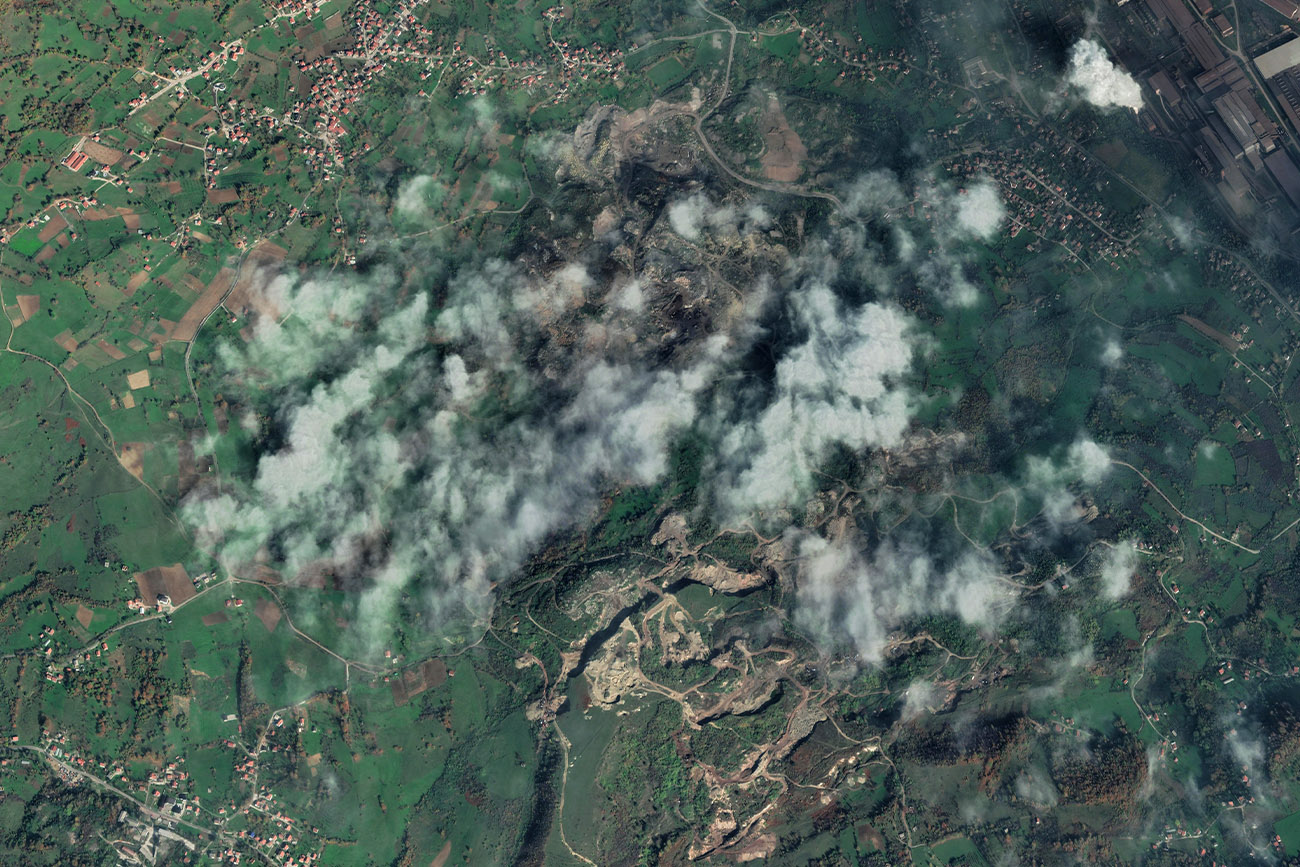

In late December 2020, a small municipality in north-west Bosnia and Herzegovina was struck by disaster. The underdeveloped town of Kostajnica was hit by a powerful earthquake that left three people injured and damaged nearly a thousand buildings.
The estimated 9.6 million BAM in damages was far beyond the capacity of the local authorities, who were already heavily in debt. Significant aid from other levels of government was also slow to arrive. The Government of the Republika Srpska contributed just 300,000 BAM.
From the RS budget reserve, intended for urgent and unforeseen emergencies, Kostajnica received a further 71,000 BAM by the end of 2024.
Between late 2019 and the end of 2024, the entity distributed a total of 53.8 million BAM from this reserve, yet only a small fraction of that money was actually spent on helping citizens in emergencies. Instead, the funds went to public institutions, sports clubs, individuals, associations, and private companies.
The money is distributed according to poorly regulated rules, and the public knows very little about the reasons for or effects of these allocations, as institutions do not allow access to spending data.

A Forgotten Town
Kostajnica could do little with the aid it received from the Government of the Republika Srpska, or with the additional 150,000 BAM received from the state and Sarajevo Canton budget reserves.
The municipal mayor, Nikola Janjetović, said the town requested support from the entity: “We were told that an agreement had been reached with Serbia, and that Serbia would provide that portion of the funds.”
Five years after the earthquake, most of the damaged buildings were repaired thanks to a 6 million BAM donation from Serbia. The remaining work on public buildings, estimated to cost up to 2 million BAM, is expected to be completed using this funding.
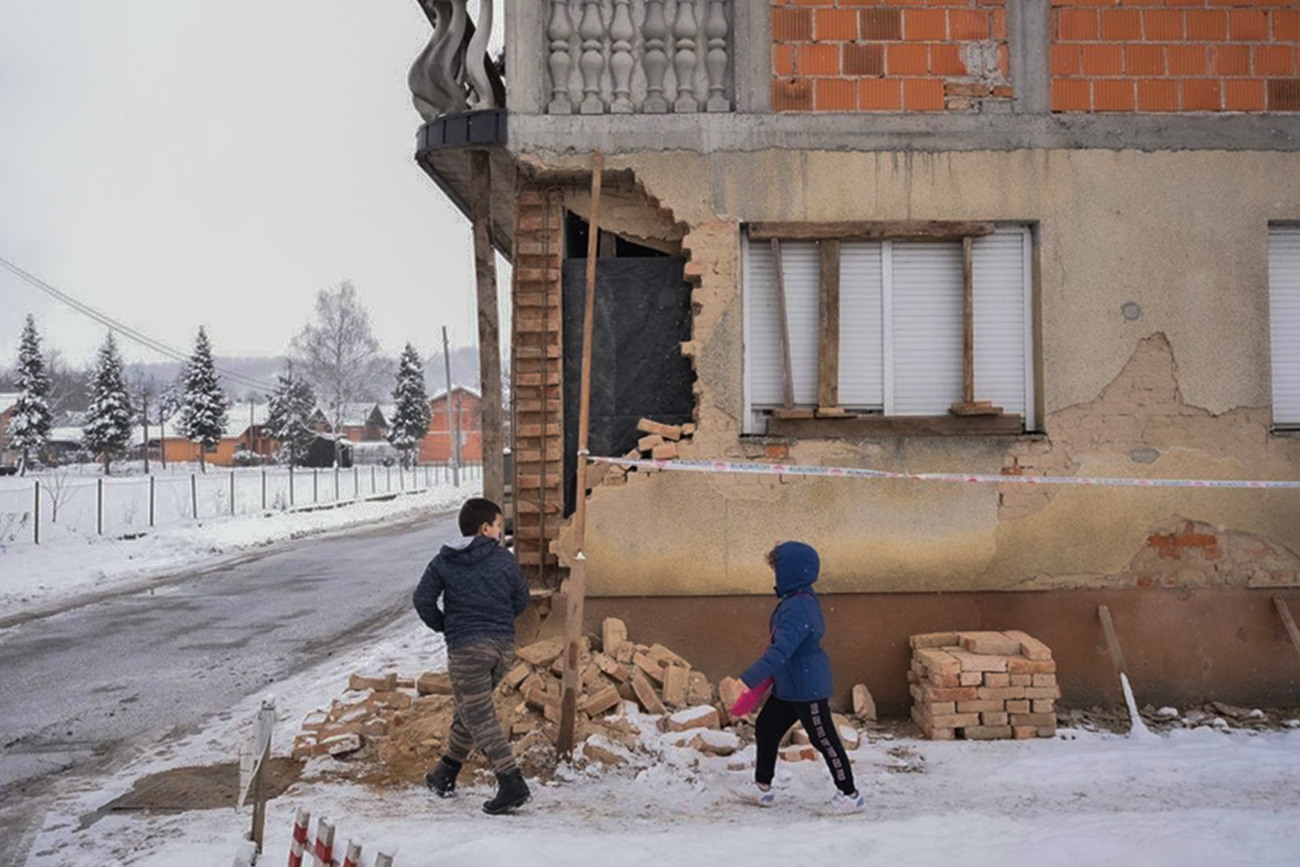
“Our budget cannot cover even a single significant—or even minor—infrastructure project,” said Mayor Janjetović. “For us, 100,000 BAM is a lot”, he added. “No matter how small that sum may seem to someone else, for us it makes a real difference.”
Although the municipality requested assistance from all levels of government in BiH, most of the aid came from international donors. In addition to the funds from Serbia, Kostajnica received a total of 653,000 BAM from the Swiss humanitarian organisation Caritas, the Red Cross, the Provincial Government of Vojvodina, and other donors.
Nenad Reljić, a municipal councillor (SDS), believes this is because Kostajnica, a town people mostly leave, does not represent a significant voting bloc: “All those higher positions that every party fills are not interested in this town, and naturally they will choose to allocate larger sums to places where they can gain more votes.”


From the earthquake until the end of 2024, the Republika Srpska distributed 46.6 million BAM from its budget reserve, the majority allocated by government decisions.
Of this, 1.5 million BAM was set aside for repairing fire damage, preventing infectious diseases in livestock, and combating the COVID-19 pandemic.
Over the past five years, the Government of Republika Srpska has had between 80 and 150 million BAM in its annual reserve, depending on the total budget. The Prime Minister has authority over one million BAM, while the Minister of Finance controls 50,000 BAM for urgent and unforeseen expenses.
During four of those years, the RS government allocated 6.4 million BAM from the reserve to maintain its representative offices and promote the entity in Russia and Austria, even though these offices are financed annually with more than one million BAM from the regular budget.
The representative offices did not respond to CIN’s request for details on how the reserve funds were spent. Reports on their activities focus on what they do, rather than on tangible results.
They primarily provide support, organise visits and meetings, participate in forums and conferences, establish contacts, conduct market research, and translate documents. Part of these activities is done online.
No information is provided on actual outcomes, such as completed investments, jobs created, export growth, finished projects, or increased tourist numbers. This makes it difficult to assess the real impact of their work and whether the funds spent in countries where BiH already has embassies are justified, as those embassies could carry out similar activities.
The RS reserve also co-financed the Srpska Open tennis tournament with 2.8 million BAM. Along with additional millions from other budget items in RS, the tournament took place in Banja Luka in 2023, but despite promises that it would remain, the licence holder, Ion Tiriac, later decided to move it to Bucharest, Romania.
“It is not known from which budget lines the tournament was funded, or how exactly the money was spent,” officials from the Tennis Association of Republika Srpska told CIN, adding that the bulk of the funds went on construction work.
Although the courts now appear neglected, the Association insists they are still in use and have not been abandoned, and that efforts are ongoing to secure funding for a roof.
“As far as that tennis court is concerned, it is truly falling apart and serves no function. The only event after that tennis tournament was a single basketball tournament, and that’s it,” said Dijana Ješić, a councillor from the People’s Front in the Banja Luka Assembly.
Ahead of the renovation and tournament, the city administration had temporarily handed the courts over to the Association for two years. That arrangement officially ended in April 2025, but the Association continues to manage the courts.
At least 3.8 million BAM from the entity’s budget reserve was also allocated to religious buildings, and 4 million BAM to the city of Istočno Sarajevo with vague justifications such as “financial assistance,” “overcoming the crisis caused by coronavirus,” and “implementation of business activities.” Nearly half a million BAM was spent on purchasing three vehicles for the RS Ministry of Interior.
The RS authorities also use the reserve to fund the Borac Football Club. Since 2014, the club has received 2.8 million BAM from the reserve as “financial assistance,” while its revenues increased by 13 million BAM over the same period. CIN journalists received no response from Borac regarding how the money was spent.
“Emergency funds are intended solely to provide help in urgent situations, when there is no budgeted provision and immediate action is required, such as natural disasters or similar emergencies. But in this way, I believe the funds have been misused, and the very purpose of the budget reserve has been rendered meaningless,” explained Srđan Traljić from Transparency International BiH.
Former Prime Minister Radovan Višković told CIN that he is no longer in a position to discuss how the government decided on the allocation of these millions during his two terms. The RS Government did not respond to CIN’s requests for comment on the matter.
Business, Banja Luka Style
Money from the budget reserve rarely reaches areas hit by natural disasters or emergencies, yet some addresses seem to receive funds year after year, almost as if they were regular budget recipients.
Companies and associations linked to the former editor of Nezavisne Novine, Dragan Jerinić, and former journalist Brankica Tejić-Jerinić, were awarded 599,000 BAM from the RS budget reserve between 2019 and 2024.
Shortly after setting up their promotional and advertising company, Conectar, in Banja Luka in 2020, they received 15,000 BAM from then-Prime Minister Radovan Višković. The consolidated RS budget execution report lists the payment as support for NGOs “in overcoming the consequences caused by the coronavirus epidemic.” According to the same report, no other company or association received reserve funds for this purpose.
Jerinić maintains that the money was used to run a website publishing data on coronavirus cases in RS, based on proposals submitted to the government. “We updated it every morning as the health centres sent the information. Once the coronavirus crisis passed, we shut down the site,” he explained.
Over the years, Jerinić’s companies have repeatedly won contracts from RS institutions. While he claims to be in good relations with all authorities in RS, he insists his government connections are not the reason for the funding. “Whether SDS was in power or SNSD, I’ve always had good relations with the authorities. I don’t see anything wrong with that,” he said.
According to his account, he also received 20,000 BAM for Info 5, a company he co-founded with Brankica Tejić-Jerinić in 2008. The firm provides media consultancy, event organisation, project management, newsletter production, and market research. The grant, again from Višković, was for organising a digital marketing conference.
Jerinić describes the process as straightforward: “We simply apply, and if it’s approved, we get the funding. Whether it comes from the budget reserve or not, I honestly don’t know. It’s just the usual way these institutions operate,” he said, even though the budget reserve is not meant to finance projects run by private companies or individuals. Jerinić initially promised CIN reporters that he would provide documentation on the projects funded from the budget reserve, but he later said he did not have it.
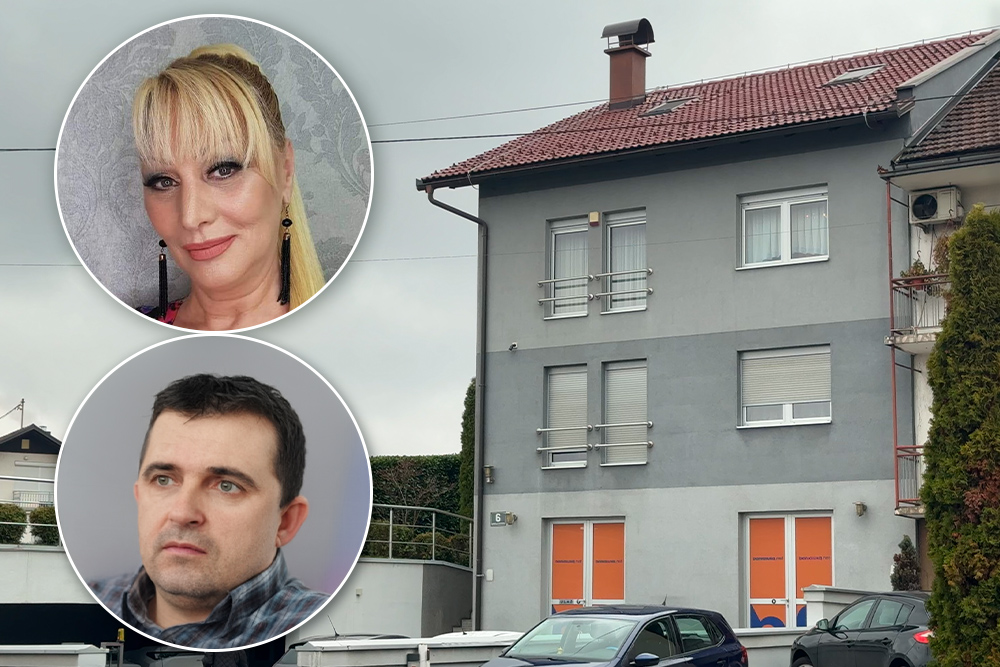
In addition to funding his businesses, the entity’s budget reserve has also channelled money to organisations connected to the Jerinić family.
Dragan Jerinić serves as Secretary General of the Association of Renewable Energy Producers, established in 2015 by the companies EHE Banja Luka, L.S.B. Elektrane Banja Luka, and Mega Elektrik.
According to Jerinić, the association focuses on consultancy work and proposing amendments to regulations governing renewable energy.
Over a four-year period, the association received 80,000 BAM from the RS budget reserve for campaigns promoting energy sustainability and the renewable potential of Republika Srpska.
“These aren’t even large sums. One can’t get rich off that kind of money,” Jerinić told CIN.
Brankica Tejić-Jerinić is the responsible person for the citizens’ association CES – the Centre for the Promotion of European Standards, Banja Luka, which she founded in 2005. In 2022, the RS Government awarded the association 25,000 BAM in financial assistance. A year later, then Prime Minister Višković allocated a further 20,000 BAM for a project described as an Educational Campaign for Public Institution Spokespersons on the Use of Social Media for Promotion.
In 2024, CES also received 5,000 BAM from the state-level budget reserve, allocated by Staša Košarac, Deputy Chair of the Council of Ministers of Bosnia and Herzegovina, for a project titled Educational E-Campaigns for Spokespersons in Local Communities.
Jerinić says the association organises lectures and training sessions on how to apply for EU-funded projects.
“We usually arrange it on an advisory basis. For example, we agreed with three local authorities to hold meetings and deliver lectures,” he explained. “These are projects, not media events.”
According to him, the bulk of the costs relate to travel, accommodation, and venue hire.
In May 2014, Doboj was hit by devastating floods that claimed 11 lives and caused damage estimated at more than 172 million BAM.
According to the City Administration, 22.6 million BAM has been spent on recovery and repairs, the bulk of it funded by foreign donors. Since then, the authorities in Republika Srpska have distributed nearly 82 million BAM from the entity’s budget reserve. Official reports show that not a single mark from that reserve was allocated to Doboj.
City officials say more than 2.5 million BAM has been invested in flood protection measures.
However, Momir Dejanović of the Centre for Humane Policy has for years warned that far too little has been done and that Doboj remains vulnerable. The riverbed of the Bosna River and its tributaries has not been properly regulated, he says. Protective embankments, drainage canals, and collector networks have not been built. The old iron bridge has neither been removed nor reconstructed. At the same time, construction continues in flood-prone areas, and river material is still being deposited in the riverbed.
Srđan Traljić of Transparency International Bosnia and Herzegovina says public money must be allocated based on clear criteria and for clearly defined objectives. “We need transparent reports showing exactly how the funds were spent, what activities were carried out, and what impact they had, i.e., what goals were actually achieved. That is the basic standard when it comes to spending public money,” he says.
Yet there is little publicly available information about the campaigns and projects for which the Jerinić-related companies and associations received funding from the entity’s reserve. A simple online search yields almost nothing.
Alongside reserve funding, their companies have for years been winning public contracts. Since 2019, Info Five, Conectar, Info 5, and Grape have signed agreements with the RS Government worth more than 400,000 BAM.
“Anyone can apply for a tender (…) I can’t say that tenders are rigged, not a single one is rigged,” Jerinić says.
Part of the funding was awarded for the creation and maintenance of the online platform businessrpska.com, a website publishing business news and information from the entity.
Since its launch in 2019, the platform has cost taxpayers at least 775,000 BAM. The larger share of that sum, i.e., 454,000 BAM, was paid by the RS Government from the budget reserve.
Jerinić says that the amount covered two contracts and that he is not aware whether they were financed from the reserve. The most recent contract, awarded in October last year, went to his company Info Five, which employs just two people.
Despite the heavy investment in the platform, its reach appears modest. It has just 112 followers on Facebook, while four videos posted on YouTube have attracted fewer than 800 views in total, and only a single subscriber.
Jerinić insists the platform is not aimed at a domestic audience. He says its real purpose is to run campaigns promoting the investment potential of Republika Srpska within the European Union. For that reason, he claims, agencies and media outlets in EU countries are hired, and that, he adds, comes at a high cost.
By Law and along Party Lines
The RS Ministry of Finance maintains that all allocations from the budget reserve were made in accordance with the law and that beneficiaries submitted reports on the status of their projects. However, the ministry refused to provide CIN journalists with Jerinić’s reports, as well as documents relating to other associations led by members of the ruling SNSD party or individuals close to the party and its leader, Milorad Dodik.
Over a four-year period, former RS Prime Minister Radovan Višković, Željka Cvijanović, and Milorad Dodik, in his capacity as a member of the BiH Presidency, along with Staša Košarac as Deputy Chair of the Council of Ministers, allocated more than 200,000 BAM from various reserves to such associations.
The judo club Randori from Istočno Sarajevo received 100,000 BAM from the RS Government in 2020. Four years later, it was awarded an additional 5,000 BAM by Minister Košarac as “support for its work”. The club is headed by Ljubiša Majdov, father of Serbian judo competitor Nemanja Majdov. Majdov Jr. was outside the building of the Court of Bosnia and Herzegovina in March 2024 during the trial of Milorad Dodik. On that occasion, he said it was his duty to stand by the president, who is a friend of his and his family.
The Banja Luka–based association Politikolog receives annual funding from the RS Prime Minister to mark the anniversary of the signing of the Dayton Peace Agreement. Over four years, it has been awarded 45,000 BAM. The association is headed by Milan Ljepojević, editor-in-chief of the SNSD party magazine Argumenti and author of several party publications and books, including Dodik: Guardian of Srpska and An Acquittal for Dodik.
Reserve funds have also been channelled to, among others, the Bijeljina-based organisation Committee for the Protection of the Rights of Serbs in the Federation of BiH, led by SNSD member Đorđe Radanović; the Pale Youth Development Centre Omega, headed by Luka Cicović, a member of the SNSD Main Board; and the Srpska House Foundation, where Milorad Dodik’s daughter, Gorica Dodik, holds a role.

“These are organisations funded from public money, from public budgets, and their purpose is often to use those funds to campaign for those in power or to buy political support,” says Srđan Traljić of Transparency International Bosnia and Herzegovina.
Milan Savanović, an MP in the National Assembly of Republika Srpska (NSRS) from the For Justice and Order movement, claims that even MPs are not given detailed information on how the entity’s budget reserve is spent. “The funds are never presented in a way that shows the outcome or exactly where the money went, what was delivered, and whether anything socially beneficial was achieved,” he says.
His colleague Bojan Kresojević of the PDP argues that the ruling majority treats the reserve as discretionary spending. “They believe it is entirely at their disposal and that it is pointless to question how they allocate it. That is precisely how they behave, and it clearly shows that the money is neither distributed transparently nor in the public interest, and that there are no criteria whatsoever,” he says.
Four SNSD MPs approached by CIN said they were not familiar with the distribution of reserve funds and had taken no particular interest in the issue. Nevertheless, they maintain that the allocations are justified and transparent.
“I believe the funds are used for legitimate purposes that meet the needs of certain groups,” said MP Borivoj Obradović.
Reports by the RS Supreme Office for the Public Sector Audit show that the authorities in this entity borrow each year to secure funds for the budget reserve, yet the money is largely not spent on urgent or unforeseen situations.
Auditors note these findings in their reports as information only, without issuing warnings or recommendations, and do not challenge the spending practices in any substantive way.
The Office ignored journalists’ requests for comment.
“The budget reserve is something that ought to be the most transparent category of spending and unquestionably the one most closely tied to the interests of RS citizens,” says MP Kresojević. “Instead, with projects like these, no one really knows whether they even took place. The reports contain only formal data. There is no explanation of why the spending was necessary in the first place, or whether it was genuinely worth allocating public money to those projects.”