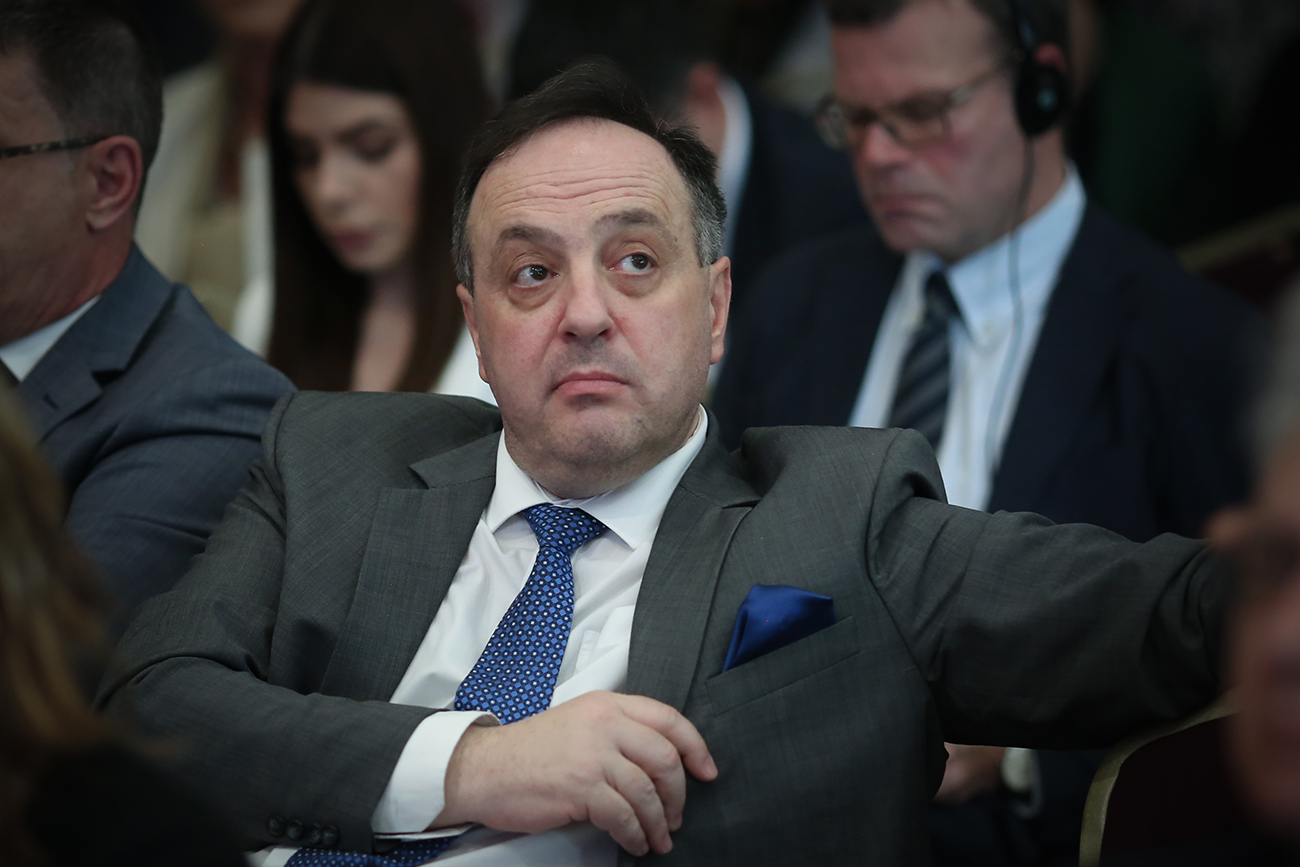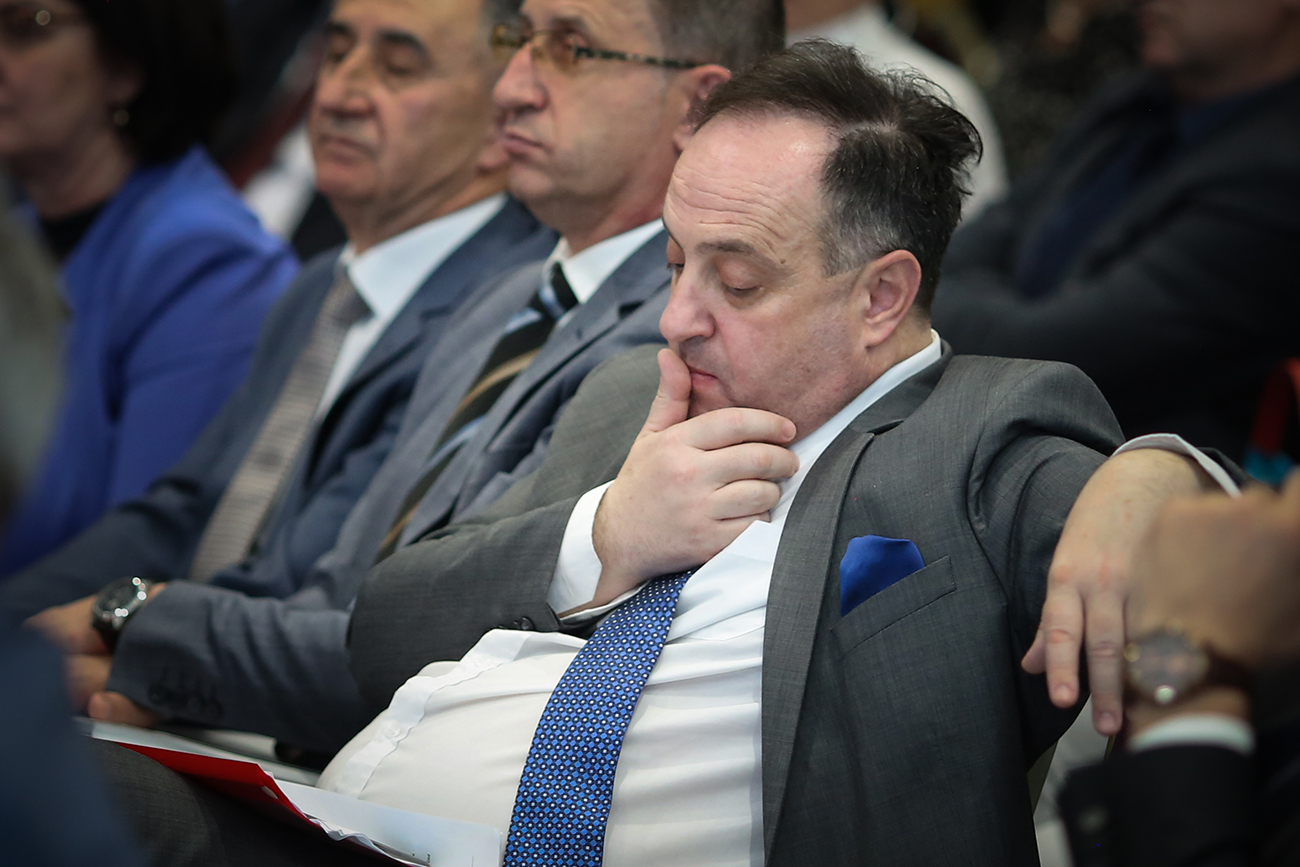

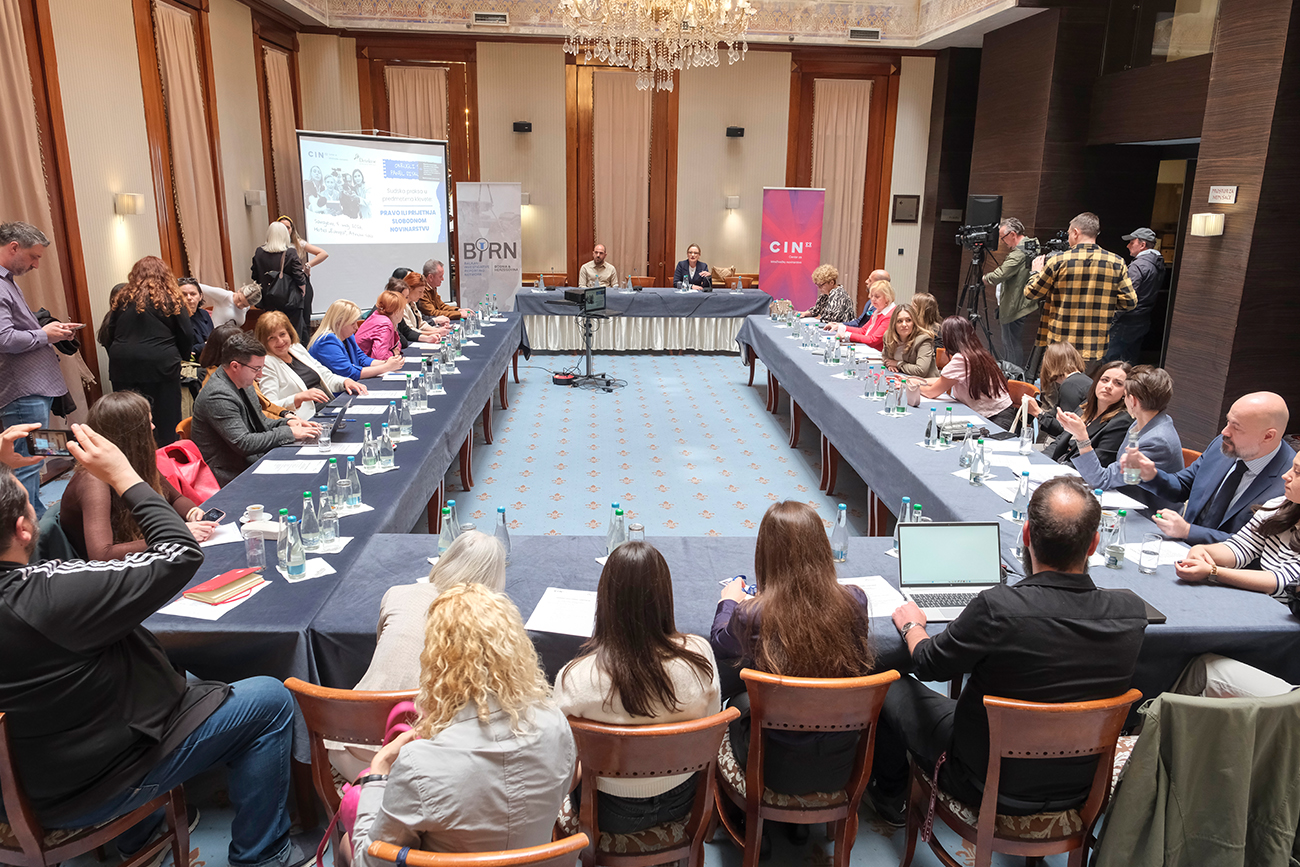
Journalists, media experts, and legal professionals gathered in Sarajevo for the roundtable Defamation Case Law: A RIGHT OR A THREAT TO JOURNALISM?, where they discussed the growing number of rulings against journalists, their impact on freedom of expression, and whether domestic case law is in line with European standards, particularly the jurisprudence of the European Court of Human Rights.
“I am absolutely in favour of journalists adhering to the ethical codes of their profession. That is one side of the equation,” said Leila Bičakčić, Director of the Centre for Investigative Reporting (CIN). “The other is that judges and prosecutors must properly understand journalists’ rights, as well as the case law of the European Court of Human Rights, which is extensive.”
The discussion also focused on judicial decisions highlighting worrying trends in how defamation law is interpreted and applied in cases involving journalists, editors, and media outlets.
Increasingly, critical reporting on individuals and legal entities in the public interest is ending up before the courts, and often resulting in adverse rulings, even when it is firmly grounded in official documents and statements from competent authorities. Courts are also ordering the removal of journalistic articles from online portals, one of the most far-reaching restrictions on freedom of expression, as it directly affects not only the media’s work and fuels censorship and self-censorship, but also the public’s right to be informed.
Referring to a ruling by the Cantonal Court in Široki Brijeg against the Centre for Investigative Reporting (CIN), which ordered the removal of two investigative pieces on the company Lager, CIN’s lawyer Ilvana Bijedić said she had been confident of a positive outcome, as all the claims in the articles were based on official documents.
“Given that there was a complete absence of evidence to support the claimant’s case, I genuinely and professionally expected a ruling in our favour,” said Bijedić.
Legal expert Sevima Sali-Terzić said the judgment raises several concerns, ranging from how defamation was defined to the court’s approach to journalists and the sanctions imposed.
“Although the court acknowledges that the journalists acted professionally, there is no indication that this was given the weight it should have been. Professional conduct by journalists is central in the case law of the European Court,” Sali-Terzić said. “This case turns the logic on its head by suggesting that the more serious the criticism, and the more it concerns the public interest, the more likely it is to be treated as defamation. That runs entirely counter to the approach under the Convention.”
Denis Džidić, Director of the Balkan Investigative Reporting Network in Bosnia and Herzegovina (BIRN BiH), said the judiciary often invokes personal data protection as a pretext to block access to information.
“Virtually every piece of information is withheld, with little regard for the case law of the European Court of Human Rights or for the High Judicial and Prosecutorial Council’s own guidance on proactive disclosure,” Džidić said, adding that the broader decline in media freedoms is creating a climate of fear in society.
Anida Sokol of the OSCE pointed to a global downturn in press freedom, citing a report covering 180 countries worldwide.
“In 110 out of 180 countries, laws are increasingly being used against freedom of expression and to restrict media reporting,” Sokol said, noting a growing number of cases where journalists are barred from covering sessions and other events of public interest.
Such practices pose an ever more serious threat to journalists’ ability to report critically and based on evidence, while reframing matters of public interest as private concerns, effectively shutting down public scrutiny and criticism, which are essential for addressing harmful developments in society, participants concluded at the event organised by CIN and BIRN BiH.