

PRESS RELEASE: LENS – Strengthening the Capacity of Civil Society Organisations for Public Budget Monitoring
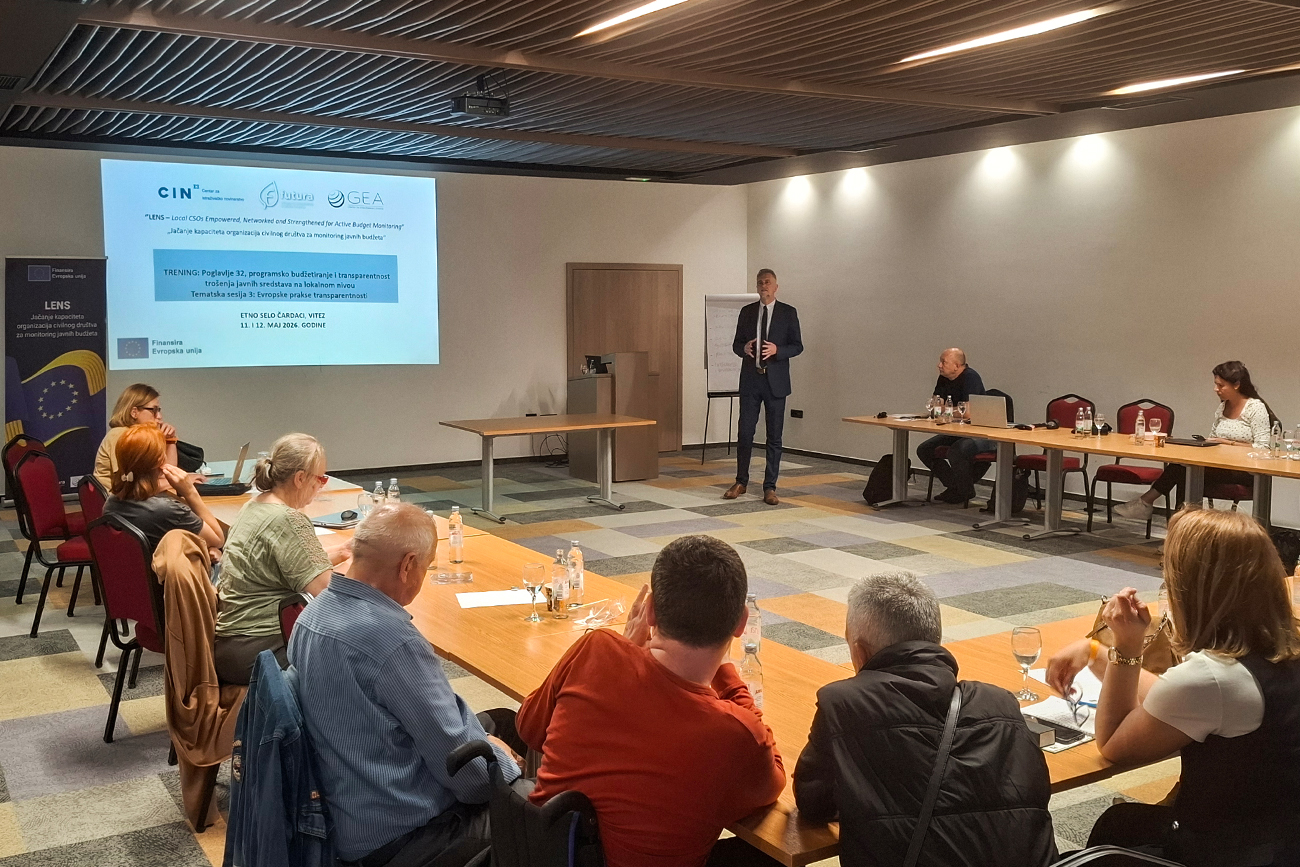
(Vitez, 11-12 May 2026) – Civil society organisations play a vital role in monitoring local budgets, particularly during the budget planning and adoption phase. That is why this training is so important — to strengthen the capacity of local-level CSOs to engage more effectively in budget oversight within their communities, said Marko Martić, one of the facilitators of the training titled “Chapter 32, Programme Budgeting and Transparency of Public Spending at the Local Level”, held in Vitez.
This training is the fourth out of five modules organized under the project LENS funded by the European Union, and implemented by the Centre for Investigative Reporting (CIN), in partnership with Futura from Mostar and the Centre for Research and Studies – GEA from Banja Luka. The project aims to contribute to the fight against corruption by enhancing the monitoring of budget spending and the use of public funds at the local level, with the active involvement of civil society.
The European Union continuously supports civil society organisations in Bosnia and Herzegovina because they are essential partners in promoting transparency and citizen participation in public life. Projects like LENS are part of these wider efforts, helping local-level CSOs gain the tools and knowledge they need to monitor public budgets and advocate for more responsible spending of public funds. During the training, representatives of civil society organisations had the opportunity to learn about activities of nationwide civil society organizations in monitoring public spending, and to learn about opportunities for sharing knowledge and research for future activities at the local levels.
Prof. Dr. Zoran Babić, trainer at this session emphasized the importance of such training sessions and of strengthening competencies in the field of public budget monitoring for organizations that can influence the transparency of budget processes at the local level. “Training sessions for civil society organisations strengthen their capacities…to monitor local budgets, identify risks in the spending of public funds, and participate more actively in the processes of planning and monitoring public policies. Through practical examples and analysis of European experiences, participants acquire knowledge and tools that will contribute to greater transparency, accountability, and more effective oversight of the use of budgetary funds in local communities.” Babić said.
“There are evident shortcomings in the transparency of public fund spending, and these must be overcome through the active involvement of civil society, working in partnership with institutional representatives at all levels of government,” said Marin Bago, President of the Futura Association from Mostar, one of the organisations implementing the project.