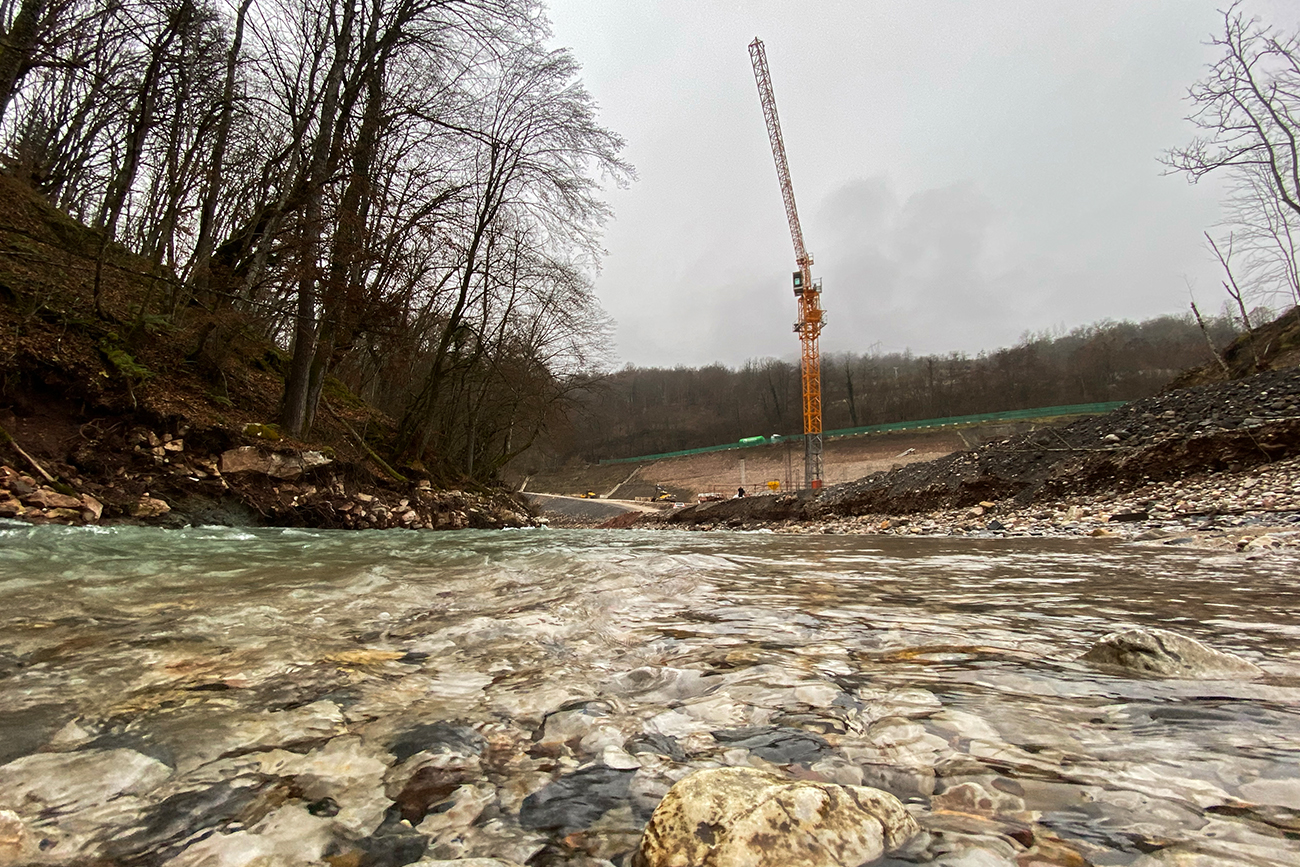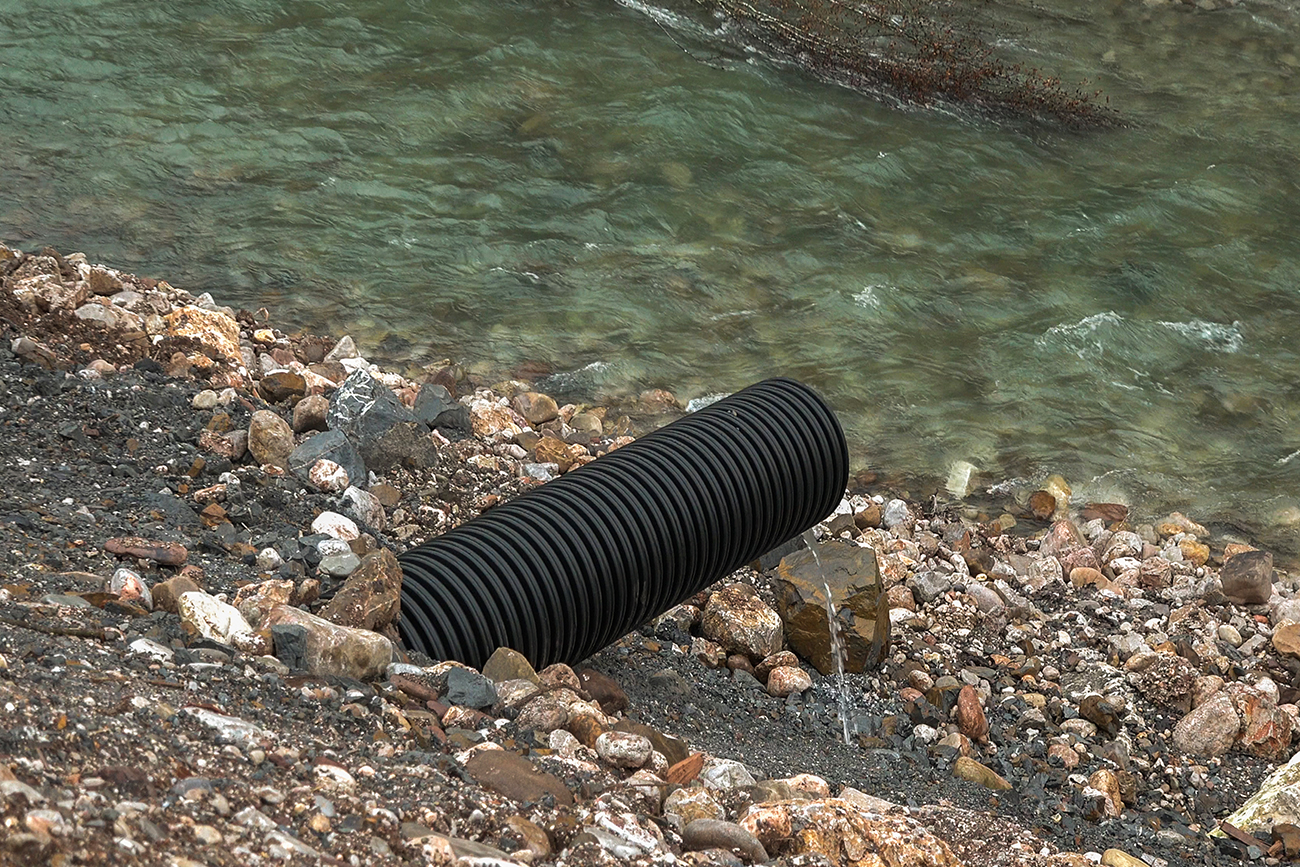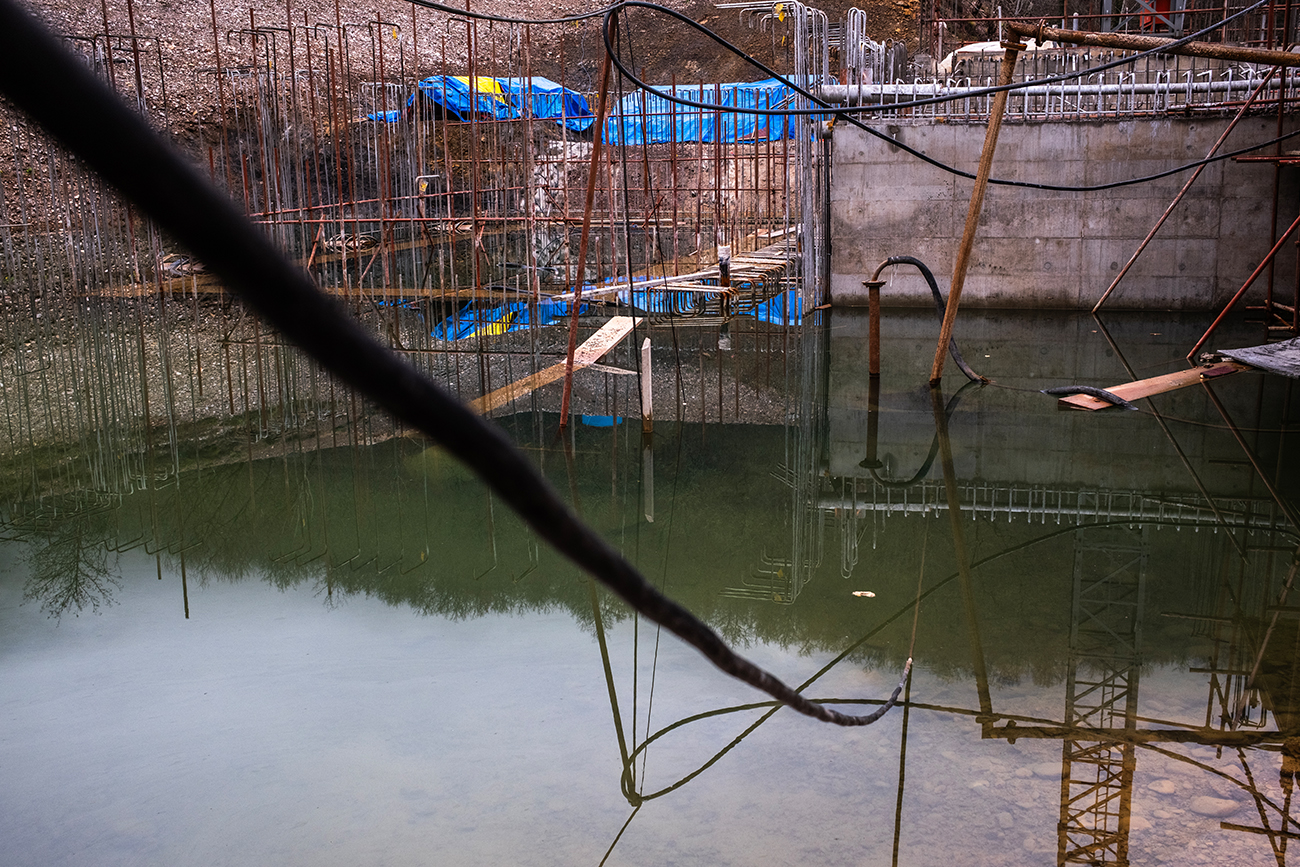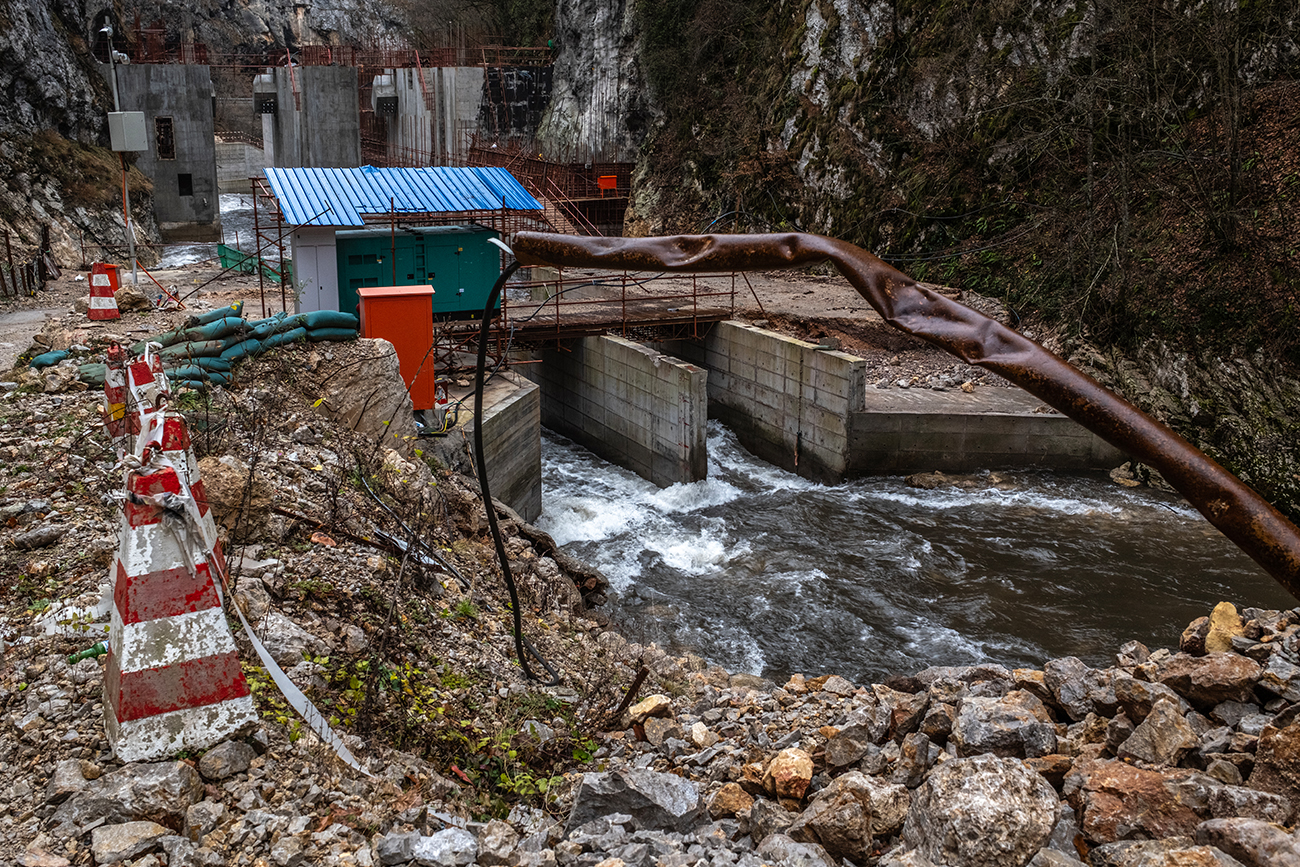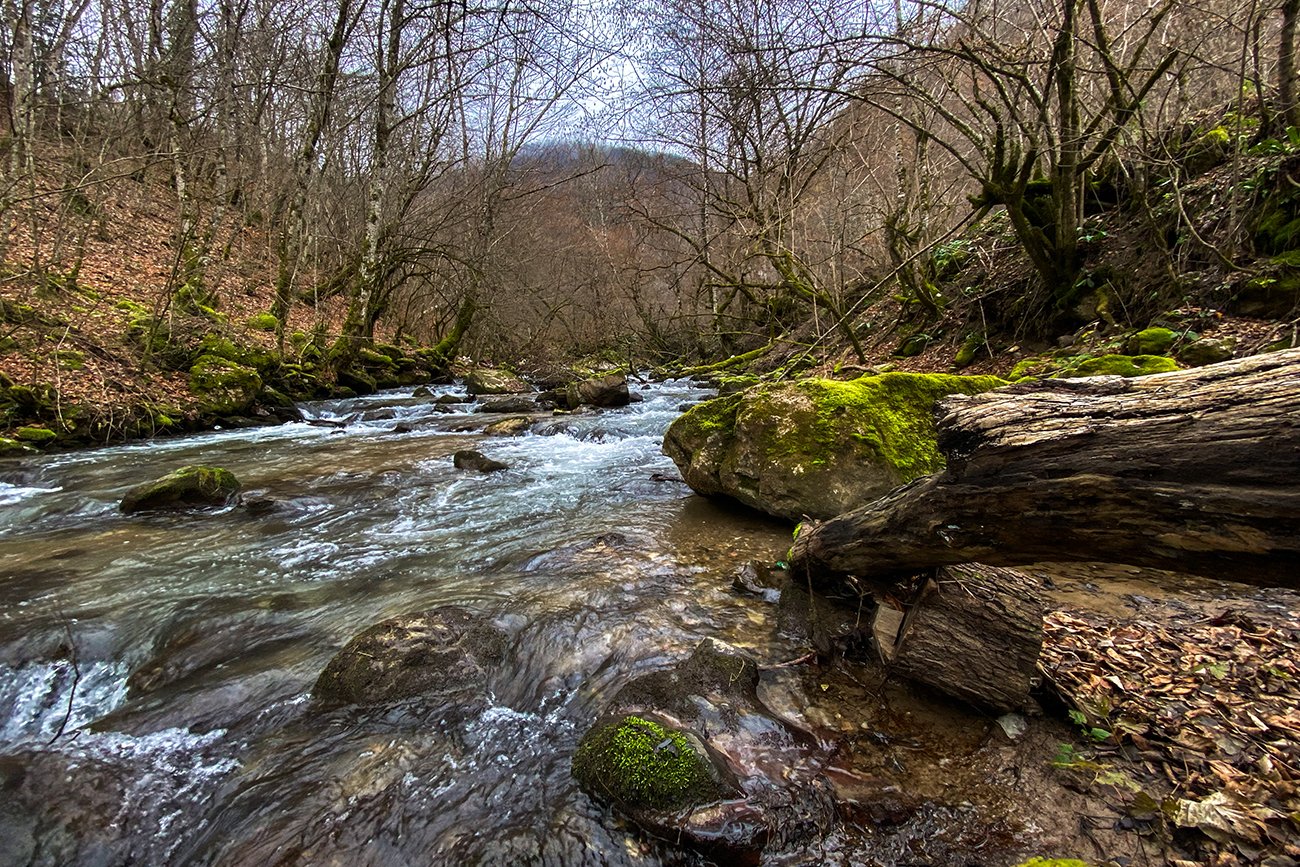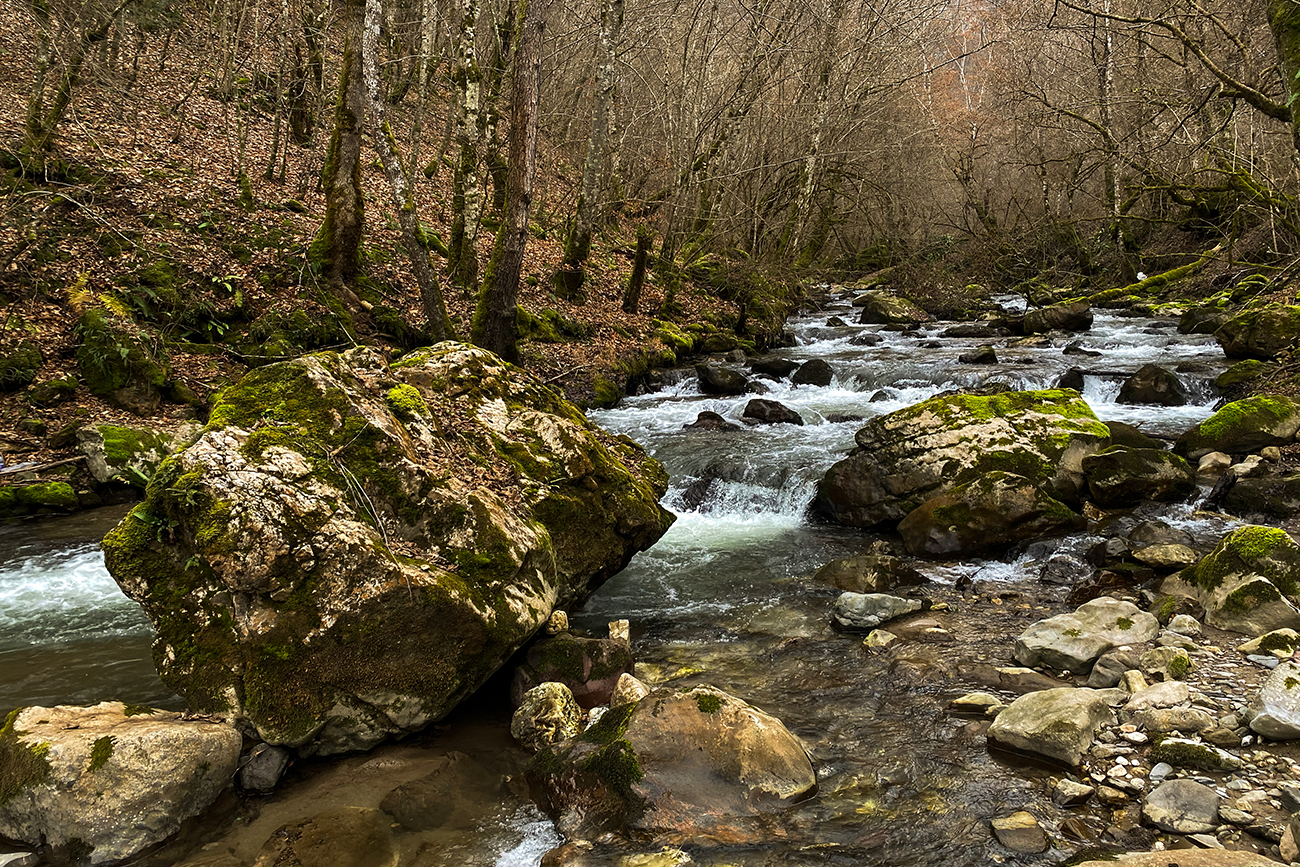

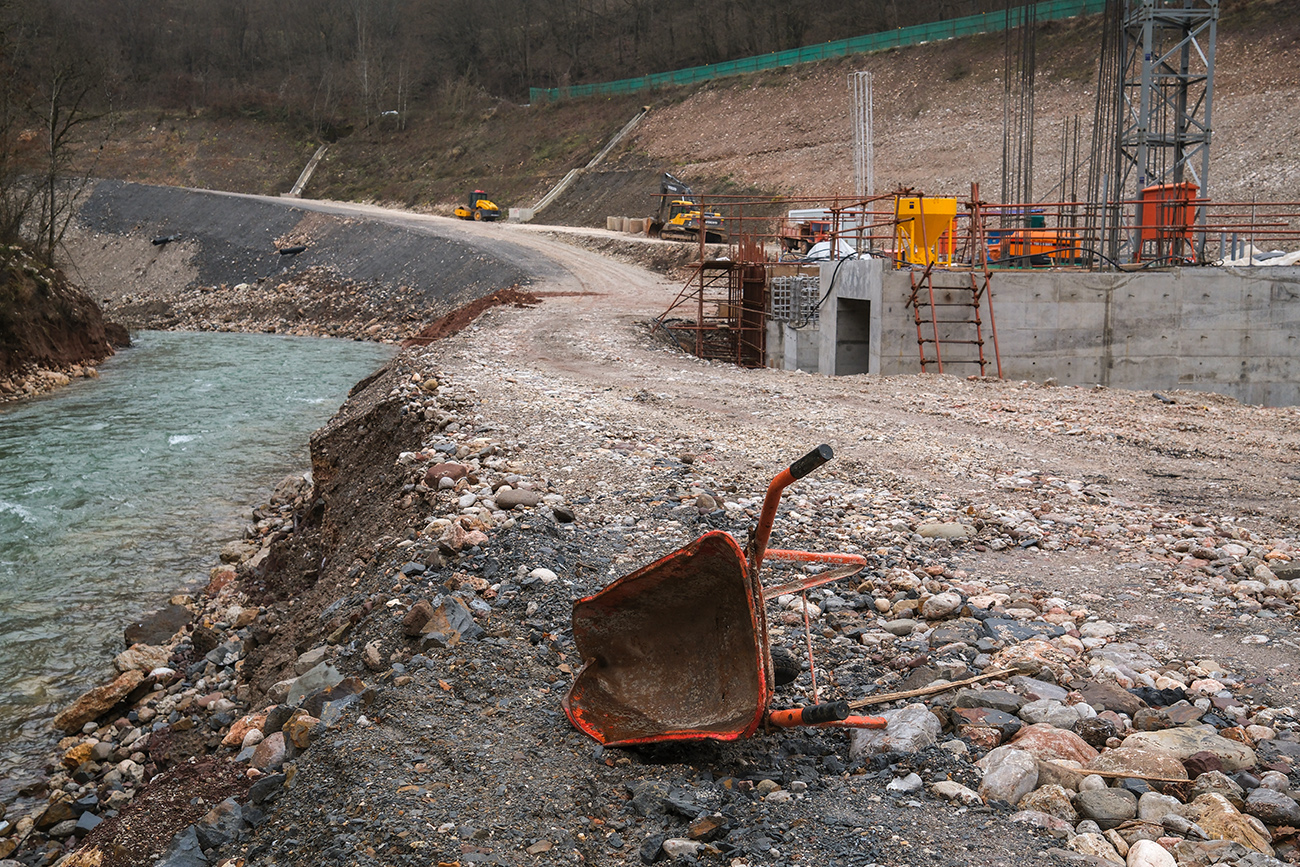
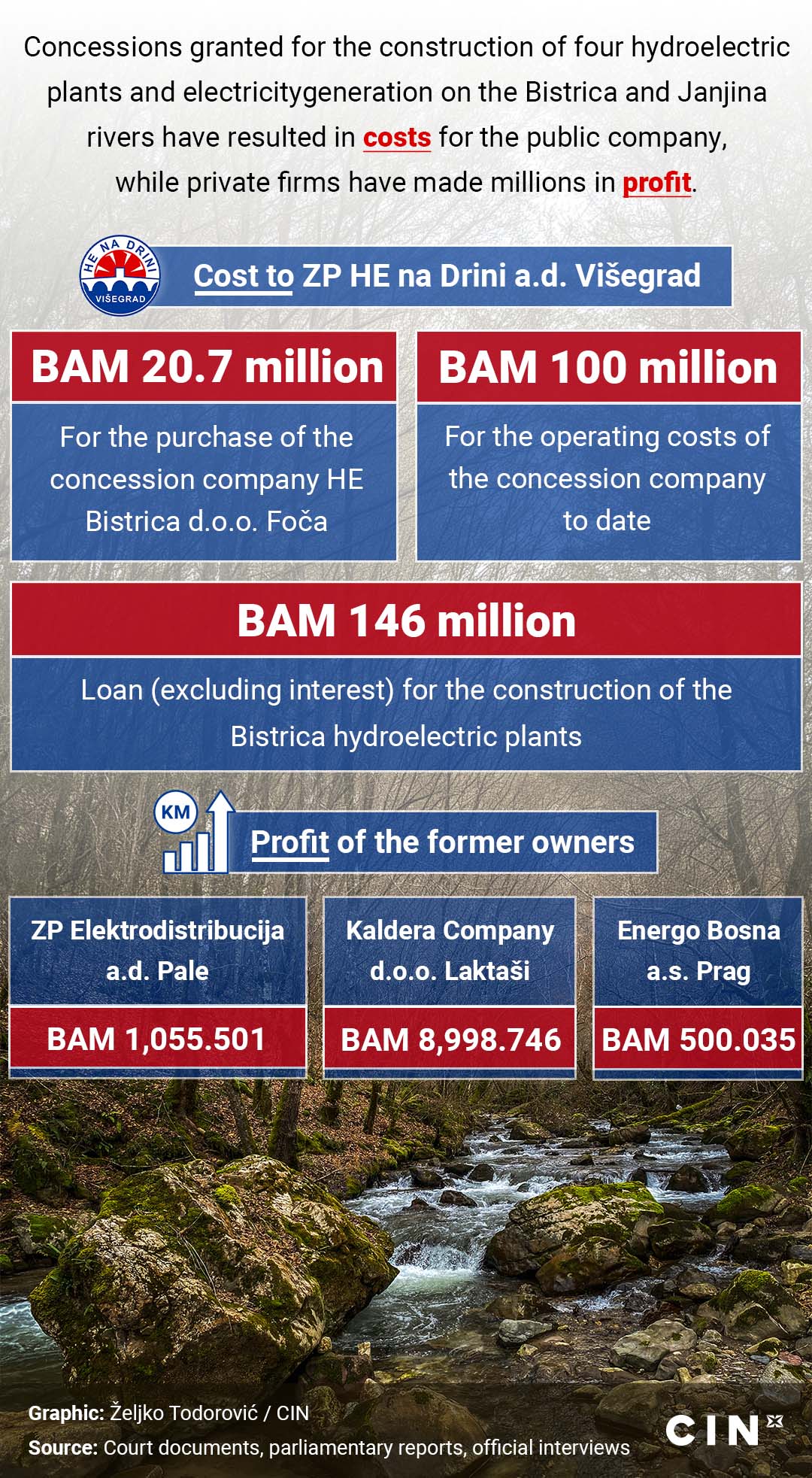
Concessions for the construction of four hydropower plants and electricity generation on the Bistrica and Janjina rivers in eastern Bosnia and Herzegovina have resulted in costs for a public company while generating millions in profit for private firms.
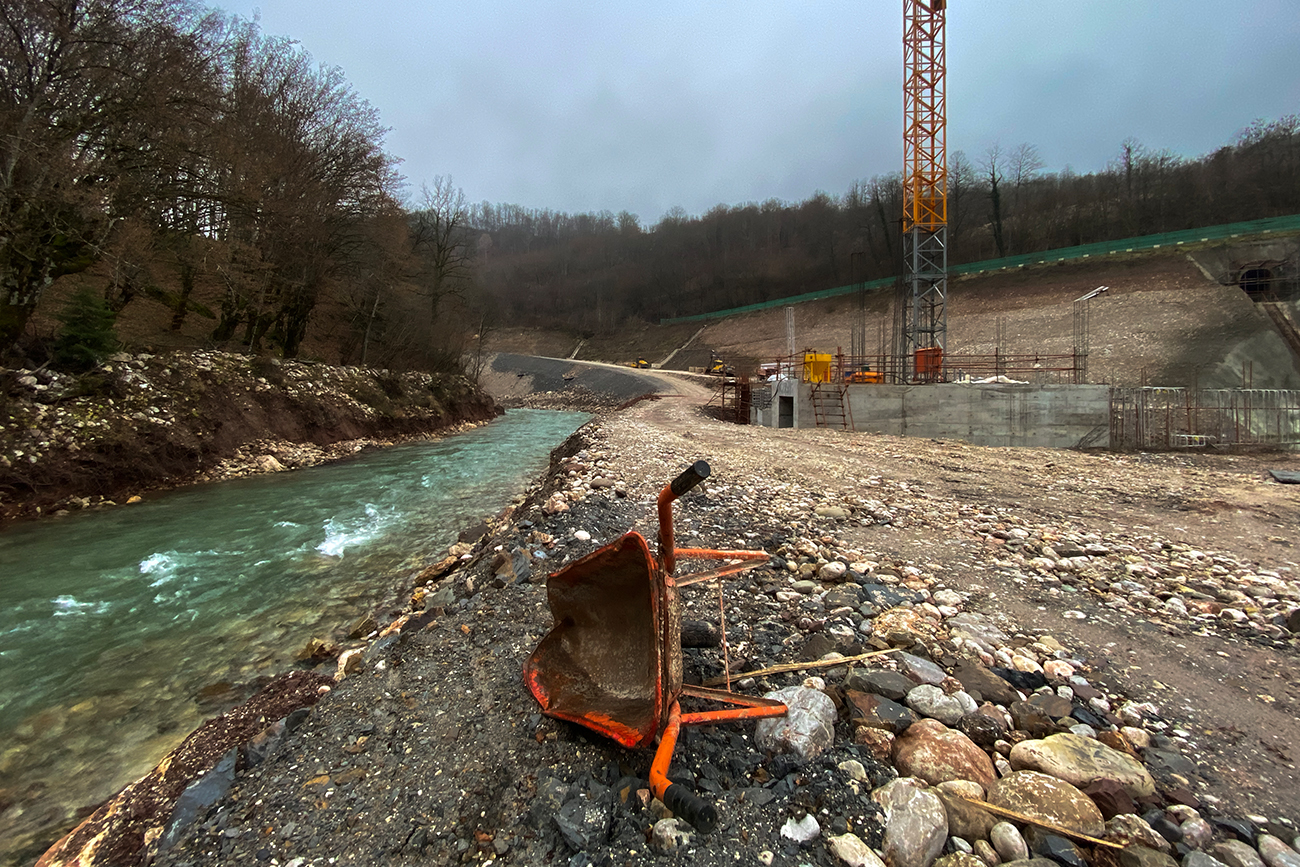
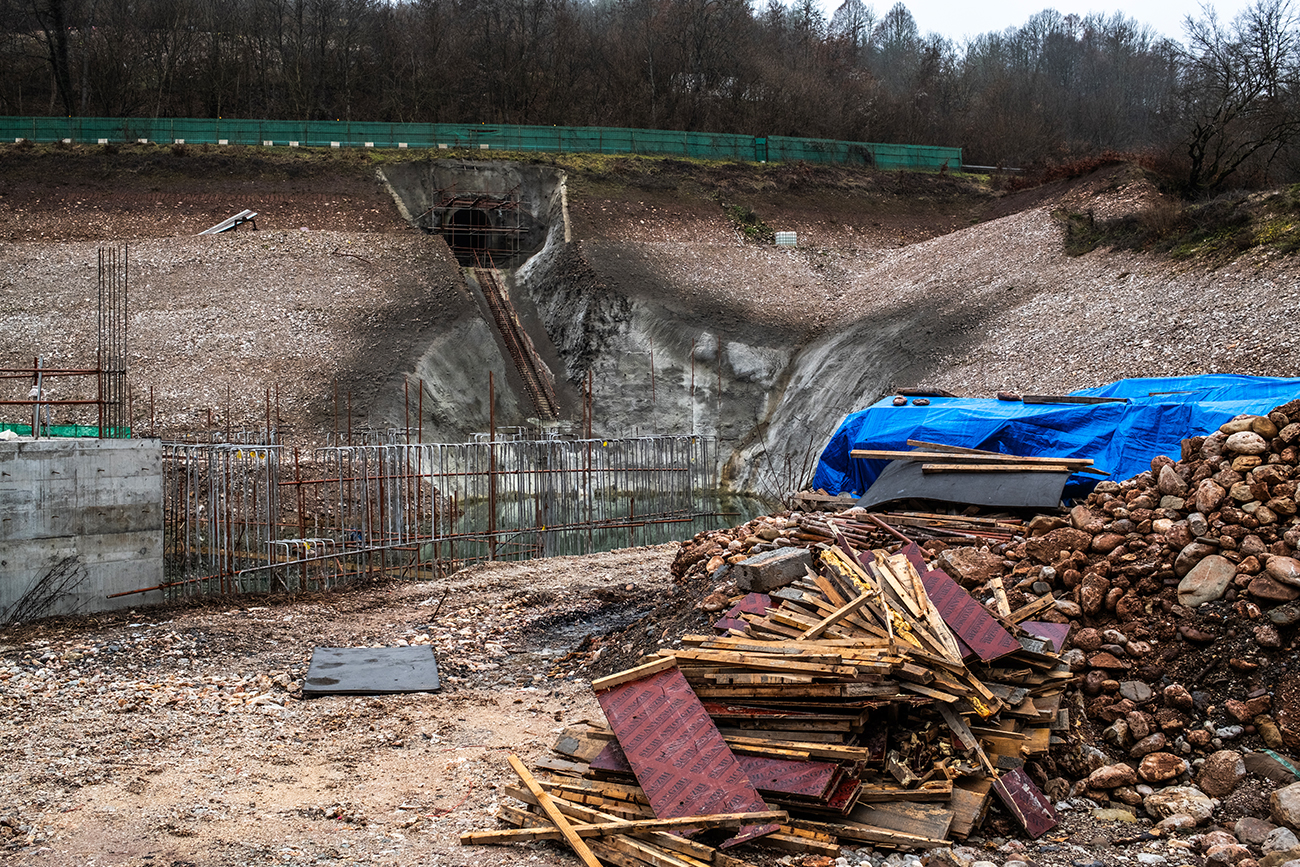
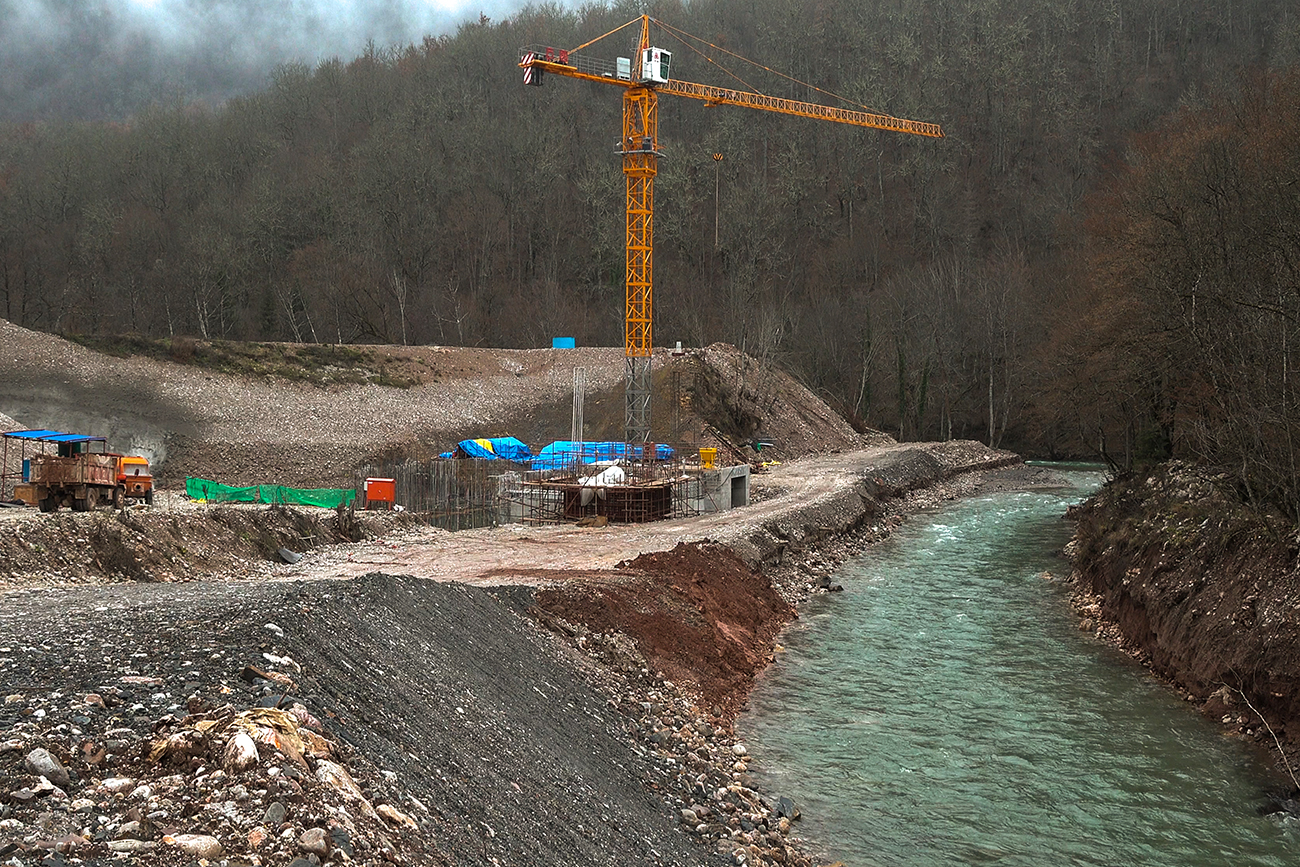
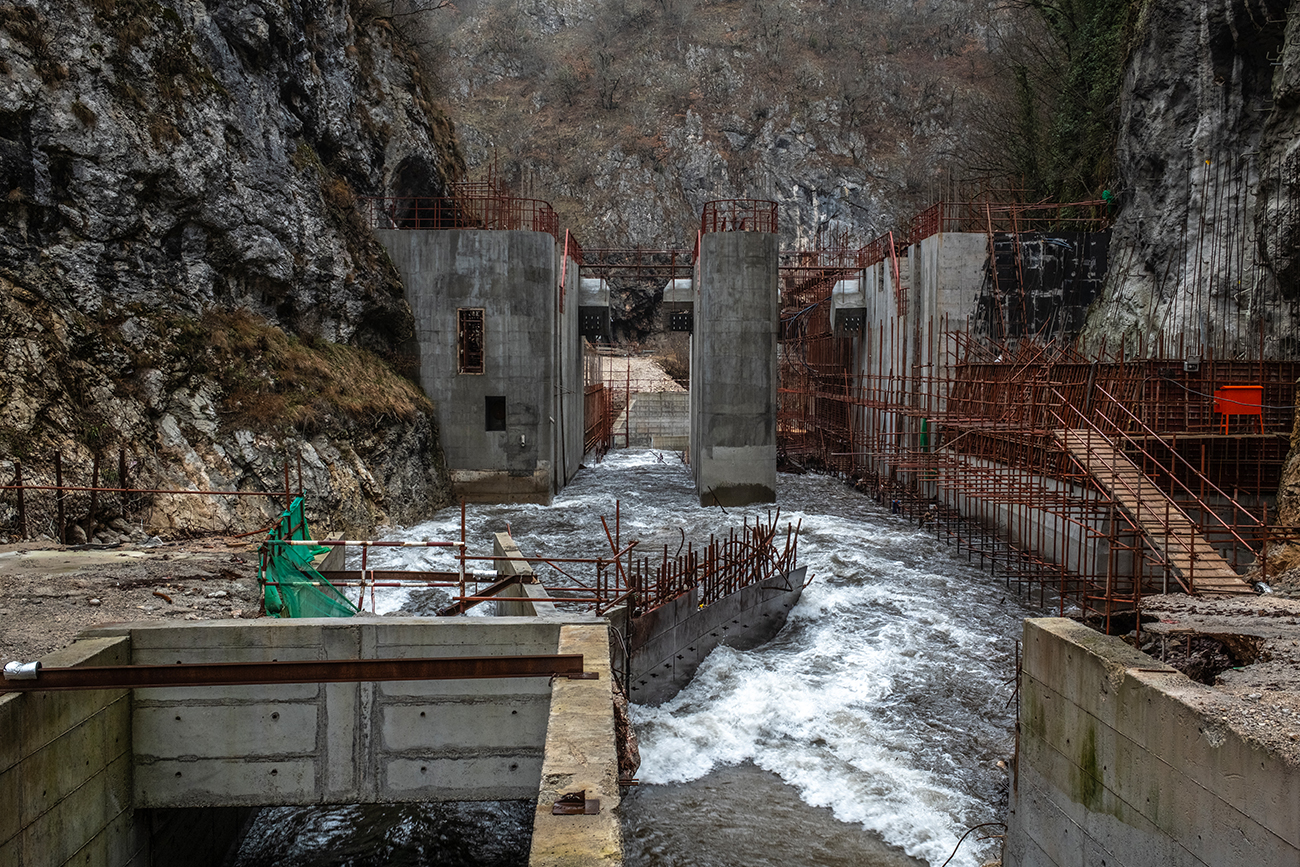
Since the Government of Republika Srpska granted the concessions in 2006, only preparatory works and tunnels have been completed, and construction has begun on just one hydropower plant. There is still no end in sight, even though all four facilities were meant to be completed by the end of 2017.
So far, the project has swallowed around 125 million BAM of public money, along with a further 146 million BAM in new loans.
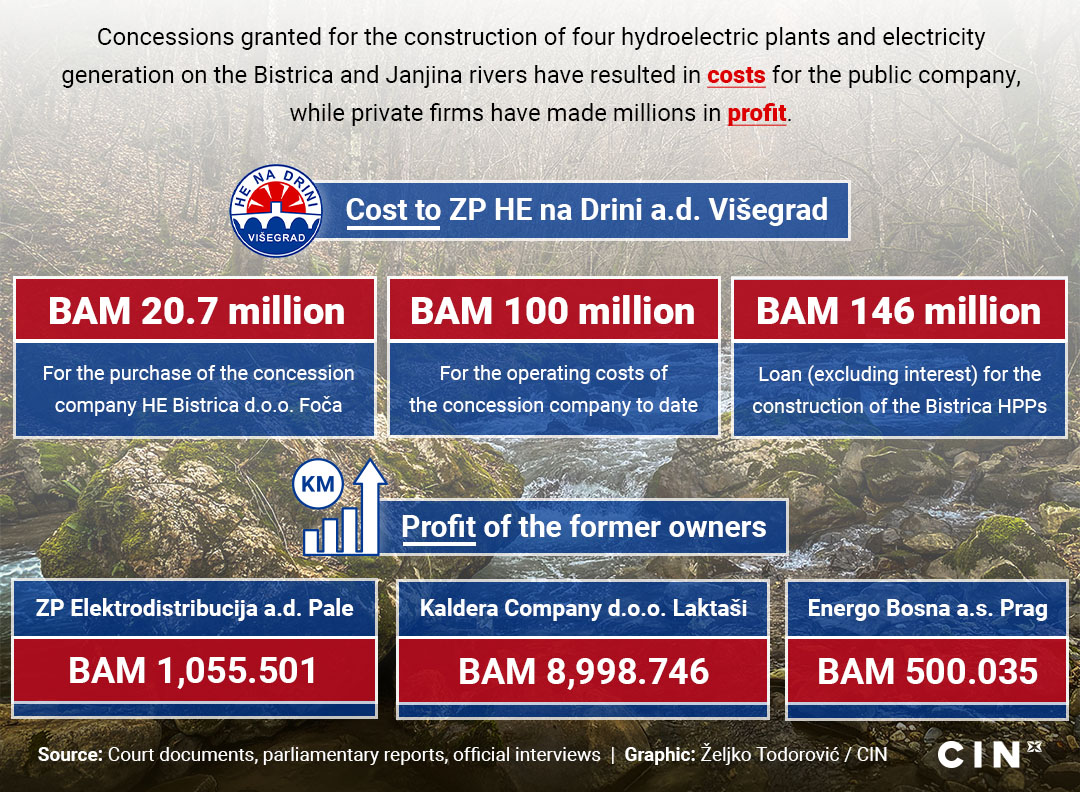
A significant portion of that amount, i.e., 20.7 million BAM, was used to purchase the concession company Hidroelektrane Bistrica Foča, established to implement the project. In 2019, the company was acquired by Hidroelektrane na Drini from Višegrad, a subsidiary of Elektroprivreda Republike Srpske and majority-owned by the RS.
Journalists from the Center for Investigative Reporting (CIN) reveal that the valuation of the concession company was based on projections of the future operations of the hydropower plants, despite the fact that, at the time, the plants should already have been built. The valuation projected that the hydropower plants would be completed by 2020, with profits expected to begin as early as 2021. That has yet to happen.
The biggest winner in the trading of shares was Kaldera Company, the majority owner of the concession firm. By selling its stake, the Laktaši-based company made a profit of 8.9 million BAM compared with its initial investment. This was made possible by the Government of Republika Srpska, which signed an annex to the concession agreement allowing shares in the concession company to be traded even though the hydropower plants had not been built.
In 2024, the Office of Foreign Assets Control identified the company as a major source of income for Milorad Dodik, the leader of the Alliance of Independent Social Democrats (SNSD). From the outset, key decisions about the project were taken by figures associated with the party, including prime ministers of the RS government, directors of public companies, owners of private firms, and valuation experts.
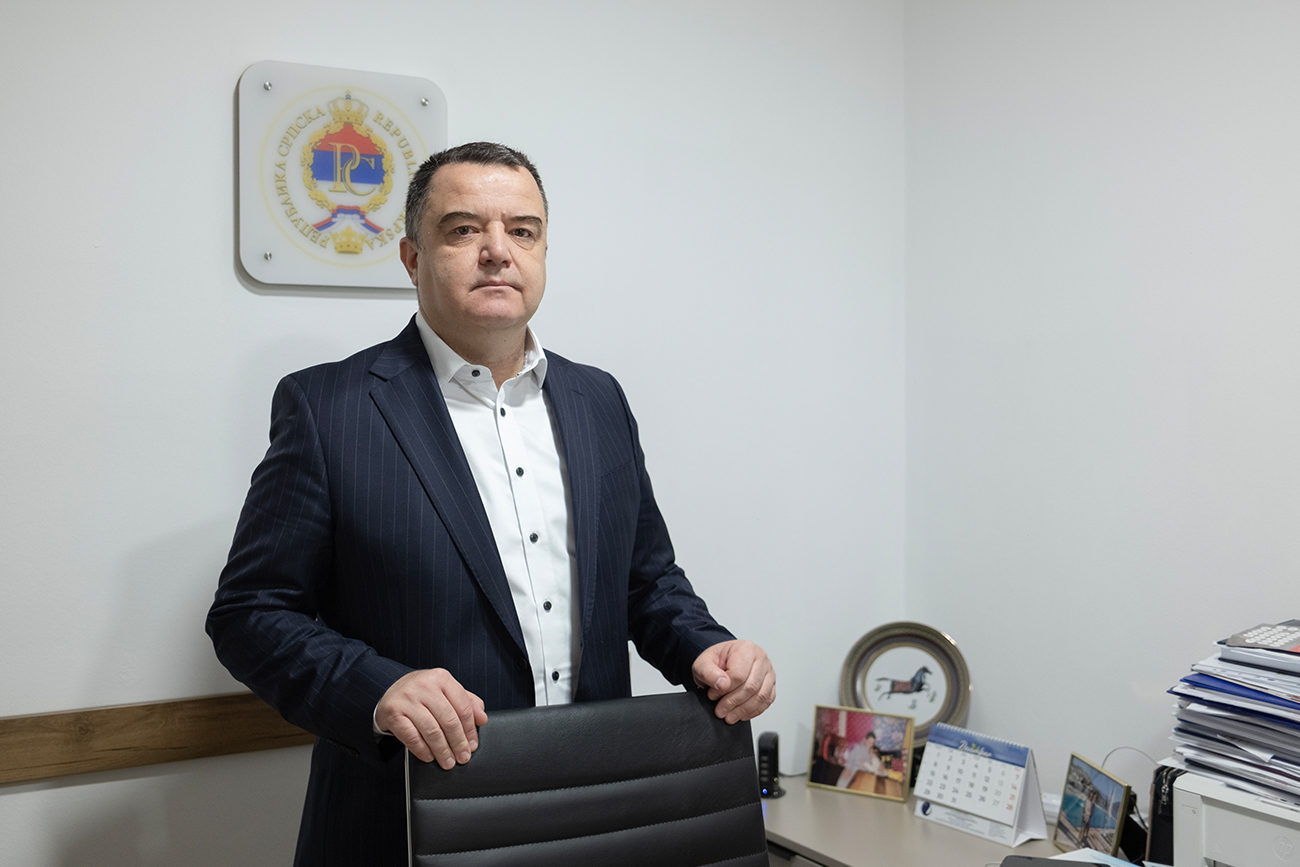
“I maintain that this is a good project, certainly a profitable one, and I believe the purchase was the right move at the time,” said Dejan Pavlović, director of HPP Bistrica.
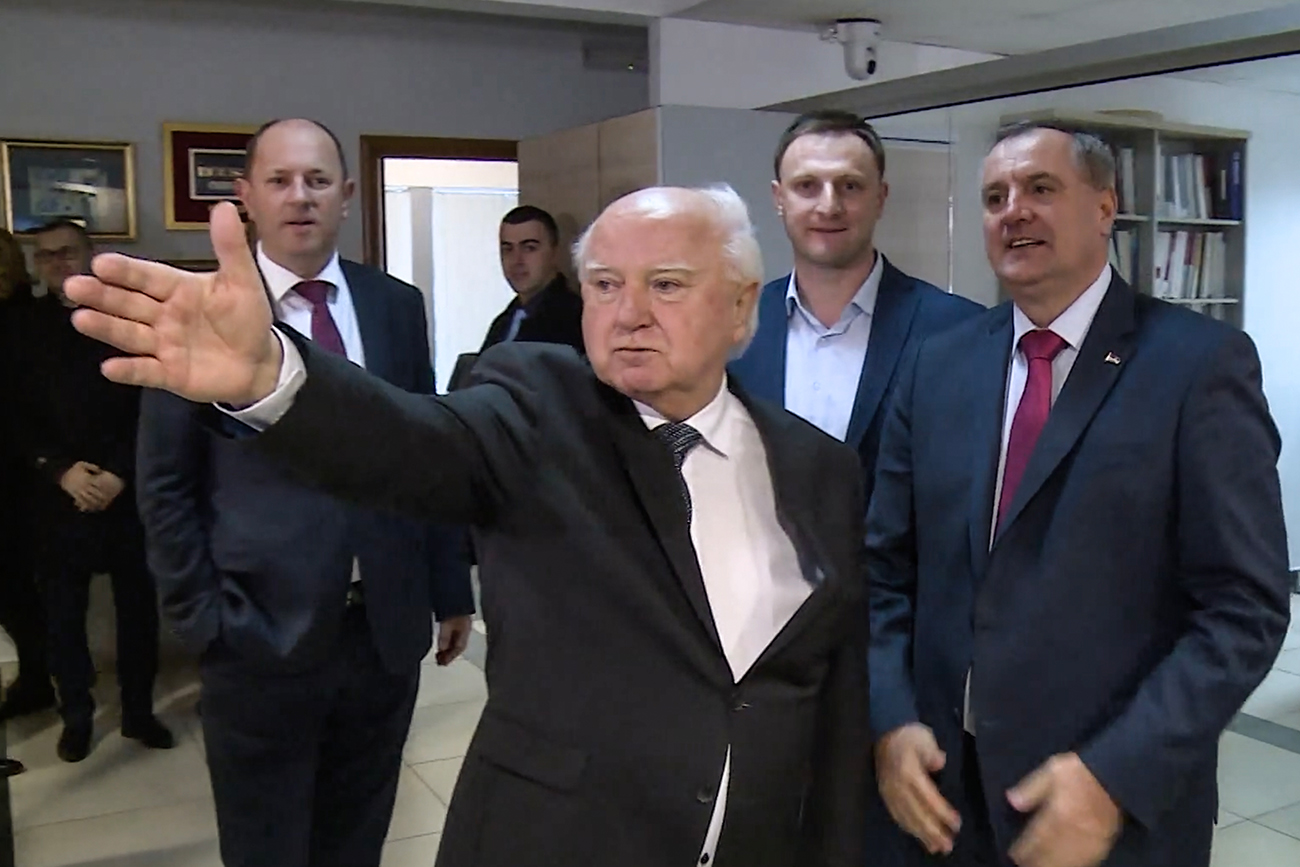
Trading concessions, not electricity
The project of building and operating four hydropower plants on the Bistrica and Janjina Rivers began in the summer of 2006, when the Government of Republika Srpska granted a 30-year concession to Elektrodistribucija a.d. Pale, a subsidiary of Elektroprivreda Republike Srpske.
The agreement envisaged the construction of four small hydropower plants: Bistrica B-1, Bistrica B-2a, and Bistrica B-3 in the municipalities of Foča and Kalinovik, as well as Janjina J-1 in the areas of Čajniče and Novo Goražde, with a total value of 106 million BAM.
For the concession rights, Elektrodistribucija paid 112,750 BAM and committed to paying a fee equivalent to three per cent of revenue once the plants became operational. To implement the project, the concession company Hidroelektrane Bistrica in Foča was established.
Soon after, in 2008, Kaldera Company from Laktaši, owned by Milenko Čičić, joined the venture. The move was approved by the RS Government led at the time by Milorad Dodik, Čičić’s party leader in SNSD.
Ljubomir Mrda, then director of Elektrodistribucija, told CIN reporters that the company accepted Kaldera’s unsolicited offer after concluding that it could not finance the project on its own. “For us, it was very important to find a partner with whom we could carry out the project,” Mrda said.
Kaldera subsequently took over 90 per cent of ownership in the Bistrica concession company, while Elektrodistribucija retained a 10 per cent stake.
Mrda said the Laktaši-based company paid them 3.7 million BAM to cover the costs of the technical documentation. It also contributed 81,000 BAM to the founding capital of the concession company.
In the following years, the company’s capital value increased through additional cash contributions and the transfer of technical documentation, bringing Kaldera Company’s stake to 9.1 million BAM and that of Elektrodistribucija Pale to just over one million BAM.
By February 2014, the original concession agreements had been amended through 11 annexes. One of the amendments removed the ban on selling the concession company before the hydropower plants were built, while December 2017 was set as the deadline for completing construction. Delays in the works were also defined as possible grounds for terminating the contract.
Work continued on site preparations and securing permits, but construction of the hydropower plants never got under way.
By 2018, however, ownership stakes in the concession company were already being traded. Kaldera Company sold 38.5 per cent of its share for 7.4 million BAM to Energo Bosna, a Czech-owned firm established to lease real estate.
The HHP Bistrica was subsequently offered to Hidroelektrane na Drini, a subsidiary of Elektroprivreda Republike Srpske, based in Višegrad. The company’s director, Nedeljko Perišić, also serves as a councillor for SNSD in the municipality.
The offer stated that Elektrodistribucija Pale was required to unbundle electricity generation from distribution, while the other co-owners would withdraw from the project.
Drago Stanivuković, then a member of the management board of Bistrica, told reporters that the intention had not been to sell the concession company but to build the hydropower plants: “The problem was securing financing for the project,” he said.
Valuation Based on the Future Operations of Planned Power Plants
A valuation report estimating the worth of Hidroelektrane Bistrica Foča at 20.7 million BAM was submitted to the potential buyer alongside the offer. The assessment was carried out in December 2017 by the auditing firm Grant Thornton, led by Aleksandar Džombić, a former prime minister of Republika Srpska from the SNSD.
The report stated that the company held limited tangible assets and that its principal value lay in the concession agreements for the construction of hydropower plants. According to the assessment, the greatest benefits for the company would stem from the future operation of those facilities. The valuation was therefore based on projections of the plants’ future performance.
Estimates relied on anticipated electricity generation of around 145.9 GWh per year on average. At the electricity purchase price at the time, this would translate into potential annual revenue of roughly 17.3 million BAM.
However, the report did not note that the hydropower plants were supposed to have been completed in 2017, as stipulated in the concession agreements. Instead, it projected that construction would be completed by 2020, with revenue expected to begin flowing from 2021.
Džombić, who was part of the auditing team, said in a written response to CIN that he could not comment on the valuation because he was bound by a confidentiality agreement. He added that the methodology used provided a more realistic picture of the company’s potential to generate income during the concession period.
However, fund management companies representing minority shareholders in Hidroelektrane na Drini questioned the realism of the valuation based on projected future operations. They argued that the company’s value had been overstated relative to its founding capital and pointed out that the firm was operating at a loss.
At the time, the company’s founding capital stood at 10.2 million BAM, roughly half the estimated value. The business itself was running a deficit of nearly 21,000 BAM, while the hydropower plants should already have been completed.
Nedeljko Perišić, director of Hidroelektrane na Drini, told CIN journalists that the company’s value should not be judged solely by its founding capital, but also by the work carried out to date. He said the management considered the offer acceptable.
“We reviewed all the assumptions and made our assessment. For a hydropower facility that will produce clean, green energy, something that will be increasingly valued in the future, we gave a positive opinion,” Perišić said.
The Government of Republika Srpska, as the majority owner of Hidroelektrane na Drini, subsequently approved the purchase. At the time, the Government of Republika Srpska was headed by Radovan Višković, also a member of SNSD. The company HPP Bistrica was purchased in 2019 for 20.7 million BAM, the same amount stated in the valuation report.
Elektrodistribucija from Pale received two million BAM for its stake, the Czech-owned Energo Bosna was paid eight million BAM, while Kaldera Company received 10.7 million BAM.
The Laktaši-based company ultimately profited the most from trading the shares in the concession company, earning a total of 8.9 million BAM, including the earlier payment it received for the stake sold to the Czech firm. Compared with its initial capital contribution, Elektrodistribucija earned about one million BAM, while the Czech investors made roughly half a million.
The company Energo Bosna entered liquidation proceedings in 2022 and no longer exists. Meanwhile, Milenko Čičić remained the sole owner of Kaldera until autumn 2021, when a majority stake of 65 per cent was taken over by Prointer ITSS.
After the Office of Foreign Assets Control in 2024 identified Kaldera and Milenko Čičić as a key source of income for Milorad Dodik, the SNSD leader, the company again changed ownership. It was subsequently merged with ELPRING and ceased to exist as a separate entity. CIN reporters were unable to reach Čičić for comment.
At the time, Višković told the media that the Government of Republika Srpska had taken over the concession company because the previous investor “had neither the intention nor the financial means to see the project through to completion”.
By purchasing the concession company, Hidroelektrane na Drini also inherited its debts, obligations, and operating costs, committing an additional 100 million BAM and thereby reducing its own revenues.
Dejan Pavlović, director of HPP Bistrica, said it was expected that the company would operate at a loss. “We are a company that does not produce electricity and is not connected to the grid,” Pavlović said.
He added that this situation would continue until the plants become operational, though he could not say when that might happen.
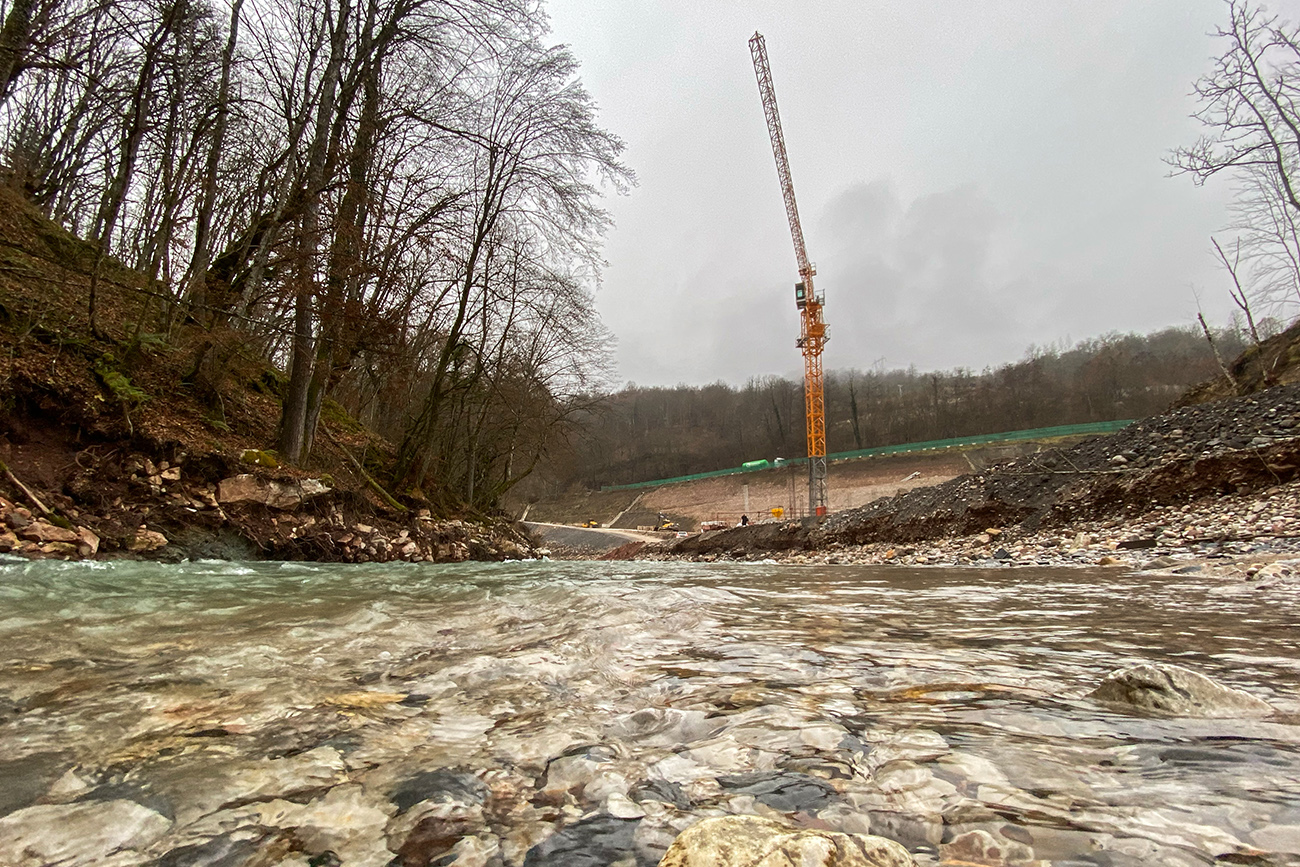
After the project was taken over, a ceremony was held on the banks of the Bistrica River in December 2021, attended by representatives of the RS Government led by Prime Minister Višković. At the time, officials announced that construction of the hydropower plants on the river would be completed by the end of 2026, a deadline that now appears unlikely to be met.
“There are several disruptive factors affecting construction,” Pavlović said.
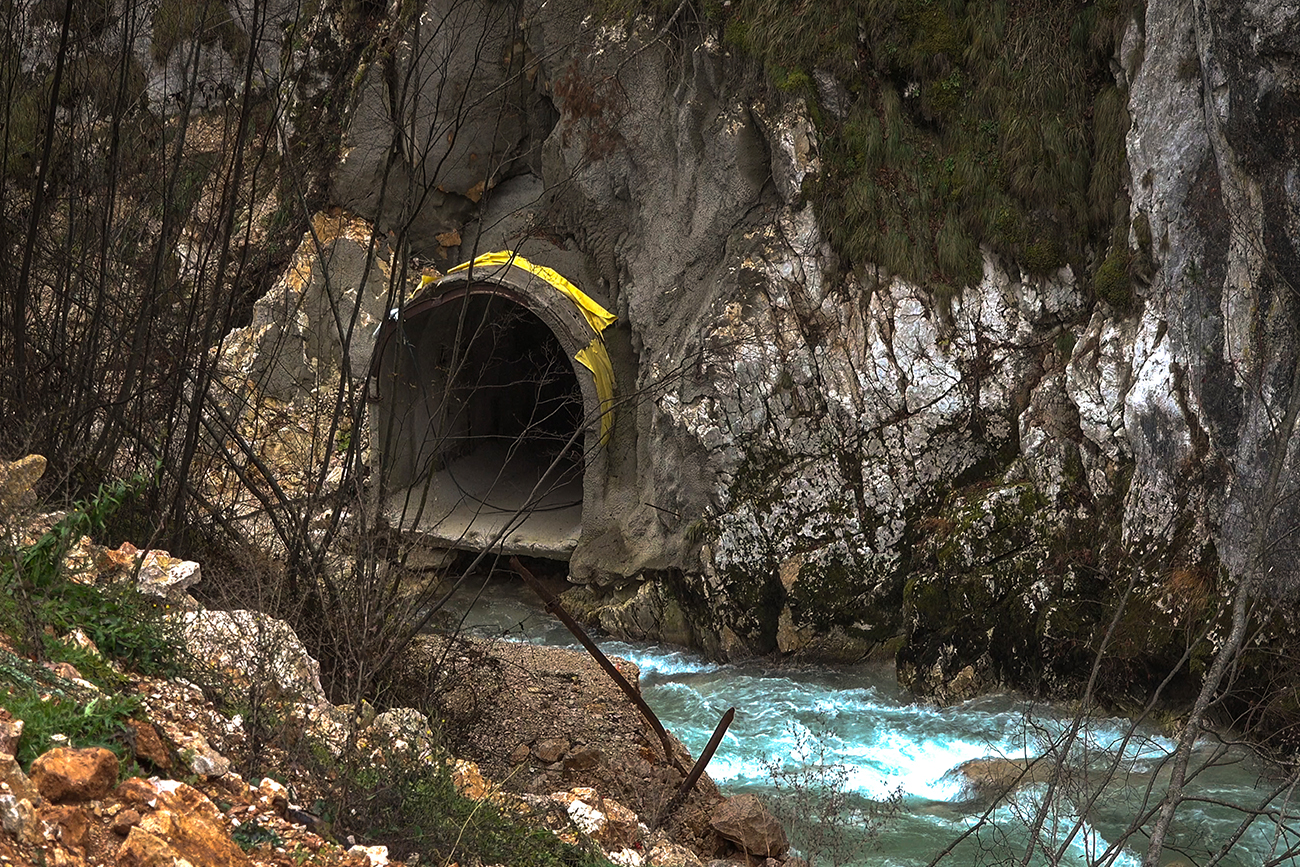
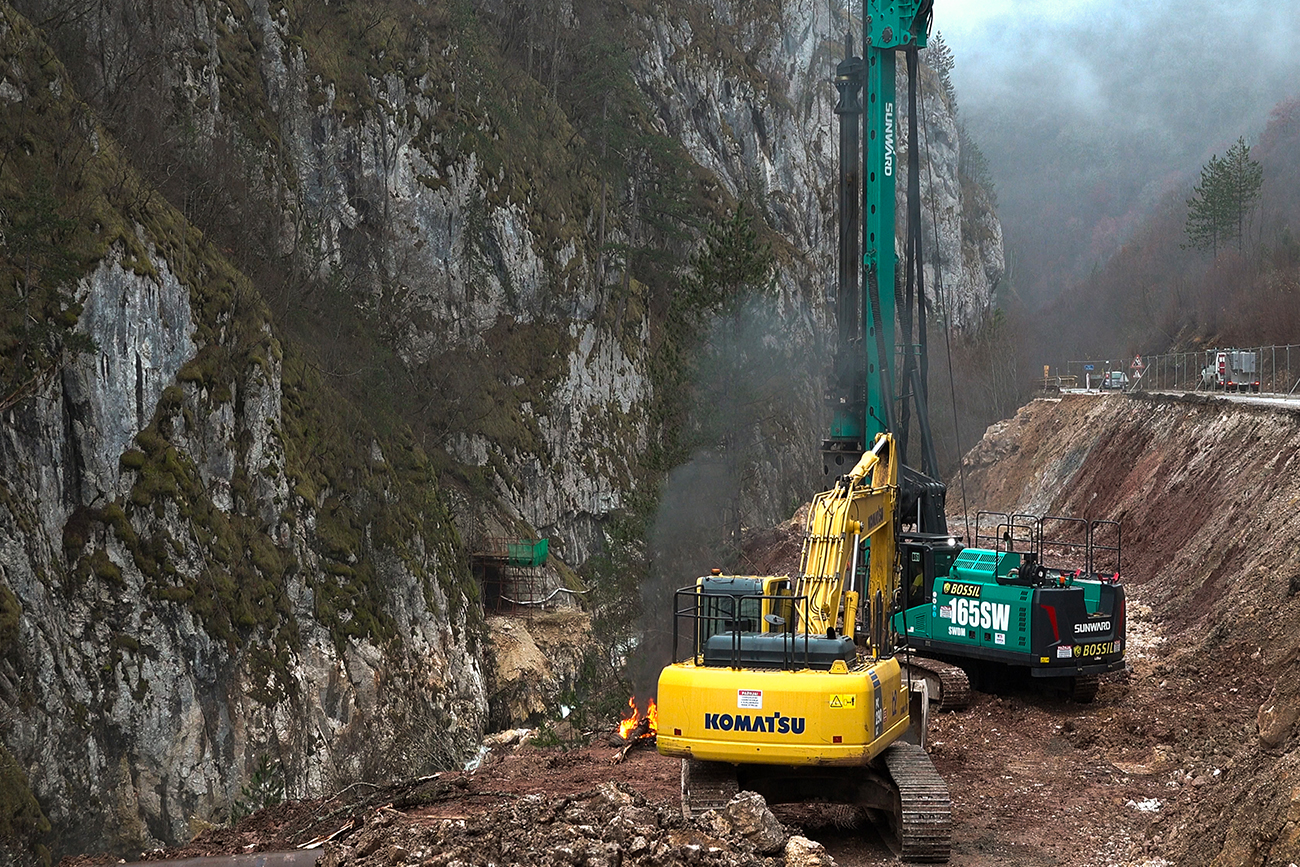
He explained that the company had inherited the necessary project documentation from the previous concessionaire but had to reapply for environmental permits. Of the construction works already carried out, only access roads had been completed. Since then, the company has built around ten kilometres of tunnels and begun work on the dam and powerhouse for the Bistrica B-1 HPP, where construction has since stalled.
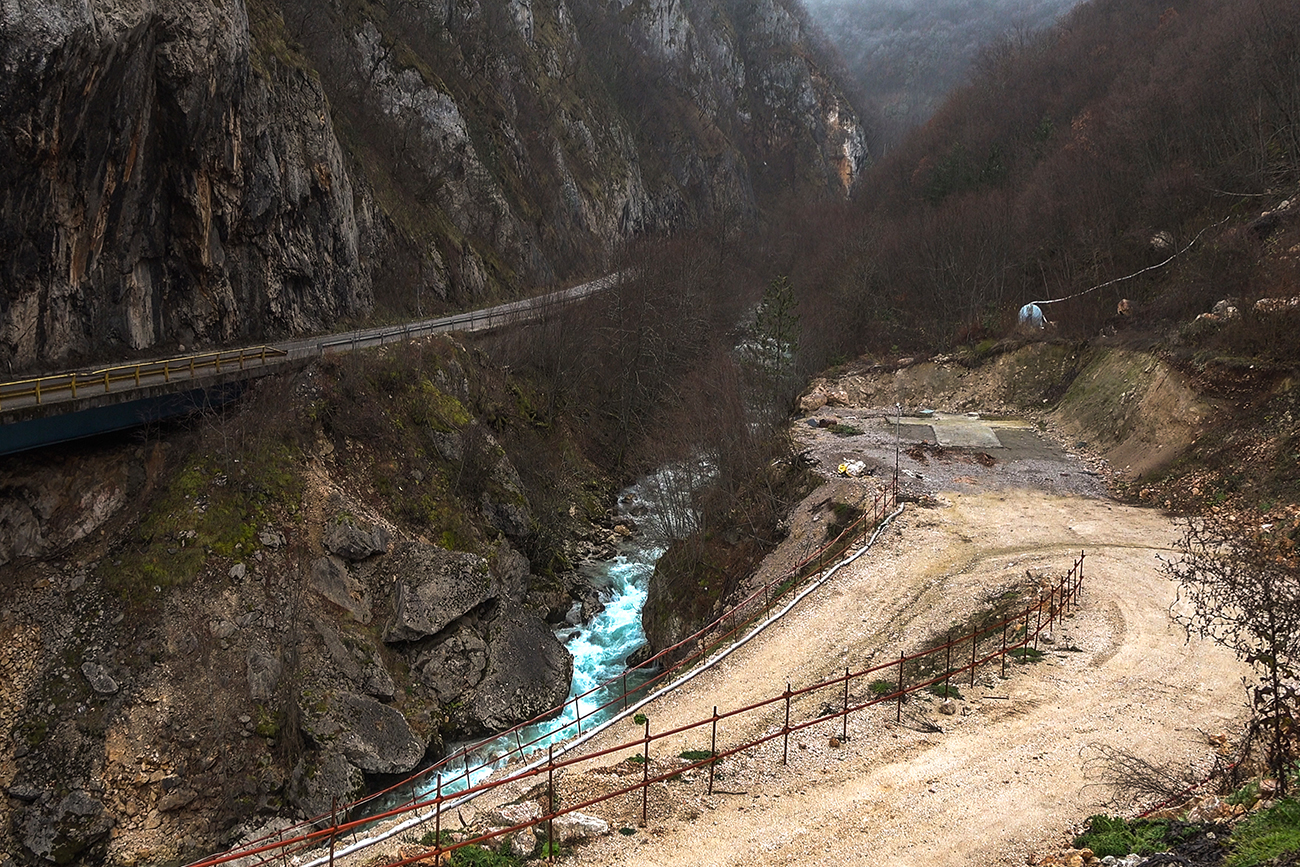
“We have a landslide that threatens the project, along with another 18 smaller landslides at these locations. However, one in particular, at B-2a, jeopardises the entire project. That is where the dam is supposed to be built, and no work can proceed there until the landslide is stabilised,” Pavlović said.
Traffic towards Foča has been closed following a major landslide in February 2026, forcing drivers to use alternative routes. However, the concessionaire rejects claims that the construction of the hydropower plant triggered the landslides.
Perišić, director of the Višegrad na Drini HPP, says he has personally witnessed the ground along that stretch gradually giving way for years. Nevertheless, he adds that the cause will be investigated.
“Whoever contributed to triggering the landslide, whoever that may be, will have to remedy it. If the contractors are responsible, they will have to carry out the repairs. If the decisions from the Bistrica HPP are responsible, then they will have to fix it,” Perišić said.
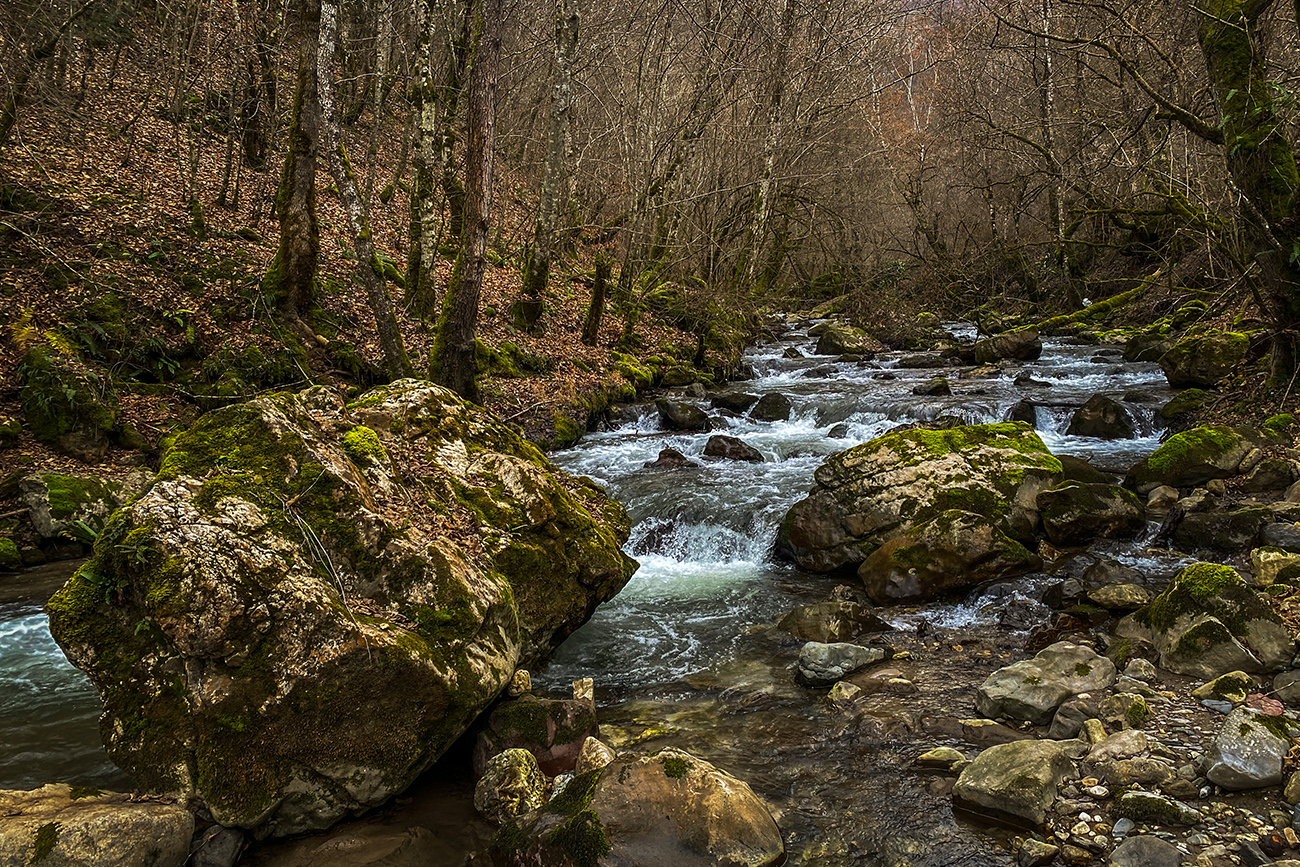
No construction work is currently taking place on the Janjina River. The environmental impact assessment required for the planned hydropower plant on the river has been overturned, effectively halting the project.
“The project still interests us. Our initial plan was simply to build these three plants first, and then move on to Janjina at a later stage, once the necessary conditions are in place,” said Pavlović, director of the Bistrica HPP, adding that the concession agreement will not be terminated.
Although the concession agreements and the valuation of the Bistrica HPP project state that building four hydropower plants would cost between 106 million and 120 million BAM, Pavlović claims that the three plants on the Bistrica River alone will require twice that amount. He says labour and material costs have risen significantly.
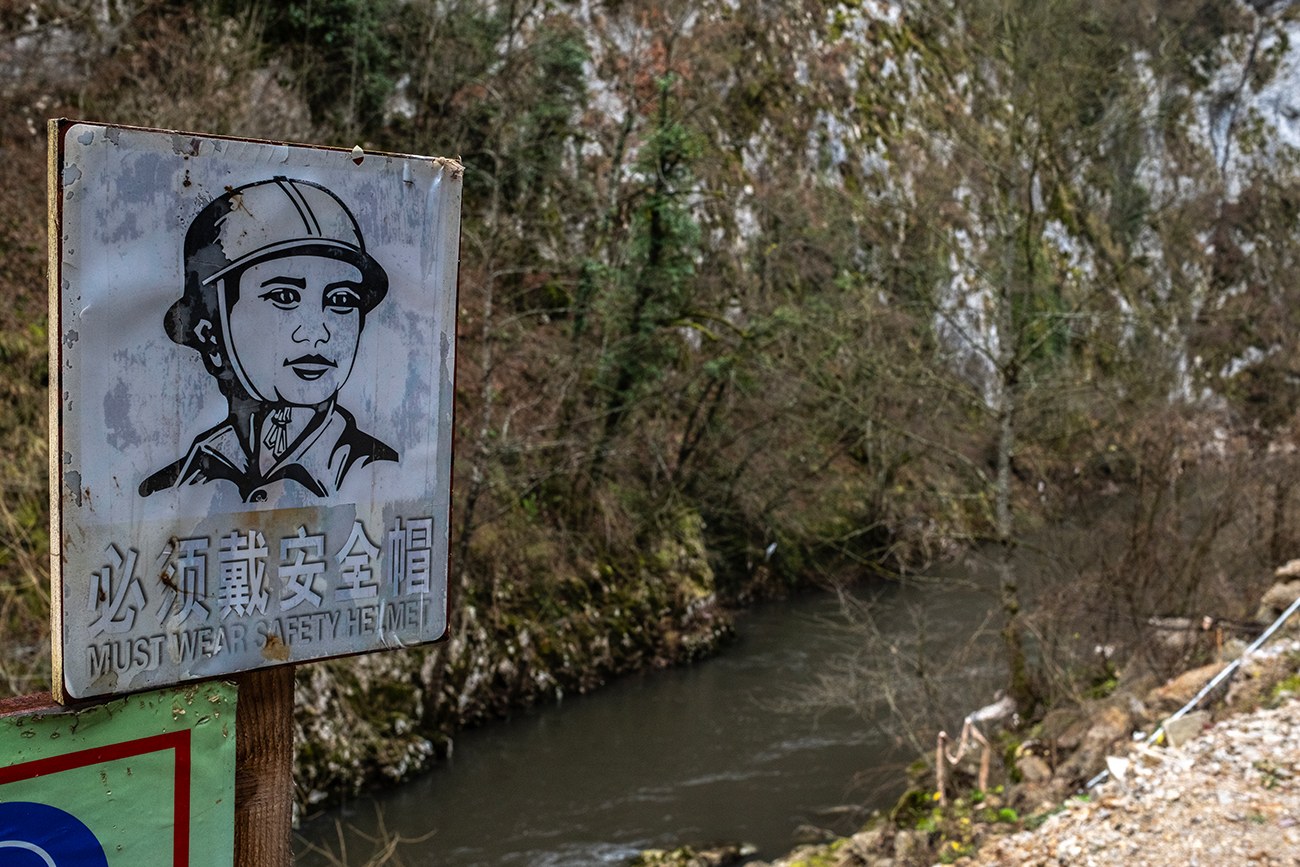
In December 2019, the then Prime Minister, Višković, signed a contract worth 200.4 million BAM for the construction of three hydropower plants on the river with the Chinese aviation industry corporation China National Aero-Technology International Engineering Corporation.
A smaller share of the funding was to be provided by Elektroprivreda RS, while the larger portion, i.e., 146 million BAM, was planned to come from a loan signed in December 2024 with the Export-Import Bank of China (CEXIM). The loan was agreed for a 15-year period with an annual interest rate of 2.4 per cent.
The repayment period for the loan almost coincides with the duration of the concession agreements. The concession for the construction and operation of the hydropower plants on the Bistrica River expires in 17 years, while the concession for the planned plant on the Janjina River runs out in 15 years.
Nevertheless, Pavlović insisted in an interview that the hydropower plants will be profitable and that, if necessary, the concession period could be extended to up to 50 years.
“Once the plants are connected to the grid, all of this will be behind us, and in the end, everyone will have some sense of satisfaction,” Pavlović said.