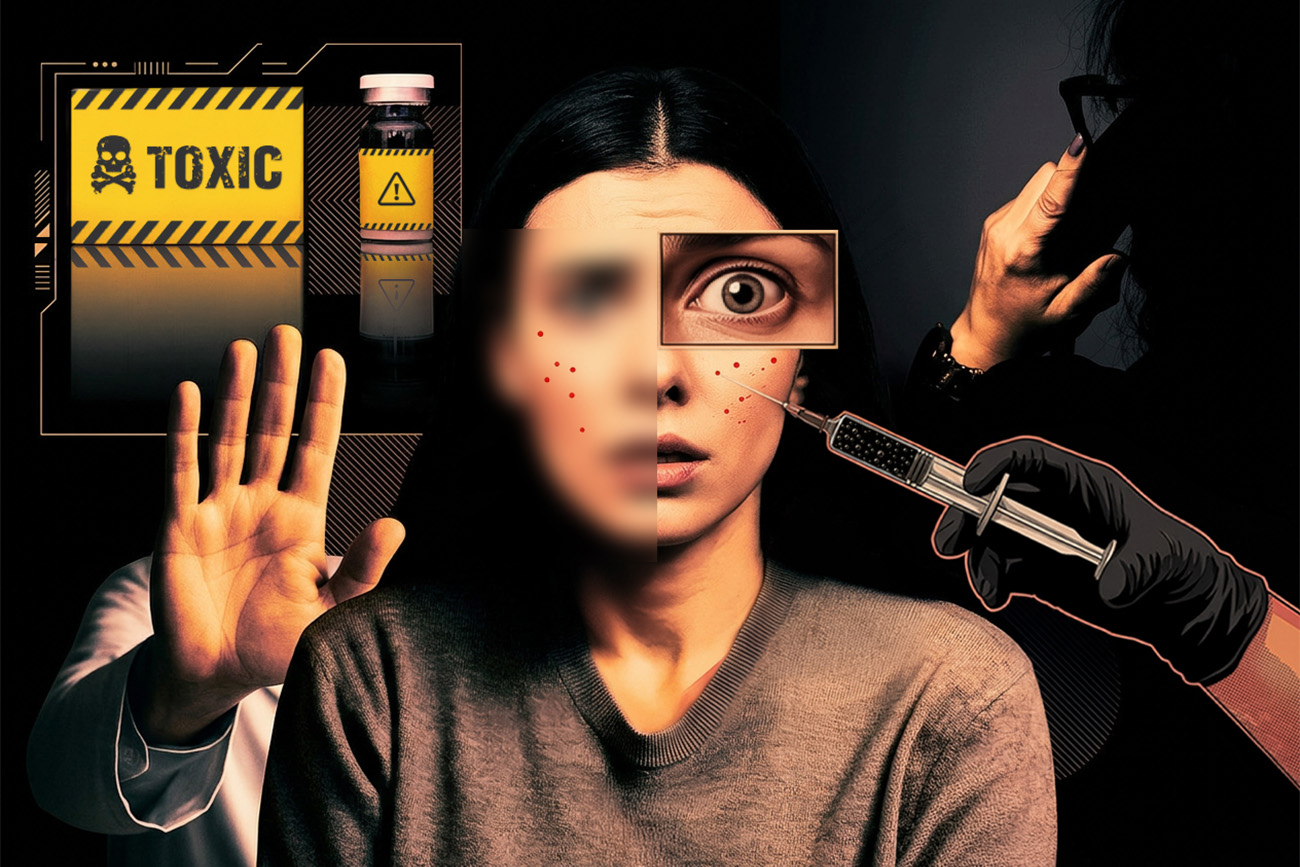


“Don’t look at me, you’ll freak out!” screamed 47-year-old Azra when she caught sight of herself in the mirror. Her face had swollen beyond recognition, her eyes sealed shut. She forced her eyelids open with her fingers, desperate to see.
“C’mon, turn around. Turn around! What’s happening?” her family members cried out in panic.
“I turned… utter shock,” Azra recalls of the nightmare she endured following cosmetic treatments for under-eye circles and wrinkles in the summer of 2024. The procedures were carried out by Dr Ismail Siručić, a dentist and maxillofacial surgeon from Sarajevo.
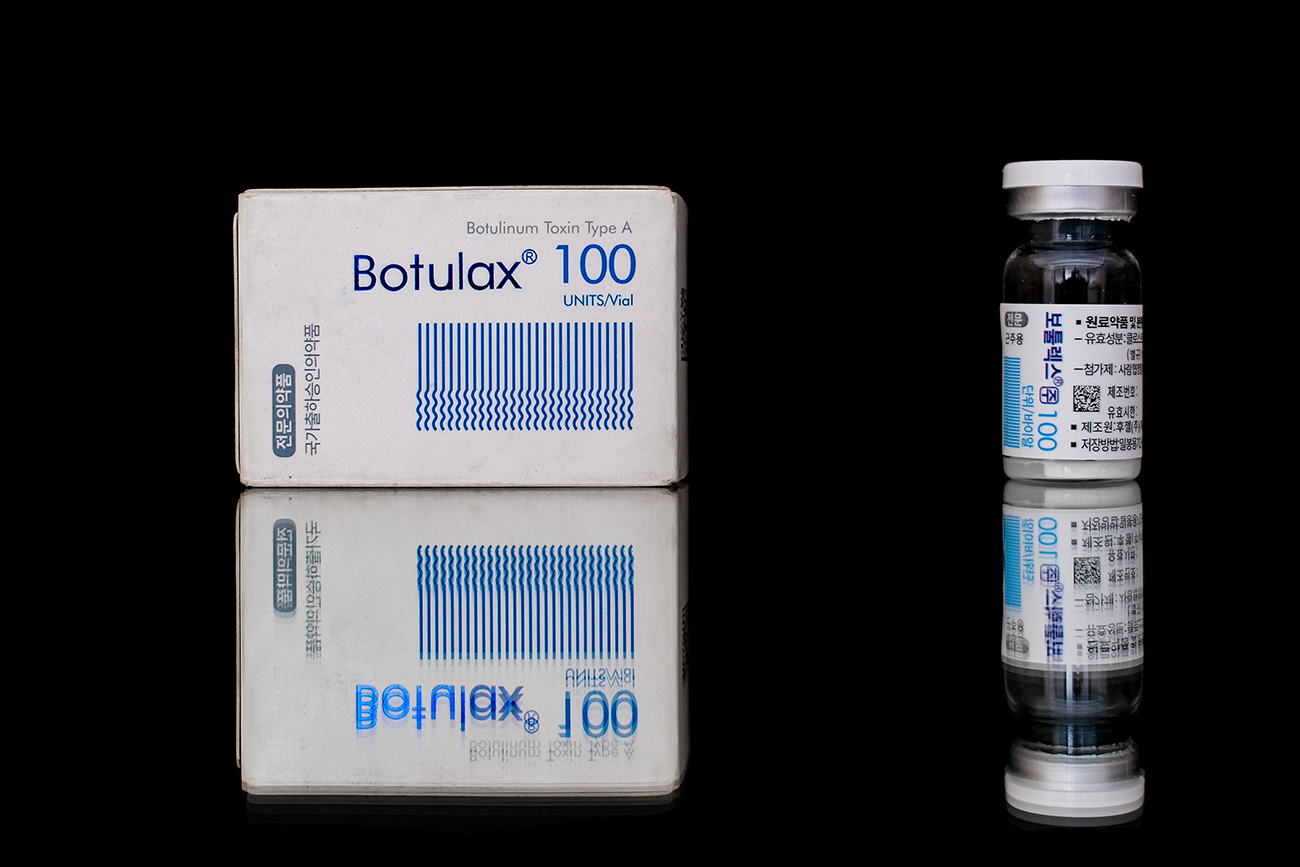
A few days later, she ended up in the ER with severe facial deformation. At the time of treatment, the doctor did not disclose which substances had been injected. For years, he has been using the botulinum toxin “Botulax,” a product not approved for use by the Agency for Medicines and Medical Devices of Bosnia and Herzegovina (BiH).
Azra was also unaware that Dr Siručić was not licensed to perform aesthetic procedures. Trusting in his knowledge and professionalism, she did not raise questions—even when no receipt was issued after she paid for the treatment at his private dental practice.
The Bosnian market is awash with unregistered, illegally imported products for cosmetic procedures. Various botulinum toxins, dermal fillers, and serums can be easily ordered online. They are used not only by doctors, but also by hairdressers and beauticians, who carry out treatments at low prices in unlicensed private practices, poorly equipped beauty salons, and even private flats. Some providers also offer quick half-hour training sessions on live patient models, who, in return, receive a cheaper procedure, while trainees walk away with highly questionable certificates.
“The combination of their ignorance and greed is shocking—and lethal for patients. It is a crime,” says Dr Amela Karabeg, a specialist in plastic, reconstructive, and aesthetic surgery.
Despite this, inspections rarely monitor such businesses, citing a lack of inspectors and too few citizen complaints on which to act.
Today, Azra rarely goes out alone, struggles with sleep, and finds it hard to accept her reflection in the mirror. She agreed to share her story with the public on the condition that her identity be protected.
Pierce the Swelling with a Needle
Before undergoing the procedures, Azra searched online for information about cosmetic treatments. Feeling she looked tired, she wanted to restore freshness to her face. That is how she came across Dr Ismail Siručić, who was offering aesthetic treatments. She read his biography, looked through photographs of previous patients, and decided to contact him.
Her first Botox treatment was scheduled for May 2024 at his private dental practice in Sarajevo. At the time, Dr Siručić did not have permission from his employer, the Sarajevo Canton Health Centre, to take on additional work. Although he is a maxillofacial surgeon, he also lacked authorisation from the Sarajevo Canton Ministry of Health to perform injectable aesthetic procedures—something he never disclosed to Azra. By July, they had scheduled an under-eye correction, followed by another treatment in August. Within three months, Azra underwent three treatments with different substances. She later learned from the doctor that he had injected Botox into three areas of her face, along with Radiant fillers and Dermaheal Dark Circle Solution revitalising serum.
She recalls paying around 1,500 BAM for the three procedures with Dr Siručić. She never saw a price list—neither online nor at his practice—and was not issued receipts.
According to Dr Musfaha Burgić, owner of the Centre for Aesthetic Medicine and Aesthetic Surgery in Tuzla, patients should leave a clinic with a medical record detailing all procedures performed, each product used with its sticker and serial number, the injected quantity, and expiry date. Patients should also be informed of everything in advance, and before any intervention, they should sign a consent form outlining possible complications.
“If you want to work transparently with your patients, you must understand that this is a document that protects the patient from the doctor—but also protects doctors against their patients. Before any surgical treatment, before injecting fillers, Botox, or any other procedure, in my practice, patients always sign a written consent for the procedure,” Dr Burgić explained.
Azra says she did not undergo such a procedure—she was not explained the process, nor did she sign anything—and admits that she did not ask about any of it herself: “Frankly, I didn’t ask. I went in trusting that the doctor knew what and how much to do. I don’t know how to explain it… I simply trusted the doctor.”
After the treatment, she travelled abroad to visit relatives. “One day I woke up and felt swelling under my left eye, which was casting a shadow over my eye,” Azra recalls, describing the terrifying fear she felt at that moment.

Because Dr Siručić didn’t provide her with a record of the treatments, the doctors in the ER could do little to help, as they didn’t know what substances had been injected. Creams for the swelling and allergy medication had no effect. Her face continued to swell, so she visited a dermatologist, who prescribed antibiotics and corticosteroids and recommended a consultation with a maxillofacial surgeon. The cost of exams and medication quickly ballooned to 4,000 BAM.
“On the third day, as the corticosteroid treatment was tapered, I felt the swelling returning—and it had taken over my entire face,” Azra recalls.
Following the doctor’s advice, she stopped the corticosteroids and started a new course of antibiotics, but her condition worsened.
“That evening, I felt my face starting to deform, taking on shapes I no longer recognised… I didn’t dare to sleep,” she remembers, tears in her eyes. “I thought—here I am abroad, part of my family is nearby… I could die. I’d traumatise them.”
Her family was shocked when they saw her the next morning. “That’s when I saw a fear in someone I perhaps love more than anyone else in the world—a fear I had never seen before. That fear broke me,” she says.
She then texted Dr Siručić. She said that at first, he had suspected an allergy to dust, powder, or mascara and did not believe her problems were caused by the treatment.
He had suggested that she apply cold compresses and asked whether other doctors were giving her corticosteroids.
“It needed to be drained—I’ve had cases like this… You should poke it a little with a sterile needle to drain it. It’s just swelling. Can you get a sterile needle?” Dr Siručić wrote, suggesting that Azra puncture the swelling herself to release the fluid.
Azra refused to do so. For several days, she sent the doctor photographs of her face, which worsened with each passing day: “We were in contact until I returned to Bosnia and handed everything over to my lawyer,” she says.
Dr Siručić did not speak to CIN, although he had said he would. When inspectors from the Cantonal Administration for Inspection Affairs of Sarajevo Canton checked his practice following Azra’s complaint, he told them that the patient had mentioned going to a tanning salon once, despite his warning not to, and that he could not know whether she had undergone aesthetic treatments elsewhere.
He also told the inspectors that the patient had “refused instructions to consult an appropriate doctor to address the complications, and only after a long period did she see a plastic surgeon,” according to the report from the Cantonal Inspection.
Upon returning to Sarajevo, Azra sought help from Dr Amela Karabeg at Polyclinic Karabeg.
“The images I have are dramatic. Her face is disfigured, her head appears twice its normal size, her eyes are completely obscured, with severe bruising and some unidentified masses under the skin,” Dr Karabeg said, adding that it was one of the most serious cases she had seen.
She noted that other patients often come to her for care after cosmetic procedures, especially injections performed in beauty salons. In the most severe cases, patients experience vision problems, vomiting, severe headaches, neck pain, instability, and, in extreme situations, even respiratory failure.
“This is the outcome of administering unregistered, inappropriate neurotoxins,” Dr Karabeg said.
The team at Naša Mala Klinika has had similar experiences. Specialist in plastic and reconstructive surgery, Dr Alemko Čvorak, explained that it is difficult to treat complications resulting from another practitioner’s work. “Patients came in after receiving Botox and developed necrosis, meaning the surrounding tissue had died,” he said.
Some patients were also referred to the Clinic for Reconstructive and Plastic Surgery at the Clinical Centre of the University of Sarajevo.
“Our job is to get the patient out of that situation. Whether they take legal action is up to them,” said the clinic’s head and professor at the Faculty of Medicine in Sarajevo, Sanela Salihagić.

Online Drugs, Fast-Track Training, and Negligence
Botox, “Botulax,” and other similar substances can be easily purchased online, despite being unregistered. Some of the advertisements also promoted short training sessions on Botox injections, where participants could receive a certificate. One such profile was “preparati2025.”
CIN journalists, posing as prospective clients, arranged to collect the potent neurotoxin and attend a half-hour training session after a few messages and a brief conversation with the advertiser, Boris Ilić. He asked for 200 BAM for the Botox and 500 BAM for the training, adding that a certificate would cost another 500 BAM. Later that same day, a Facebook post appeared inviting clients to act as models for the scheduled “training” session, offering a discount on the treatment as an incentive.
In January 2025, CIN journalists travelled to Doboj as arranged. Boris Ilić and Sanela Stanojević met them at a small “Beauty Studio SS” on Vidovdanska Street, introducing themselves only by their first names.
The cramped space was divided by a screen into a waiting area and a room containing a cosmetic table, a small fridge, and shelves stocked with products. Around ten framed certificates from beauty salons and centres hung on the wall, attesting to Sanela’s training—but none were from recognised educational institutions.
In the dusty, non-sterile room, Stanojević conducted a half-hour training session, demonstrating the Botox injection process on a client model. She pointed with her finger, explaining the three facial zones, and warned the trainee not to inject the lower part of the face, cautioning that it could cause the lip to droop, “like a stroke,” resulting in a “catastrophe.” Speaking with a slight smile, she filled the syringe to the brim with unregistered Botulax, encouraging the trainee to overcome her fear. She injected the contents into the client’s face in a few punctures, concluding that it was easy—just hold the needle straight and poke.
At no point did she inform the client that she was injecting unregistered Botox. Thanks to a discount for acting as a demonstration model, the procedure cost 150 BAM, three to four times cheaper than in licensed clinics.

At Ilić’s request, trainees were required to sign a statement waiving any right to hold the instructors liable “in case anything happens,” as they claimed they could not be held liable for others’ unprofessional work. Despite this, they encouraged participants to perform the treatments on others at home or in salons. They highlighted the potential for good earnings and even offered a form of collaboration: for five to six clients a day, they would travel to Sarajevo to perform the procedures, earning 250 BAM per facial zone—three zones per client—allowing them to recoup their time and expenses with just one client.
Ilić presented both himself and Stanojević as dentists, but the Dental Chamber of Republika Srpska confirmed that neither is registered.
Under regulations across Bosnia and Herzegovina, Botox and hyaluronic filler injections may only be performed in licensed medical practices by specialists in plastic, aesthetic, or reconstructive surgery; dermatovenerology; maxillofacial or ophthalmic surgery; or subspecialists in plastic surgery.
Sanela Stanojević is employed in the Doboj City Administration in the Department for Strategic Planning, European Integration, and Local Economic Development, yet during working hours, she was standing with a needle in hand, conducting a half-hour training session on facial Botox injections, despite having no authorisation to do so.
Ilić is registered as a sole trader in the “Espresso Shop B” business in Doboj.
Neither of them issued a receipt for the 850 BAM they earned in just half an hour, nor did they provide any declaration about the substance they were selling.

In addition to “Botulax,” Ilić’s offerings included two other unregistered drugs—“Botox” and “Nabota.” He is discreet about his suppliers and customers, but claims to have an established network of salons to which he ships the drug by post, with some clinics reportedly ordering up to 50 boxes at a time.
Botox must be transported and stored according to strict “cold chain” rules to remain effective and safe for use. Vistabel, the only registered Botox in Bosnia and Herzegovina, is kept at temperatures between 2 and 8°C. Ilić, however, said that “Botulax” could be transported in the trunk of a car from Doboj to Sarajevo because the weather is cold, and then placed in a fridge. He claims there is no danger in using it if injected correctly and if the person is not allergic to penicillin.
“Botox, like fillers, must be stored under special conditions. If it is transported incorrectly, it can cause serious complications—especially if it is a cheap product from an unverified source,” said Dr Reuf Karabeg, president of the Association of Plastic, Reconstructive, and Aesthetic Surgeons in BiH.
After a CIN journalist confronted him about the investigation, Boris Ilić refused to speak, threatening to sue if he was mentioned in the report. Afterwards, he removed the advertisements for Botox sales and training sessions from online platforms and social media.
The beauty salon has since moved to a larger space, and Sanela Stanojević continues to promote Botox and filler services online.
Unlike her, many salons do not publicly advertise their offerings, relying instead on a chain of personal patient recommendations, with appointments mostly arranged via social media.
CIN journalists contacted more than 20 beauty and hair salons, as well as dentists, offering illegal treatments. Most cut off communication or postponed conversations as soon as the word “journalist” was mentioned, and many failed to respond to follow-up attempts.

Caption: (Photo: Dženat Dreković / CIN)
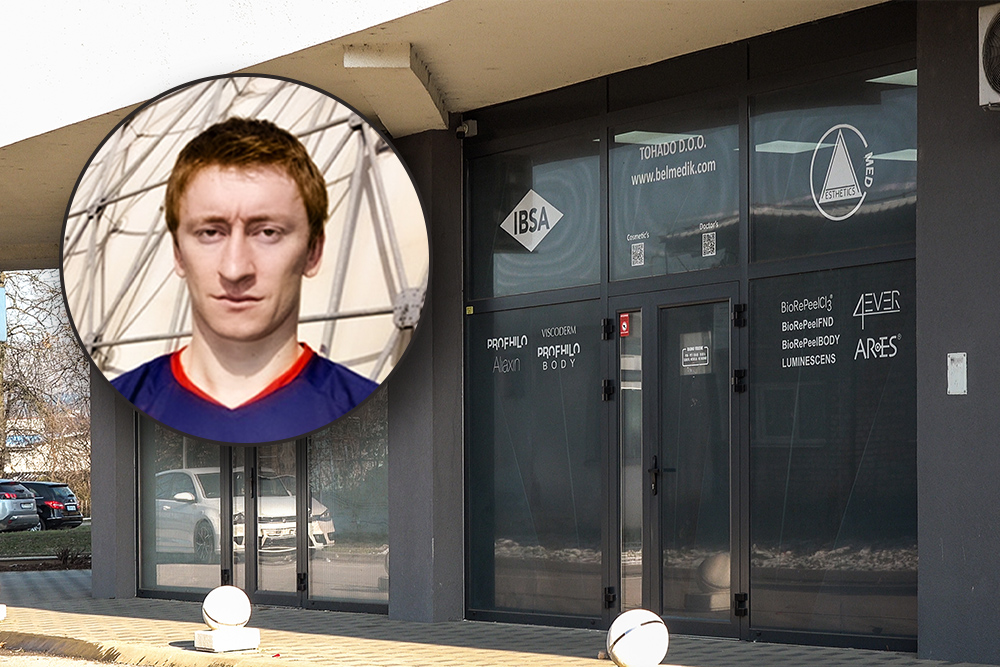
The Banja Luka-based company “Tohado” is a wholesaler of medical products in BiH, and CIN sources mentioned it as one of the main suppliers of unregistered products for aesthetic treatments. Co-owner Milan Torbica offered to supply everything needed for a cosmetics studio to a CIN journalist posing as an interested entrepreneur, including Nabota Botox, assuring her that all products were registered.
The Agency for Medicines and Medical Devices, however, confirms that Nabota is not on the list of registered drugs.
At the end of 2022, the Agency temporarily banned Tohado from wholesale operations at its then-address. The company relocated two months later, and inspectors confirmed that the new premises met all operational requirements. Similar outcomes occurred after several other inspections prompted by reports of illegal medical product sales, though the agency says it only ever found “discrepancies,” which the company quickly corrected.
Despite repeated promises, Torbica refused to speak to CIN about his business.
In early 2025, the Banja Luka District Public Prosecutor’s Office opened a case against Torbica and Tohado based on a report from the State Investigation and Protection Agency (SIPA) regarding the illegal trade of medical products.
The Agency for Medicines and Medical Devices of Bosnia and Herzegovina says it has no information about unregistered Botox and fillers on the BiH market, and that no adverse reactions to these products have been reported.
“Through legal drug and medical device distribution channels, unregistered products of this type should not be available, as they are imported only with registration certificates issued by our Agency,” they wrote in response to CIN, adding that drugs present on the BiH market without approval have arrived illegally. “Their quality, efficacy, and safety are unverified, and they may pose a risk to public health.”
Under state law, companies can be fined up to 100,000 BAM for marketing drugs without Agency approval.
The Agency has no information that Botulex is used in BiH, but no one responded to CIN journalists’ requests to speak on camera about the issue.
In the registration process, a pharmaceutical company or authorised representative applies for market authorisation. Experts then assess the proposed drug’s quality, efficacy, and safety. After a positive evaluation, the drug receives a five-year licence.
For the legal purchase and use of Botox and fillers, a contract with an authorised pharmacy or wholesale distributor is required, explains Dr Musfaha Burgić. All products are delivered with the appropriate documentation and receipts.
Botulinum toxin type A is a drug and a neurotoxin that temporarily blocks nerve impulses to muscles, causing them to relax and reducing the appearance of wrinkles. It is also used to treat migraines, strabismus, muscle spasms, and excessive sweating.
Unlike Botox, fillers are not drugs but medical devices. Most are based on hyaluronic acid, which binds water and restores volume and elasticity to the skin. Fillers are used to fill deep wrinkles, enhance lips, and shape facial contours. They work mechanically, filling the space beneath the skin without affecting muscles or nerve endings.
A Ban in Name Only
CIN journalists spoke with several patients who had negative experiences with aesthetic treatments, but none—apart from Azra—were willing to speak publicly. They felt insecure, frightened, and distrustful of the public and authorities, and so did not report their cases.
When inspectors visited Dr Ismail Siručić’s practice following Azra’s complaint, they were unable to locate the space where he carried out aesthetic treatments. As a result, they did not inspect the practice. Their report makes no mention of Botox, and regarding the serum, they determined it was not under their jurisdiction, as Dr Siručić had told them it was not a drug but a “cosmetic product.”
He was prohibited from administering Botox and fillers and from advertising these services on social media until the identified irregularities were corrected.
Yet, three months later, while the ban was still in effect, CIN journalists were able to easily book an appointment for wrinkle correction with Dr Siručić. His Instagram page still displayed his phone number alongside advertisements for Botox and filler services.
Open and responsive in communication, he explained that he operates from the premises of Plava Poliklinika in Sarajevo, and when asked, openly confirmed that he had been using Botulax for years.
The building’s entrance and the doors of Plava Poliklinika were opened by Dr Siručić and his wife, Sabina Siručić. The appointment was scheduled for 6 p.m., an hour after the Polyclinic’s official closing time, and it appeared that no one else was in the premises besides the couple. Dr Siručić was initially ready to see the patient for Botox. However, when he realised he was speaking with journalists, his story changed. Formal and reserved, he claimed that no Botox appointment had been scheduled and that he was only there to talk, insisting that the inspectors had not prohibited him from giving interviews.
Journalists reminded him that the treatment had been clearly arranged via messages. He responded that he could schedule an appointment, but that he did not perform aesthetic procedures. When asked why he used Botulax, he insisted that none of the products were “unregistered” and, panicked and flustered, tried to explain that journalists could only claim he performed treatments if they saw him holding a needle.
Dr Siručić refused to speak officially on camera with CIN journalists and did not respond to later inquiries. He summed up the encounter by saying that journalists could report whatever they wanted, but as far as he was concerned, they had not found him at Plava Poliklinika.
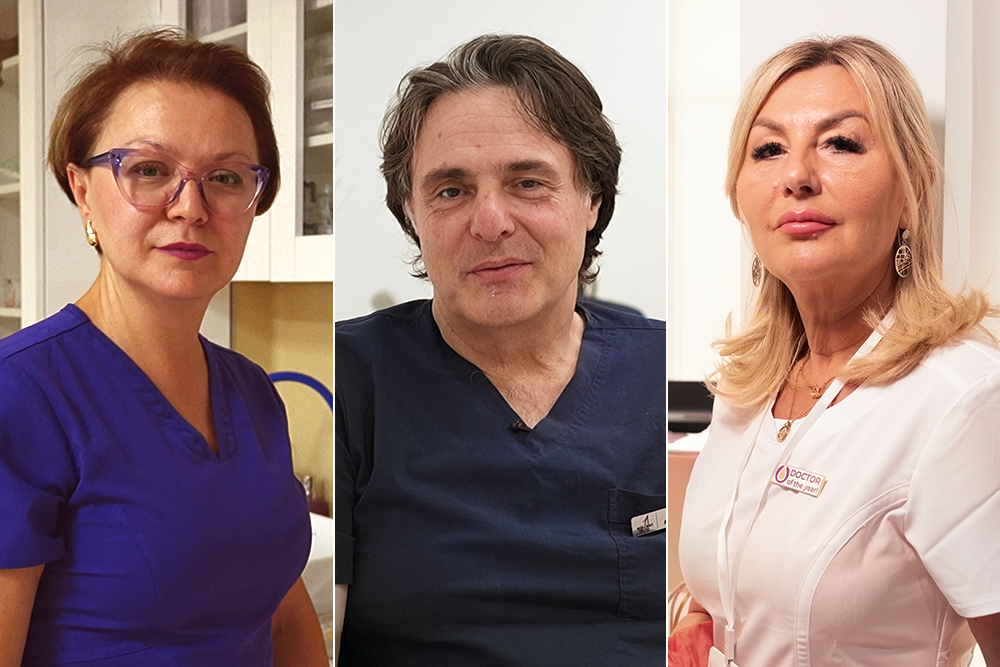
The owners of Plava Poliklinika, Dr Džemil and Dr Senada Hujdurović, also refused to speak on camera. Instead, Dr Ahmed Hujdurović responded via email:
“We hereby inform you that Dr Ismail Siručić is not an employee of our institution, nor is he engaged in any other capacity,” he wrote, explaining that they had only been in discussions about renting the space or the consulting room. “…(he) apparently scheduled consultations during the period when the space was made available for viewing in the presence of our nurse, of which we were informed, and which is one of the reasons why the rental agreement was never finalised.”
Oversight of the beauty market is almost non-existent, with inspectors citing a shortage of health inspectors and the fact that they do not act without citizen complaints.
In Republika Srpska, inspectors did not find a single illegal Botox or filler service over two years.
In 2023 and 2024, inspectors in the Sarajevo Canton issued work bans for four entities that did not have authorisation from the relevant Ministry. In one beauty salon, inspectors found fillers and phials of lidocaine and adrenaline intended for anaesthesia. The salon was fined 10,000 BAM.
In the Tuzla Canton, two salons were fined and banned from operating for over four years for carrying out unregistered medical activities.
In other cantons, salons and clinics were not inspected.
Lawyer Sanela Gorčić believes the problem lies in the sluggishness of the inspection system, insufficient training of inspectors, the lack of citizen reports, and the possibility of reduced fines. As a result, some individuals and salons simply continue to operate.
“Such individuals should be recorded and listed in a registry,” Gorčić says.
She characterises the findings of CIN’s investigation as organised crime: “In my view, this clearly amounts to organised crime, as there is a known network among these individuals for buying, distributing, importing, and selling these products. Whether every person identified within this network will be formally classified as a member of an organised group is up to the prosecutor when preparing the indictment,” Gorčić explains.