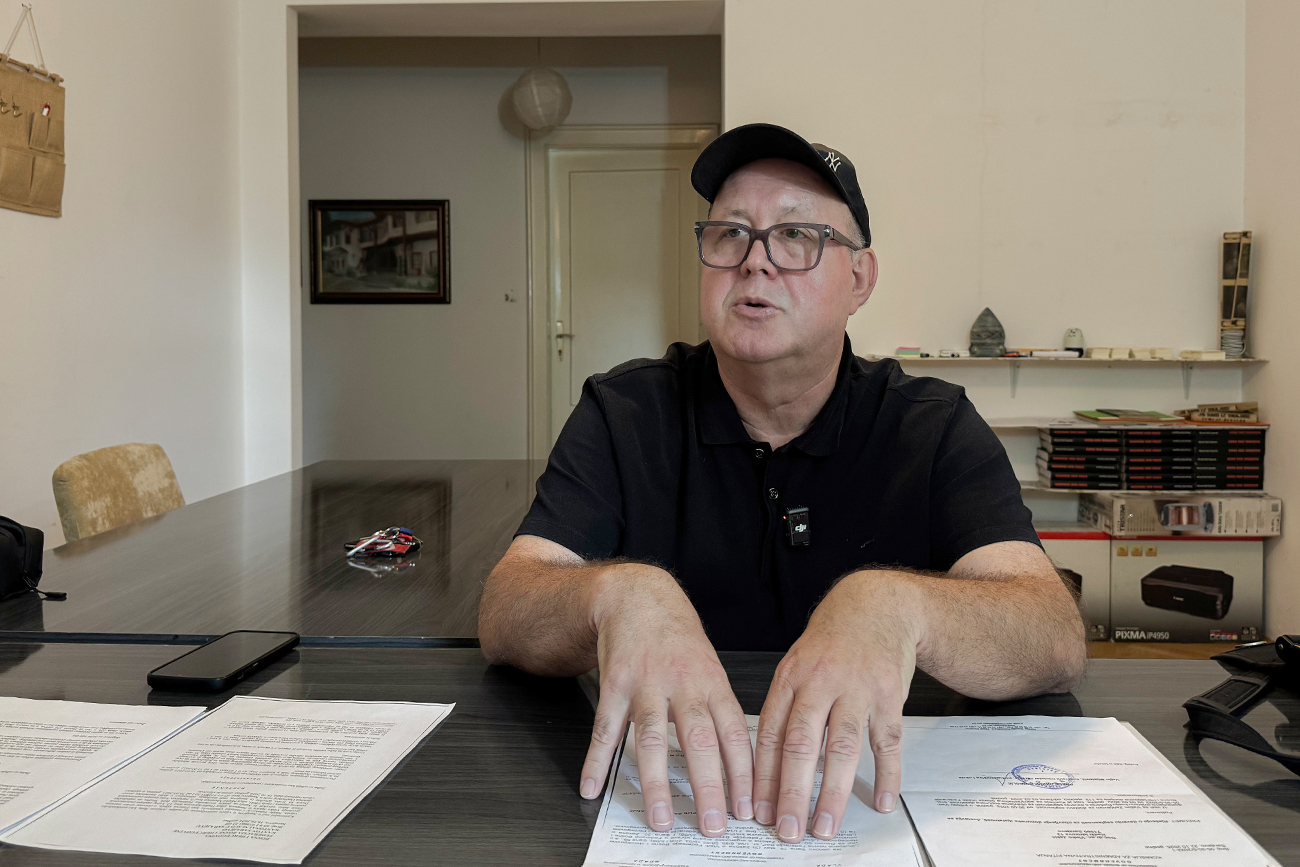
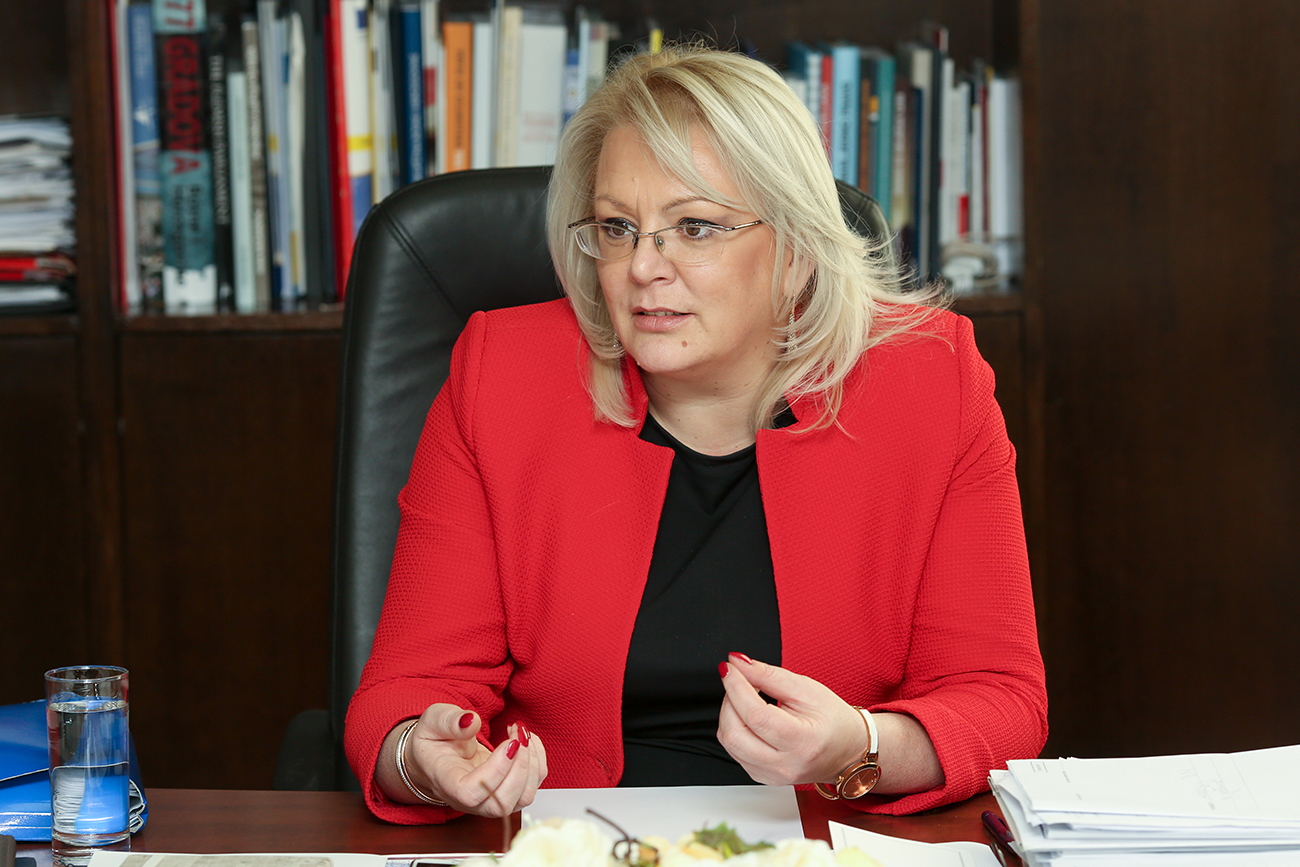
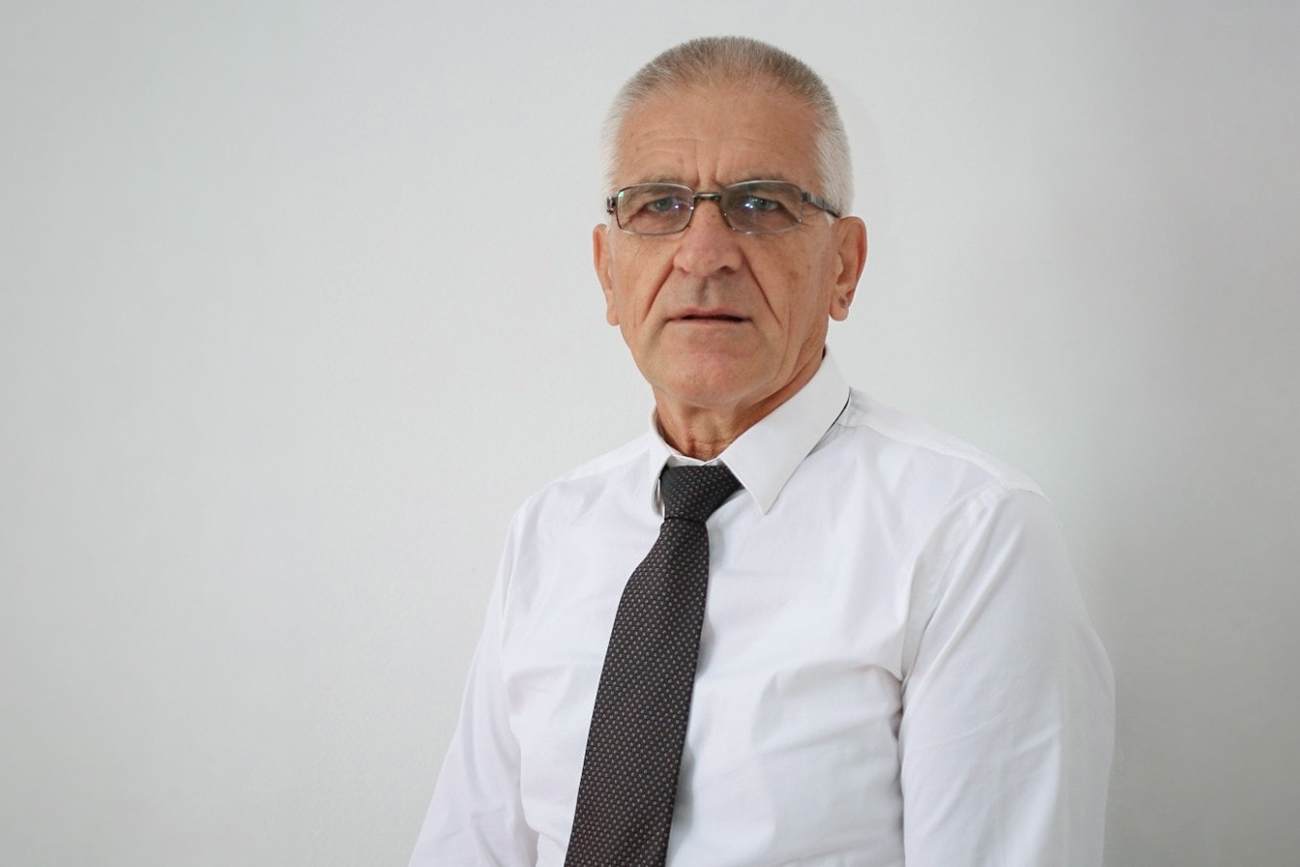
Alija Hadžiabdić, the former mayor of Olovo, served just half of a two-year prison sentence handed down for abuse of office. He secured early release thanks to a pardon granted in July 2025 by Lidija Bradara, President of the Federation of Bosnia and Herzegovina.
Now at liberty and living at home in retirement, Hadžiabdić has no wish to speak to the press. “Especially when I know I was wrongfully convicted,” he said tersely.
Alongside Hadžiabdić, six other individuals convicted in Bosnia and Herzegovina were pardoned in 2025. Their offences ranged from tax evasion and drug trafficking to document forgery, domestic violence, illegal logging, and a fatal road traffic accident. They were granted release, had their sentences reduced, or had their convictions wiped from the record.
In the same year, clemency petitions from at least 44 applicants were rejected. They may reapply after six months, a year, or three years, depending on the length of the sentence imposed.
Under the law, pardons may be granted by: the Presidency of Bosnia and Herzegovina, the presidents of the Federation of Bosnia and Herzegovina and Republika Srpska, as well as the Mayor of the Brčko District.
Clemency decisions are published in the official gazettes, but the reasons behind them—whether granted or denied—are not disclosed. There is no cap on the number of pardons that can be issued, although those convicted of the most serious offences, such as war crimes or terrorism, are ineligible.
Three convictions for Hadžiabdić
Hadžiabdić was convicted in 2021 by the Municipal Court in Zavidovići for hiring 75 people without a public recruitment process while serving as director of the public forestry company of Zenica-Doboj Canton (Šumsko-privredno društvo ZDK d.o.o. Zavidovići), a post he took up after his mayoral term ended.
Among those hired was the son of the head of the cantonal forestry administration, the very body responsible for overseeing the company.
The court found that recruits were taken on without any assessment of competence, relevant qualifications, or work experience. The appointments were justified as urgent, ostensibly to meet operational targets. During the trial, the defence sought to shift responsibility onto the company’s management board as a collective body, but the court dismissed the argument.
Of the 24-month sentence imposed, Hadžiabdić served 13 months in Tuzla prison. The remainder was commuted to a suspended sentence by President Bradara in a pardon decision issued in July 2025.
“I don’t want to talk about it at all,” the 70-year-old told a reporter from the Centre for Investigative Reporting (CIN) in a brief telephone exchange. He maintains he was wrongfully convicted, adding that he is now retired and in poor health.
Bradara, for her part, declined to comment on the pardons.
An investigation by the Centre for Investigative Reporting (CIN) shows that Hadžiabdić received a custodial sentence only after a third criminal case for the same offence. Earlier convictions had resulted in suspended sentences, which failed to deter him from reoffending.
He was found guilty in 2015 and again in 2017 by the Municipal Court in Visoko for abuse of office while serving as mayor of Olovo.
In one instance, he promoted a municipal employee without issuing an internal vacancy notice or following due procedure; in another, he unlawfully dismissed members of the Olovo health centre’s management board. The dismissals came after the board refused to award an internal medicine residency to his cousin, instead selecting another candidate.
Throughout the proceedings, Hadžiabdić insisted he had done nothing unlawful, arguing he had acted in the public interest to resolve mounting problems at the Olovo health centre.
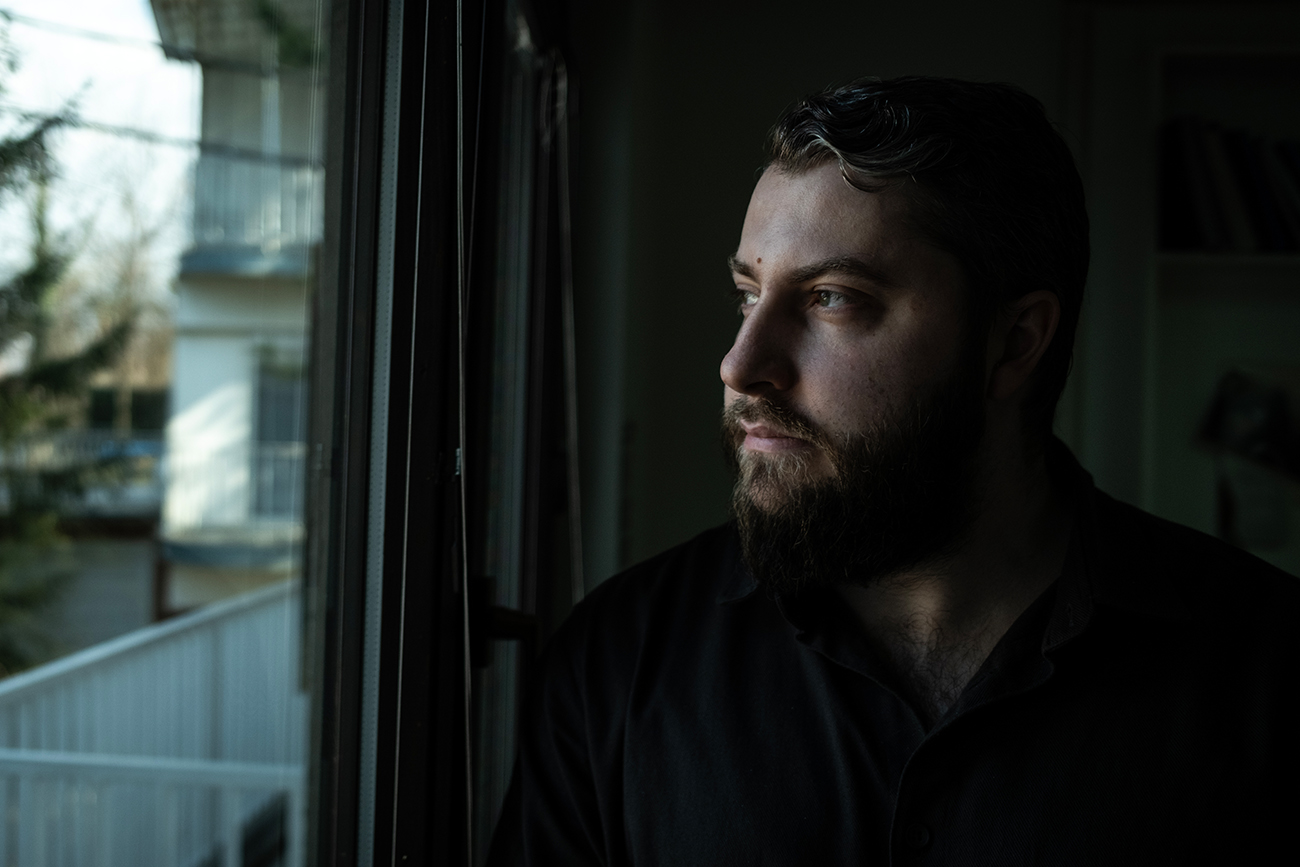
Bradara also reduced the prison sentence of Ahmed Kurdić, convicted over a fatal road traffic accident. He served 11 months instead of the 16 originally imposed.
The crash occurred in Zenica in the summer of 2018, when Kurdić was nearly twenty.
He was driving with his father in the early hours along a road where 75-year-old Kasim Pivić was transporting plums by bicycle, loaded in crates and bags. Contact occurred between the car and the bicycle, leaving Pivić with injuries from which he later died.
During the trial, all parties agreed Kurdić had been driving below the 50 km/h speed limit, but sharply conflicting accounts emerged over how the collision happened. Defence experts, supporting Kurdić and his father, argued that Pivić lost his balance under the weight of the load and fell beneath the car’s wheels. Prosecution experts, by contrast, maintained that the vehicle struck the cyclist while overtaking.
After years of proceedings and conflicting rulings, a final verdict was handed down by the Cantonal Court in Zenica, and in March 2024, Kurdić was sent to prison in Busovača.
Kurdić told CIN reporters that, upon arrival in prison, he was advised to submit a pardon request.
“There was an inmate who worked in the library and on the computers. He wrote those applications for pardons, parole, and so on. In the end, he told me the same thing. He was an older man who used to work for the interior ministry. He advised me to apply for a pardon. He told me it takes a long time, so it’s best to do it straight away, as soon as you arrive,” Kurdić recalled.
In his application, he said the incident had been an accident, that the trial had not been objective, and that he wanted to start a family and move on with his life.
“Perhaps it helped that I was young and had no prior offences, and the nature of the case itself. Most likely that played a part,” he said.
A pardon granted in February 2025 reduced his sentence by five months. He said he was surprised by the decision, adding that it was a good thing such a mechanism exists: “Precisely because there are people who may, unfortunately, end up in prison unjustly or through no real fault of their own.”
According to decisions published in the Official Gazette of the Federation of Bosnia and Herzegovina, Bradara granted full release to two additional individuals in 2025. Ekrem Idrizović, sentenced to four years in prison for tax evasion amounting to 1.7 million BAM, had the remainder of his sentence commuted to a suspended term.
Zijo Melić, who had been given a one-year sentence for illegal logging, likewise had his prison term converted into a suspended sentence.
At the same time, Bradara turned down pardon requests from 36 convicted individuals. Among them was Ajša Ramić from Visoko, previously reported on by CIN. She was sentenced to 16 months in prison for impersonating a lawyer and issuing forged official documents. CIN reporters also revealed that, together with a partner in the United States, she had taken money from BiH citizens for US visas despite having no links to the US Embassy, providing clients with falsified paperwork instead.

No clemency for MP and Brčko official
Siniša Milić, Mayor of the Brčko District, granted pardons to two individuals last year. Milorad Karać, serving a 10-month sentence for drug trafficking, had his term reduced by two months, while Selma Babić had a suspended sentence erased after being convicted of document forgery and certifying false information. She had submitted a fake certificate of secondary education when applying for a cleaner’s post with the Brčko District Judicial Commission.
In a brief phone call, Milić told reporters his role in the process was largely formal, as he follows the recommendations of the Brčko District Judicial Commission. That body, effectively functioning as a justice ministry, reviews applications and issues opinions before forwarding them to the mayor.
“The mayor is, after all, a political figure and can only act as the signatory to such decisions. In my view, the mayor should not delve into the substance of the commission’s proposals,” Milić said.
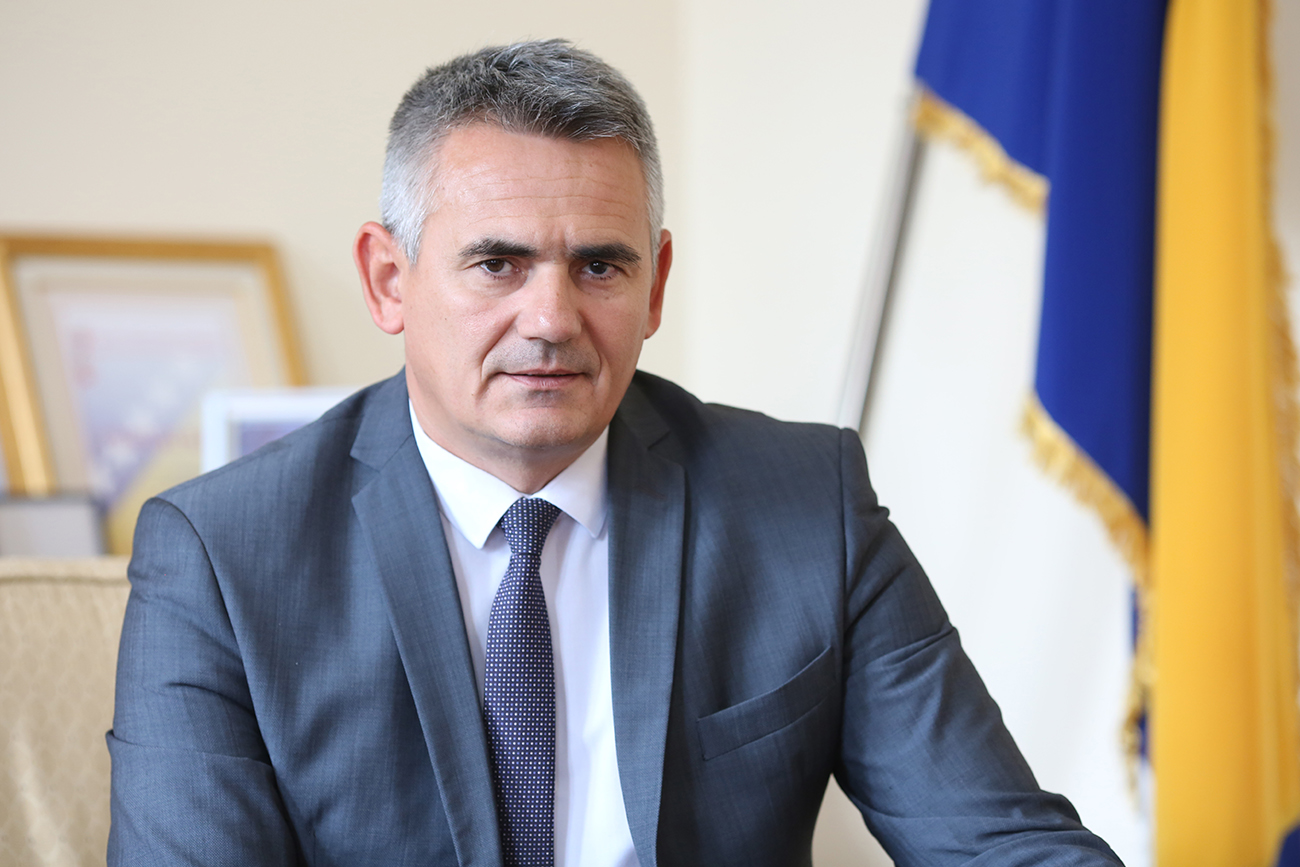
He acknowledged he has the discretionary power to decide otherwise, but chooses not to exercise it.
Eight applicants in Brčko were denied clemency. Among them were Ćazim Dačaj, a former member of the Brčko District Assembly, and Ferhat Ćejvanović, the former head of the agriculture sub-department.
Dačaj was sentenced in April 2022 to three years in prison for abuse of office, a term he served in Zenica. During the trial, he argued he had not received a fair hearing because proceedings were conducted in Bosnian rather than Albanian, which he does not fully understand, and he also invoked parliamentary immunity.
He had secured at least 300,000 BAM in grants for local associations through budget amendments before demanding and receiving a third of the funds himself. The criminal case was launched after CIN reporters uncovered irregularities in the allocation of Brčko grants.
Ćejvanović, meanwhile, was sentenced to one year in prison for accepting bribes, having demanded 1,000 BAM in exchange for approving agricultural subsidies. His custodial sentence – taking into account time already spent in detention – was later converted into a fine of 34,200 BAM. He had hoped a pardon would wipe his conviction from the record, but the Judicial Commission issued a negative opinion on his application. He declined to comment publicly.
Asked about these rejected cases, Milić said he was not aware of the specific reasons and had acted as he did in all others. “Had the Judicial Commission recommended that they be pardoned, I would likely have signed it. Since it did not, I did not go any further into the matter,” he said.
The Presidency of Bosnia and Herzegovina did not grant any pardons in 2025. In Republika Srpska, meanwhile, former president Milorad Dodik, leader of the Alliance of Independent Social Democrats (SNSD), issued just one, to Svjetlan Nović, the nephew of party colleague Sredoje Nović, a delegate in the national parliament.
CIN previously reported that Nović had been sentenced to two years in prison for domestic violence. Dodik reduced his sentence by six months.
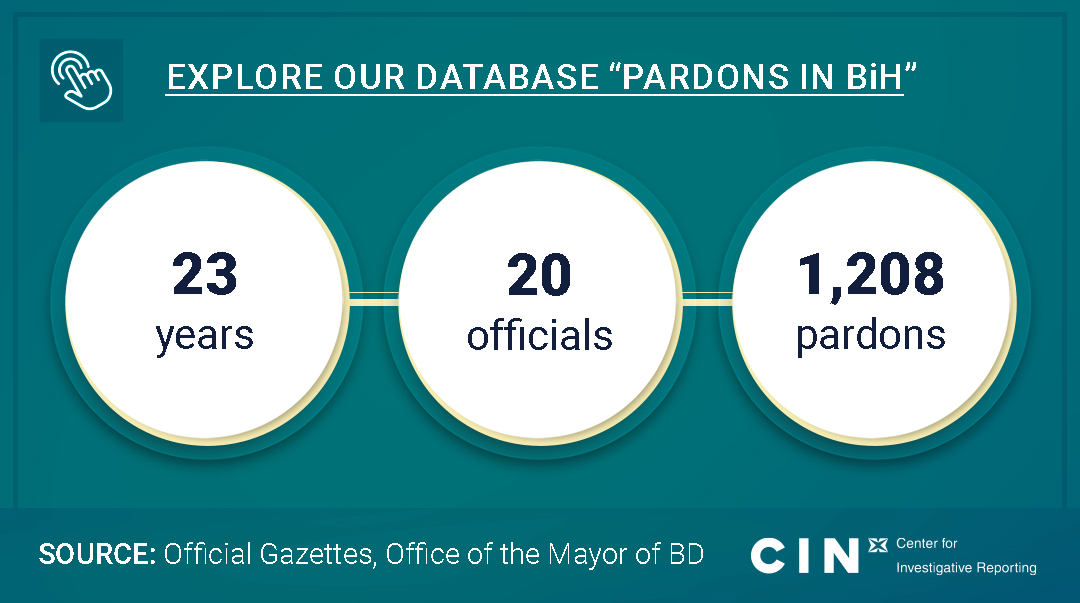
Data on last year’s pardons have been incorporated into CIN’s “Pardons in Bosnia and Herzegovina” database, which tracks clemency decisions dating back to 2003 issued by the State Presidency, entity presidents, and Brčko District mayors.