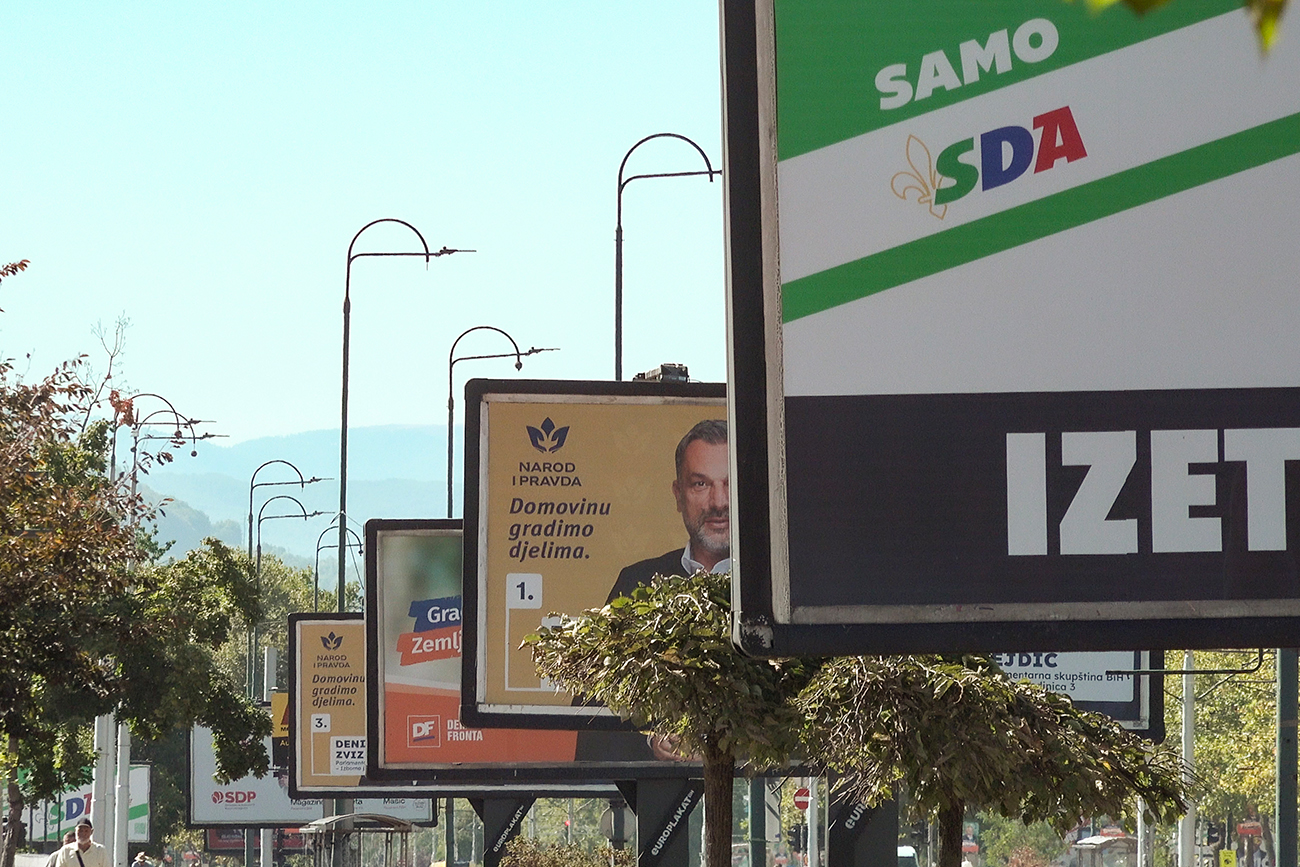


While public attention was focused on the presidential election in Republika Srpska (RS), a BAM 240.5 million deal was quietly signed.
On 18 November 2025 in Banja Luka, RS Finance Minister Zora Vidović, acting director of GAS-RES Nikica Vranješ, and Aleksandr Kurochkin, representing Russian businessman Rašid Sardarov, signed an agreement for the purchase of the concession-holding company Comsar Energy Republika Srpska.
Journalists from the Centre for Investigative Reporting (CIN) have uncovered that the company was bought for three times the value of its share capital, while as much as BAM 181.9 million was paid upfront, before the contract was signed and before the money had been secured in the budget.
The RS Government subsequently found the money through a budget rebalancing exercise and additional borrowing.
The payment was made possible by a preliminary agreement based on a valuation of the company. The valuation was carried out by Grant Thornton, where former RS Prime Minister Aleksandar Džombić works, and reviewed by The Wolf Consulting, a company belonging to his former adviser, Jasminko Jotić.
The valuation was not based on the company’s financial position, despite the fact that it was operating at a loss. Instead, it relied on forecasts of the future performance of a thermal power plant and a mine that are yet to be built under the concessions held by the company. The valuation projected BAM 73.9 million in coal sales in 2025 and a further BAM 659.1 million in electricity sales in 2029.
With this BAM 240.5 million payment, the total bill paid by citizens for Sardarov’s unfinished projects in Bosnia and Herzegovina has risen to BAM 309.2 million. An earlier BAM 68.6 million was paid for Comsar Energy Hidro in Rudo, which held concessions to extract stone and build a hydropower plant in the town.


Saving RiTE Ugljevik used as cover for the deal
The story dates back to 2011, when the RS Government, headed by Džombić, approved the establishment of Comsar Energy Republika Srpska. The company was founded by Sardarov’s Cypriot company Comsar Energy Group Limited, which held a 98.4 per cent stake, and the state-owned Rudnik i Termoelektrana Ugljevik (RiTE Ugljevik), which held the remaining 1.6 per cent. Sardarov contributed BAM 71.4 million to the company’s share capital, while RiTE Ugljevik contributed BAM 1.1 million, mostly in property.
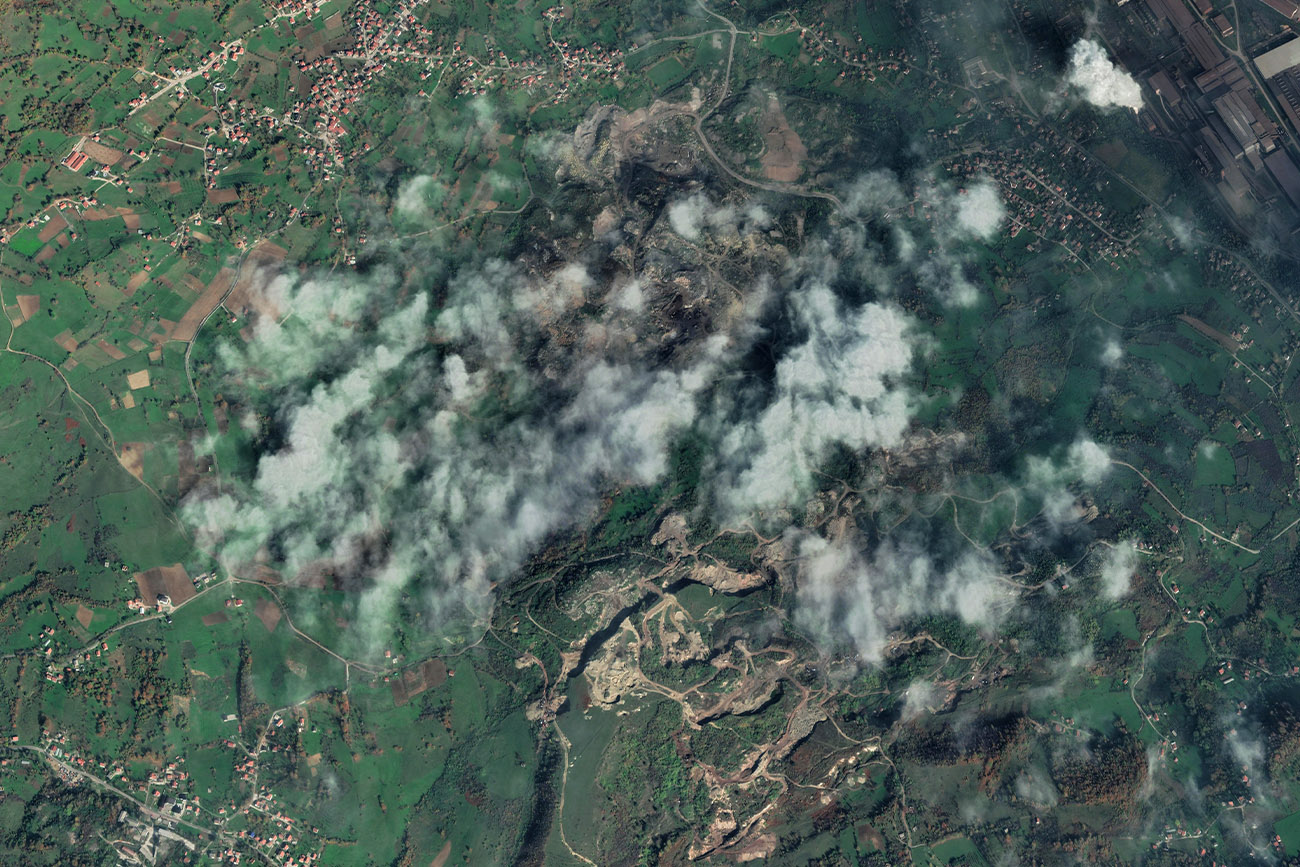
By 2016, Comsar Energy RS had secured eight concessions around Zvornik, Lopare and Ugljevik, for which around BAM 8.5 million was paid into the RS budget. Four concessions covered exploration for coal and limestone for periods of up to two and a half years, while the other four covered mineral extraction and the construction of a thermal power plant for 30 years.
The thermal power plant was never built, and no ore was mined. Yet the RS Government did not terminate the concession agreements. Instead, it extended their deadlines by another 12 to 14 years.
Meanwhile, RiTE Ugljevik was running down its remaining coal reserves and had no say over the exploitation of the deposit that had been granted to its partner company under a concession. As a result, production was halted several times, and workers staged protests.
‘We produce one-third of the electricity in the Republika Srpska power system. We are the largest producer and, as such, we have run into a problem because there are not enough quantities available in Ugljevik Istok 1 for the thermal power plant to operate normally,’ Boban Benović, until recently president of the company’s trade union, told CIN journalists.
In March 2025, the RS Government, headed by Radovan Višković, adopted a conclusion declaring it strategically important for RiTE Ugljevik to have a continuous supply of and access to the coal covered by the concession. It decided that negotiations with Sardarov were necessary, that his stake in Comsar Energy RS should be bought out, and that a preliminary agreement should be drawn up, with BAM 58.6 million paid immediately.
The money was paid from the budget the following month.
At the Government’s instruction, further communication and negotiations were taken over by GAS-RES, a company involved in gas projects, and its supervisory board, chaired at the time by Duško Perović. Perović had previously worked for Sardarov and had publicly boasted of bringing him to Bosnia and Herzegovina. He is now head of the RS representative office in the Russian Federation and has declined to speak to journalists about the matter.

The Government’s conclusion was a smokescreen, documents obtained by CIN reveal. The process had actually begun much earlier, in 2022, with a letter of intent sent by Sardarov to the authorities. The multi-million-mark payment was not made based on a signed contract and an agreed purchase price, but on the strength of a preliminary agreement and a valuation of the company.
The preliminary agreement was signed on 2 April 2025 by Vidović, Kurochkin and Vranješ. It stipulated that GAS-RES would receive a 25 per cent stake in the concession-holding company, but only as security until the purchase price was paid in full. In return, the RS Ministry of Finance would pay the euro equivalent of BAM 58.6 million as part of the purchase price, with the final purchase price to be determined at a later date.
At the request of the concession-holder, Comsar Energy RS, the company was valued by Grant Thornton, with former RS Prime Minister Aleksandar Džombić acting as the valuer. During his term in office, Sardarov had been presented as an investor who would pour BAM 1 billion into the energy sector, a claim that also featured in the process through which he obtained Bosnian citizenship.
‘I have no mandate to comment on the fact that the investor announced significant investments, abandoned them, decided to withdraw from the business and sold his stake in his company,’ Džombić wrote in a response to CIN journalists. He added that he had not worked in the public sector for 13 years and that there was no conflict of interest.
Džombić valued the concession-holding company at BAM 291.7 million, with around BAM 287 million attributed to Sardarov’s stake and the remainder to RiTE Ugljevik.
He based the valuation on projections of the company’s future performance. He stated that the company held concessions to build a thermal power plant and extract coal and stone, as well as concessions for mineral exploration. Those concessions had expired more than a decade earlier, which is a detail that does not appear in the valuation.
In a projection prepared in February 2025, he forecast that the company would generate BAM 73.9 million in coal sales that same year, followed by an additional BAM 659 million in electricity sales in 2029 from a thermal power plant that has not yet been built.
In his written response, Džombić said he did not have time for an interview and that he had carried out the valuation in accordance with internationally recognised valuation standards.
For the valuation, he relied on documents provided by the client, Comsar Energy RS. According to those documents, 2025 was identified as the year in which coal extraction would begin, while construction of the power-generating unit would take four years.
That did not happen.

Valuation endorsed by an audit
In May 2025 – one month after the first BAM 58.6 million instalment had been paid – GAS-RES commissioned a review of the valuation. It was carried out by The Wolf Consulting, owned by Jasminko Jotić, Džombić’s former adviser.
The audit confirmed that the right valuation method had been applied, but the value of the concession-holding company was set at BAM 237.5 million, or roughly BAM 54 million below the original valuation.
Both companies — Džombić’s and Jotić’s — are based in the same building. The Wolf Consulting does not even have a website or telephone number. Stevo Jovičić, who signed the review, confirmed to CIN journalists that he had been engaged only as an external contractor rather than as a permanent employee of the company.
‘I am reviewing that valuation; I am not carrying out a new one,’ Jovičić said, explaining that he had used the information already contained in the original valuation.
Responding to questions from journalists, he said he had confirmed the methodology and had not been under pressure or given instructions on how the work should be carried out. He said he had followed international valuation standards.
Based on the valuation and its review, representatives of GAS-RES and Comsar Energy Group Limited agreed on a purchase price of BAM 240.5 million in Banja Luka in July 2025.
Three months later, Džombić prepared reports to finalise the agreement on the company’s financial position and contractual liabilities.
The figures offered little cause for optimism: Comsar Energy Republika Srpska’s losses had reached BAM 32 million; it had less than BAM 3,000 in its bank account; and its liabilities to suppliers exceeded BAM 4.6 million. The company remained afloat thanks to BAM 14.9 million in loans from its founder, Rašid Sardarov. Almost half of that money was provided precisely during the period in which the company was being sold, in March and August 2025.
In the same month that the reports were prepared, on 23 October 2025, a second instalment of around BAM 123 million was paid for the purchase of the concession-holding company. The payment was made under an annex to the preliminary agreement. Under the arrangement, a further 52 per cent of the company was pledged to GAS-RES as security until the purchase price was paid in full.
Nikica Vranješ, acting director of GAS-RES, ignored CIN journalists’ letters and calls. He is bound by a confidentiality agreement that prevents him from disclosing information about Comsar Energy Republika Srpska’s operations, projects and financial data without the company’s written consent.

CIN journalists have established that the sale and purchase agreement was not signed until 18 November 2025 by Vidović, Vranješ and Kurochkin. By then, only BAM 58.6 million remained to be paid. That final instalment was paid three months later, after which Sardarov withdrew from the concession-holding company.
Because the money for Comsar had not been included in the regular 2025 budget, the RS Government subsequently sought to ‘tidy up’ the payment through a budget rebalancing exercise. The National Assembly of RS approved two budget revisions — the first in June and the second in November 2025.
During parliamentary debates on the revised budget, Minister Vidović failed to disclose the signed agreement to MPs. She said that the RS would take on additional debt, increasing the budget by BAM 260 million, half of which related to expenditure on shares and equity participation.
‘This relates to increasing the state capital in our public company GAS-RES, which we financed from the budget to secure the right to the concession in the Ugljevik mine,’ Vidović said.
Bojan Kresojević, an MP from the Party of Democratic Progress (PDP), asked the minister to explain how the money had been paid when the revised budget had not yet been adopted:
‘You have already done it. In other words, the revised budget is already in force as far as you are concerned. Why are we even here today, Mr Prime Minister, if you already have a revised budget?’
The accusation that budget funds had been spent for an unauthorised purpose went unanswered by the finance minister, as a heated exchange between MPs and members of the RS Government shifted attention away from the issue.
Kresojević later told CIN that the money had been spent for an unauthorised purpose and that the failure to provide an answer spoke volumes in itself.
‘They are not even constrained by the law when it comes to putting a stop to this improper way of paying out money, let alone by MPs, because how can you influence something that has already happened?’ Kresojević asked.
The BAM 240.5 million paid for the company was three times the amount Sardarov had originally invested in its share capital, despite the fact that the company had neither built the planned energy facilities nor generated electricity.
After the acquisition, in June 2026, at the request of its new owner, GAS-RES, an economic feasibility study was prepared on the purchase. The study was carried out by Jasminko Jotić, director of The Wolf Consulting, who concluded that the purchase was economically justified. He noted, however, that revenue could also be generated from coal sales if the thermal power plant — which would require BAM 1.3 billion to build — could not be constructed.
According to data from RiTE Ugljevik, the deal enabled the company to gain access to the mining field and reach new coal reserves.

The money trail goes cold
The documents also reveal a lack of transparency surrounding the payment. The purchase agreement for the concession-holding company does not specify the account into which the money was to be paid or the bank through which the transaction would be made. It merely states that the seller would provide payment instructions at a later date.
Comsar Energy Group Limited, the company through which Sardarov conducted his business in this case, is registered in Cyprus’s offshore sector. The jurisdiction is regarded in financial circles as a high-risk environment vulnerable to money laundering and tax evasion. Sardarov’s company has no employees, infrastructure, or secured sources of income. It exists on paper and is registered to hold stakes in other companies.
Under the applicable anti-money-laundering legislation, banks are required to notify the State Investigation and Protection Agency (SIPA) as soon as transactions involving such companies come to their attention. However, SIPA declined to tell CIN journalists whether it had received a report concerning the multi-million-mark transfer.
Petar Đokić, RS Minister of Energy and Mining, whose ministry is responsible for energy concessions, told journalists that he did not know who had received the money but that it was ‘not important’ that the ultimate owner was based in Cyprus.
‘Comsar could register here in Foča, and the money would be paid into an account in Foča,’ he said during a visit to the town, where he had gone to attend a public gathering in support of the SNSD candidate for RS president.
The RS Ministry of Finance officially confirmed that the transactions had been carried out in euros. Meanwhile, the representatives of the government did not want to comment on the payment specifics, citing the need to protect commercial interests. They did not explain how the money had been paid when no such expenditure had been budgeted for.
RS Prime Minister Savo Minić also refused to answer CIN’s inquiry about why the money had been transferred before signing the contract.
‘Who says that?’ Minić shot back when journalists approached him in Lopare during the SNSD election campaign, in which he is also running as a candidate.
When the journalist pointed out that the documents demonstrated precisely that, he replied: ‘Sue us, for God’s sake. Publish it.’
CIN is in possession of a notarised statement by Rašid Sardarov confirming that he received the money. The notary, however, made clear that the certification applied only to Sardarov’s signature, not to the facts stated in the document.
Nor would ERS-Obnovljivi izvori energije in Ljubinje, a company established by Elektroprivreda Republike Srpske, provide information on how BAM 68.6 million had been paid for the purchase of Sardarov’s other company, Comsar Energy Hidro.

The purchase agreement for Sardarov’s other company, Comsar Energy Hidro, signed on the last day of 2022, also contains no details of the payment. According to the agreement, the purchase price stood at BAM 68.6 million, payable in three instalments, with payment instructions to be provided at a later date.
Siniša Šišić, director of ERS – Renewable Energy Sources in Ljubinje, the company that bought the business, declined to discuss the deal. In a written reply, he stated that the money had been paid in euros directly to Sardarov’s Cypriot company, Comsar Hydro Holding Limited.
He added that his company had accounts with UniCredit Bank and Nova Bank, and that the transaction had gone through the SWIFT international payment system via a correspondent bank based in Germany.
For BAM 68.6 million, ERS-Obnovljivi izvori energije acquired a concession-holding company that was already operating at a loss of more than BAM 600,000 at the time of the purchase and was financially dependent on its founder.
Here too, the deal was based on forecasts of the concession-holding company’s supposedly strong future performance, linked to concessions for the construction of a hydropower plant and the extraction of stone in Rudo. That future, however, has yet to materialise.
Prime Minister Minić had no response when CIN asked what interest the Republika Srpska had in paying around BAM 300 million for Sardarov’s projects, given that the concessions had cost roughly BAM 8.5 million.
‘And what exactly do you expect me to say?’ he shot back.