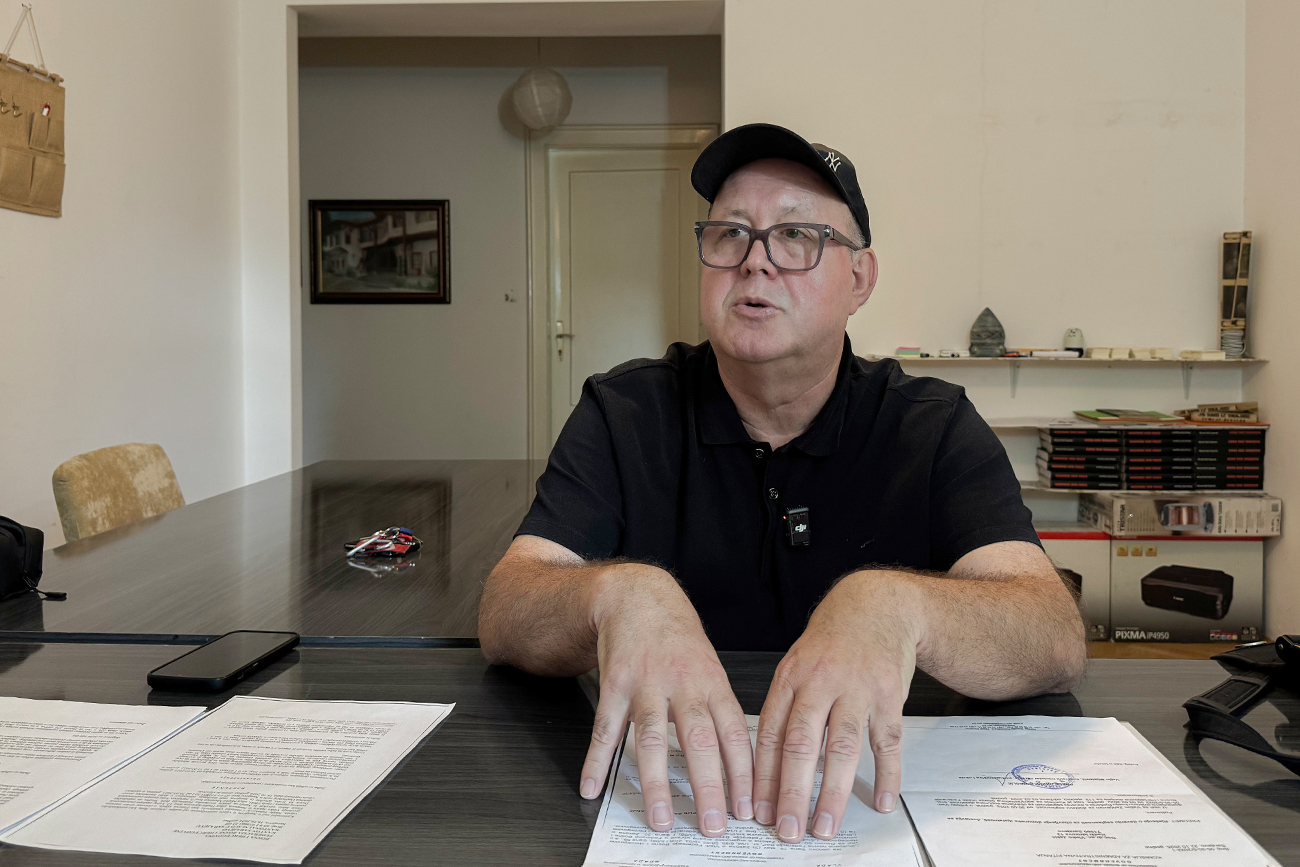

Smajo Mandžić, a member of the Tuzla Canton Assembly, voted in July 2019 to oust the government headed by a prime minister from his then-party, the Democratic Action Movement (PDA). He was soon punished by being expelled from the party.
But the real penalty came later, when PDA enforced a bill of exchange that Mandžić had signed two days before the 2018 General Election. BAM 123,295 was taken from his bank account. That was the price he paid for voting against his party’s interests. He subsequently took the matter to court in an attempt to recover the money.
PDA sought to secure the political loyalty of its candidates by requiring them to sign agreements governing their relationship with the party and authorising it to withdraw money from their private bank accounts. Candidates who failed to vote in the party’s interests faced penalties.
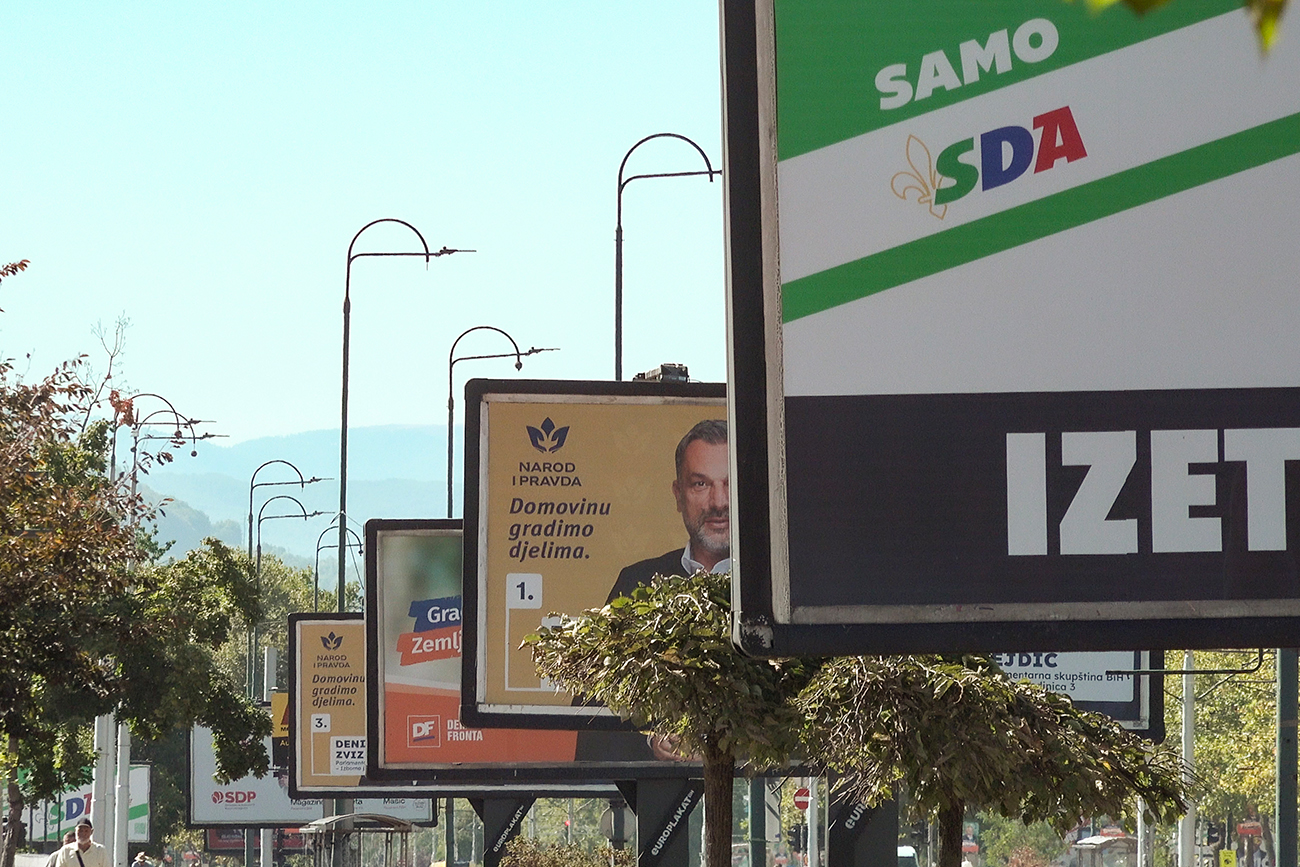
Journalists from the Centre for Investigative Reporting (CIN) have documented that, since 2012, at least three other parties — the Democratic Front (DF), the Party of Democratic Progress (PDP) and the Party of Democratic Activity (A-SDA) — have also used contracts to secure the political loyalty of their candidates.
In two cases, the Constitutional Court of Bosnia and Herzegovina confirmed that such contracts are contrary to the BiH Election Law and that a political party’s will cannot undermine an elected representative’s free mandate.
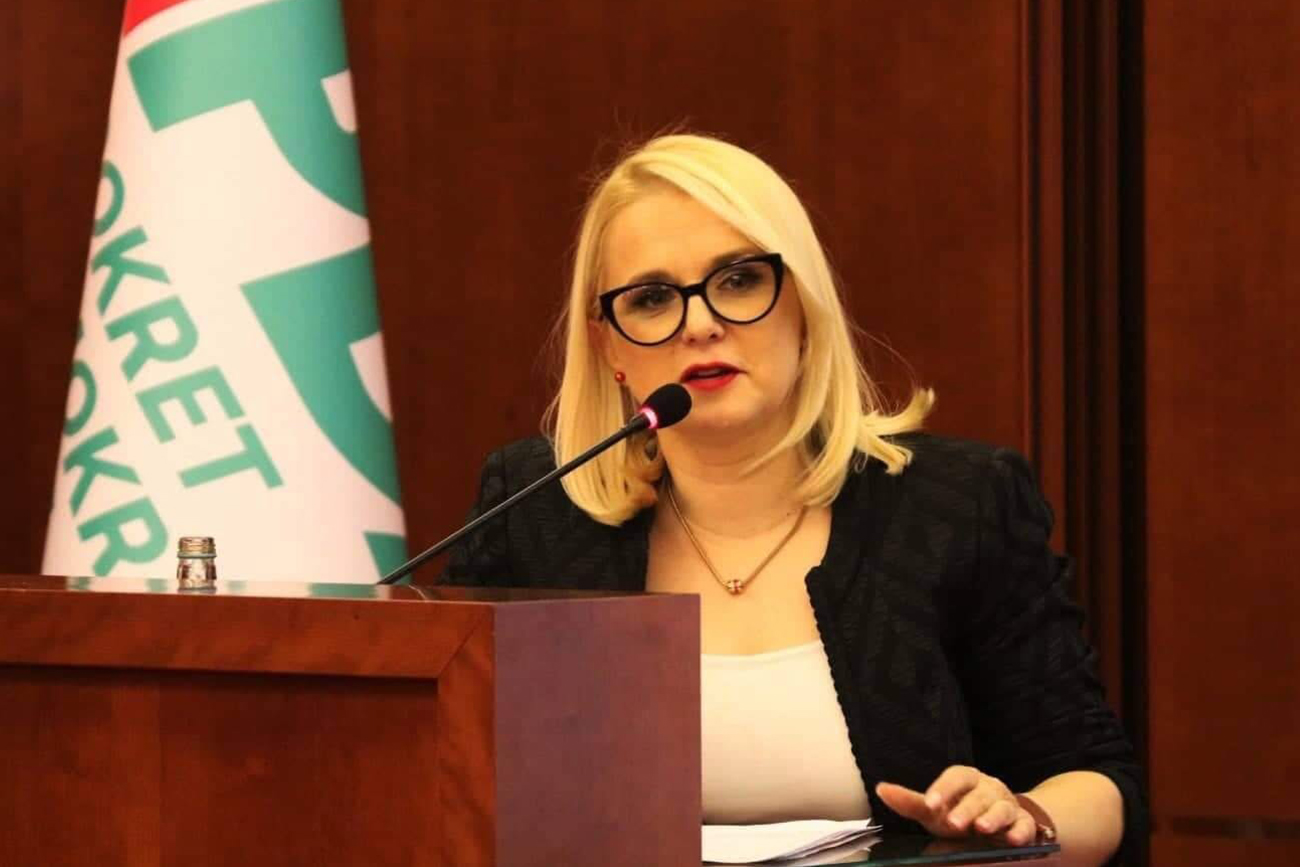
Elzina Pirić, president of PDA, has made no secret of the fact that her party plans to sign contracts with its candidates again ahead of the upcoming elections in October 2026, most likely securing them with bills of exchange.
‘We haven’t yet, but we will be signing them. (…) Naturally, the contract has to be secured in this way by a blank bill of exchange. Because no one has challenged that bill within the banking system,’ Pirić said.
Jovan Kalaba, president of the Central Election Commission of Bosnia and Herzegovina (CEC BiH), said that contracts between political parties and individuals were not a matter for his institution.
‘We don’t have that information. They make their own internal contracts, agreements and whatnot. We know when someone’s mandate ends. (…) The Central Election Commission cannot influence everything else that goes on behind closed doors.”

Loyalty secured by blank bills of exchange
Smajo Mandžić and Jasmina Lugavić were on the same PDA candidate list for the Tuzla Canton Assembly in the 2018 General Election. With no political bloc guaranteed a majority by the voters’ choice, a turbulent term was on the cards.
PDA knew how to secure the loyalty of its candidates. Ahead of the election, it offered them contracts governing their relationship with the party, along with blank bills of exchange. Pirić told CIN journalists that all of the party’s candidates at every level had signed identical contracts.
‘We had a situation where everyone signed voluntarily, and then claimed they didn’t know what they were signing. You can’t sign a blank bank bill of exchange and then say you didn’t know what you were signing. If that’s the case, you shouldn’t have put yourself on a political party’s candidate list or been involved in this business in the first place,’ Pirić said.
The first major political upheaval in Tuzla Canton came in July 2019. The Party of Democratic Action (SDA), the Alliance for a Better Future (SBB) and DF gathered enough votes to bring down the Tuzla Canton government, headed at the time by PDA’s Jakub Suljkanović.
With Mandžić and other representatives backing them, they secured a parliamentary majority. Against the interests of his then-party, Mandžić voted to oust the government and subsequently to appoint a new one. Three months later, he was expelled from PDA.
In July 2022, PDA instructed Sparkasse Bank to cash the BAM 150,000 bill of exchange. The bank seized all the money in Mandžić’s account at the time — BAM 123,295.
‘I looked at my phone and saw that BAM 150 had gone. I thought, fine. Not even ten minutes later, it beeped again. What now? I looked more closely and there it was — the balance: 00.00. The bank had first taken its BAM 150 fee, you know, for processing the transaction. Then they wiped out the BAM 123,000,’ Mandžić recalled.
The CEC recorded the money PDA took from its candidate through the bill of exchange as a donation, even though an individual is not allowed to make a voluntary contribution of more than BAM 10,000 to a political party.
Our audit department treats it as a donation. (…) Money has been transferred from your account to a political party’s bank account. And that is treated as a donation. So, if the limit has been exceeded, the political party will be fined,’ said Kalaba of the CEC BiH.
Asked by journalists why the money was treated as an individual’s donation, Kalaba replied: ‘Well, how else could it be?!’
After the money was taken from his account, Mandžić sued PDA and Sparkasse Bank. In July 2025, the Municipal Court in Tuzla ruled in his favour at first instance, ordering the return of BAM 123,295 and awarding him BAM 17,694 in legal costs.
The court did not rule on the validity of the contract through which the party sought to appropriate the candidate’s mandate, despite the BiH Election Law stipulating that a mandate belongs to the individual. Instead, it faulted the party for drawing the bill of exchange on its own account and later setting the amount at BAM 150,000.
The judgment was sent back for reconsideration on procedural grounds, but Mandžić believes the final outcome will be in his favour.
Despite the political upheavals, he has remained a member of the Tuzla Canton Assembly and is now part of the SDA campaign for the upcoming general election. Asked whether he had signed a contract with SDA ahead of this election, Mandžić said he had not.

His party colleague Jasmina Lugavić won a seat in the Tuzla Canton Assembly in the 2018 election with more than 9,000 votes. It was her second term in the legislature.
When Mandžić voted against the interests of his then-party, Lugavić continued to support PDA. The government remained unstable until the end of its term.
The second major political upheaval came in February 2022, when Lugavić backed the removal of a government in which PDA had held a majority alongside the Social Democratic Party (SDP), SBB and Our Party for a year. She was expelled from PDA two days later.
Because PDA had drawn up the same type of contract with Lugavić as it had with Mandžić, it sued her for BAM 150,000 in damages, plus interest. In 2023, the Municipal Court in Tuzla rejected PDA’s claim.
‘We didn’t collect anything from Ms Lugavić because she didn’t have any money in her account when the bank initiated the bill of exchange,’ Pirić said, adding that Lugavić, a lawyer, had prepared the contracts herself, presented them to her colleagues, attended the signing and registered the documents.
Lugavić is now an SDA representative in the Tuzla Canton Assembly. She declined to speak to CIN journalists.
A democratic practice
Edita Velić from Goražde was elected to the Bosnian-Podrinje Canton Assembly in the 2018 election on the Democratic Front (DF) list. She says that, to get onto the candidate list in the first place, she had to sign a notarised agreement committing her to loyalty to the party.
‘When we signed the agreement, we were told that it was just a formality and no one would ever ask us to honour it. I signed it because, in reality, it was a condition for us to be candidates,’ Velić told CIN journalists.
Asked what the agreement said, Velić recalled that it stated that DF had invested in promoting her during the election campaign, at an estimated cost of around BAM 45,000 per candidate.
‘That’s a bit absurd because I didn’t even have two billboards. I don’t think I even had two. I did everything myself — the materials and everything else. But apparently that was their estimate,’ Velić recalled.
When she left DF in June 2021, it did not take long for a warning to arrive, followed by enforcement proceedings stating that she owed BAM 69,333.
‘That’s when I fought it in court, legally speaking. And in the end, I didn’t have to pay the money back,’ Velić said.
She later launched proceedings against the party before the Municipal Court in Sarajevo seeking to have the contract annulled. She says she won at first instance, but the judgment has not yet become final because DF appealed.
Velić says candidates in other cantons also signed such contracts, particularly those considered likely to win seats.
‘Looking back on it now, it was blackmail — it was blackmail. You couldn’t get on the list unless you signed it,’ Velić said.
Dženan Đonlagić, DF vice-president, told CIN journalists that the party had discontinued the practice and had not drawn up contracts with candidates for the upcoming election.
‘The case law has shown that the courts refer to the provisions of the BiH Election Law, under which mandates in legislative bodies belong to individuals. On the other hand, we have a bad practice whereby so-called floor-crossing frequently occurs, undermining the credibility of the electoral process,’ Đonlagić said.
Dario Jovanović of the Pod Lupom Coalition believes that the CEC is the key institution that should give an opinion on whether such practices undermine the principles set out in the BiH Election Law.
He points out that Bosnia and Herzegovina uses open electoral lists, meaning voters can vote not only for a party but also for individual candidates they want to see in parliament.
‘So, any violation of that principle is simply unlawful,’ Jovanović said.
Party progress at candidates’ expense
According to its president, Branislav Borenović, the Party of Democratic Progress (PDP) will not enter into contracts with its candidates ahead of the upcoming general election.
‘It’s simply something we don’t do, don’t want to do and have no need to do,’ Borenović said categorically.
However, he stressed that some candidates trade their mandates and switch from one party to another.
‘Unfortunately, the MP owns the mandate. (…) And that is why we find ourselves in this circus, this trading, where, after elections, 20 to 30 MPs in the Republika Srpska National Assembly change parties or switch the colour of their party membership card because they can do whatever they want with that mandate,’ Borenović said.
However, CIN journalists obtained a 2025 Constitutional Court of Bosnia and Herzegovina decision showing that PDP had signed contracts with its candidates while the party was led by Mladen Ivanić.
Nebojša Milovčević and Milan Premasunac were elected in 2012 from the PDP list as councillors in the Kozarska Dubica Municipal Assembly.
Before they were elected, they signed contracts with PDP undertaking that, if they left the councillors’ group or the party, they would repay the money invested in their campaigns and pay a fixed sum in damages.
After leaving the party in the first half of 2016 and becoming independent councillors, PDP sued them, seeking BAM 26,080 in damages from each.
The courts rejected PDP’s claims, and the decisions became final by 2021.
Unable to accept the outcome of the proceedings before the courts in Kozarska Dubica and Prijedor, PDP lodged an appeal with the Constitutional Court of Bosnia and Herzegovina. Ultimately, the Constitutional Court confirmed that the mandate belongs to the individual and that termination of a mandate cannot be a matter of party discipline.
Borenović became president of PDP in 2015 but could not recall the case: ‘What was the judgment back then? I can’t remember.’
Dario Jovanović of the Pod Lupom Coalition agrees with Borenović that so-called floor-crossers are a problem, but says this is fundamentally a problem for political parties, rather than for the electoral system or citizens of Bosnia and Herzegovina.
‘You have people who are essentially in these political parties purely out of self-interest, rather than for any other reason,’ Jovanović said, adding that signing contracts with candidates ties democracy’s hands.
An attempt to tie democracy’s hands was also documented in the Krajina region, after Bihać City Council members Hasan Keškić and Meho Kličić left the Party of Democratic Activity (A-SDA) during the term they had won in the 2016 election.
Soon afterwards, A-SDA attempted to cash bills of exchange for around BAM 53,000 from each of them. Keškić and Kličić told the court that they knew they had signed something related to the election, but believed they had signed consent to be placed on the candidate list. A-SDA ultimately dropped its claims.
In 2021, A-SDA merged with the Independent Bosnian-Herzegovinian List (NBL) to form the People’s European Alliance (NES). Nermin Ogrešević, the party’s president, declined to speak to CIN journalists.
Elzina Pirić of PDA attempted to explain why parties bind their candidates through contracts, arguing that it is the party, rather than the individual, that runs the campaign.
‘No individual runs a campaign on their own. We engage volunteers, employees and party supporters. Everyone working on the ground is working for someone — that is, for the party. (…) People who don’t want to, or don’t like, the political position at a given moment can simply return the mandate to the party.’