
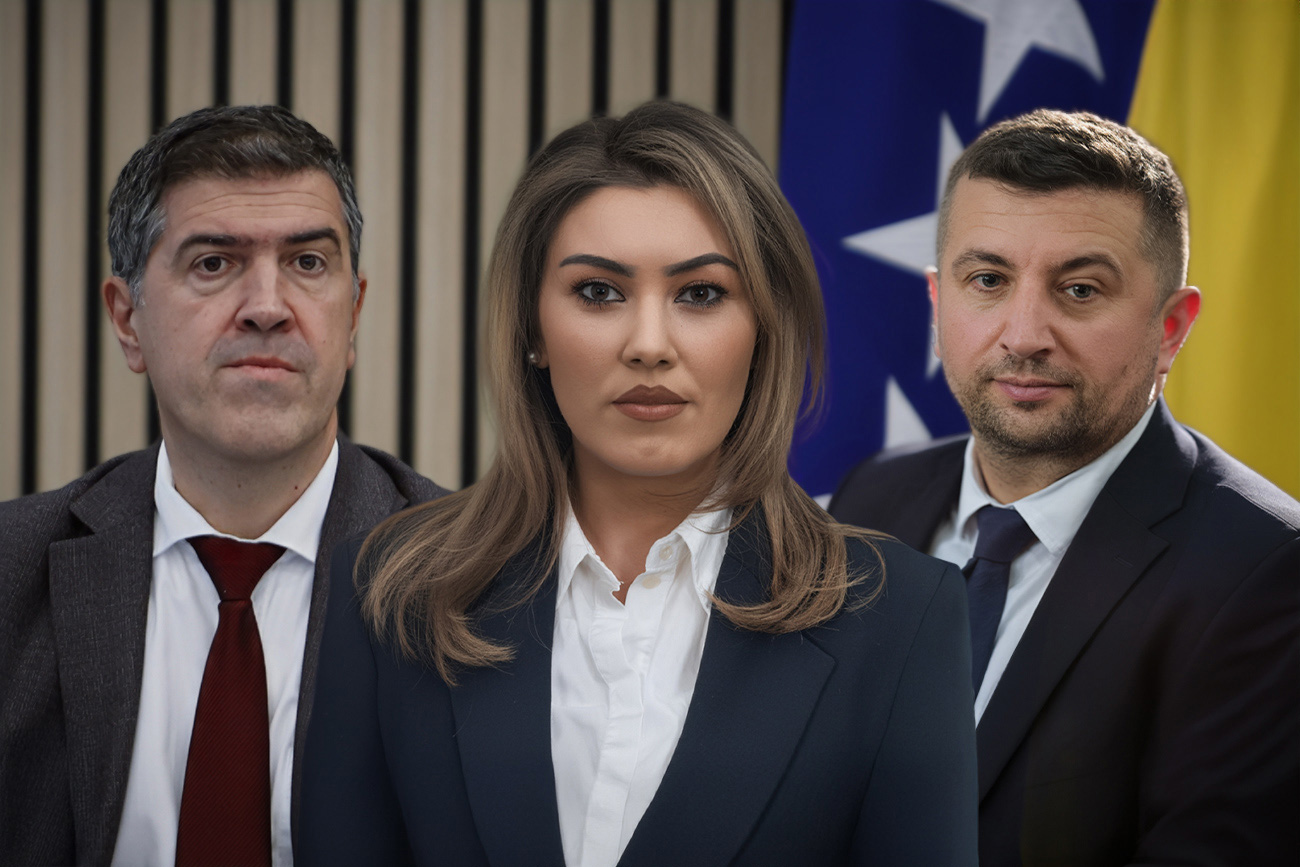
Robert Vidović, a lawyer from Ljubuški, may be in a conflict of interest as he simultaneously serves at the state level as Secretary General of the Council of Ministers of Bosnia and Herzegovina (BiH) and as a member of the Management Board of the Foreign Investment Promotion Agency.
Under the Law on the Prevention of Conflicts of Interest in the Institutions of BiH, holders of public office may perform only one public function at a time, unless otherwise provided by law or other regulations.
Vidović’s colleagues may also be in a potential conflict of interest. Davor Bošnjak, adviser and chief of staff to the BiH Minister of Civil Affairs Dubravka Bošnjak, and Marija Ćosić, adviser and chief of staff to Marinko Čavara in the House of Representatives of the Parliamentary Assembly of BiH, are also under scrutiny.
In addition to his advisory role, Davor Bošnjak has been a member of the Supervisory Board of the company Operator – Terminali Federacije since April 2023, while Marija Ćosić has served as a councillor in the Busovača Municipal Council since the October 2024 elections.
“In these cases, initial suspicions have emerged indicating a possible conflict of interest, and proceedings have therefore been initiated,” Dženan Šečerbajtarević of the Commission for Deciding on Conflicts of Interest in the Institutions of BiH told CIN.
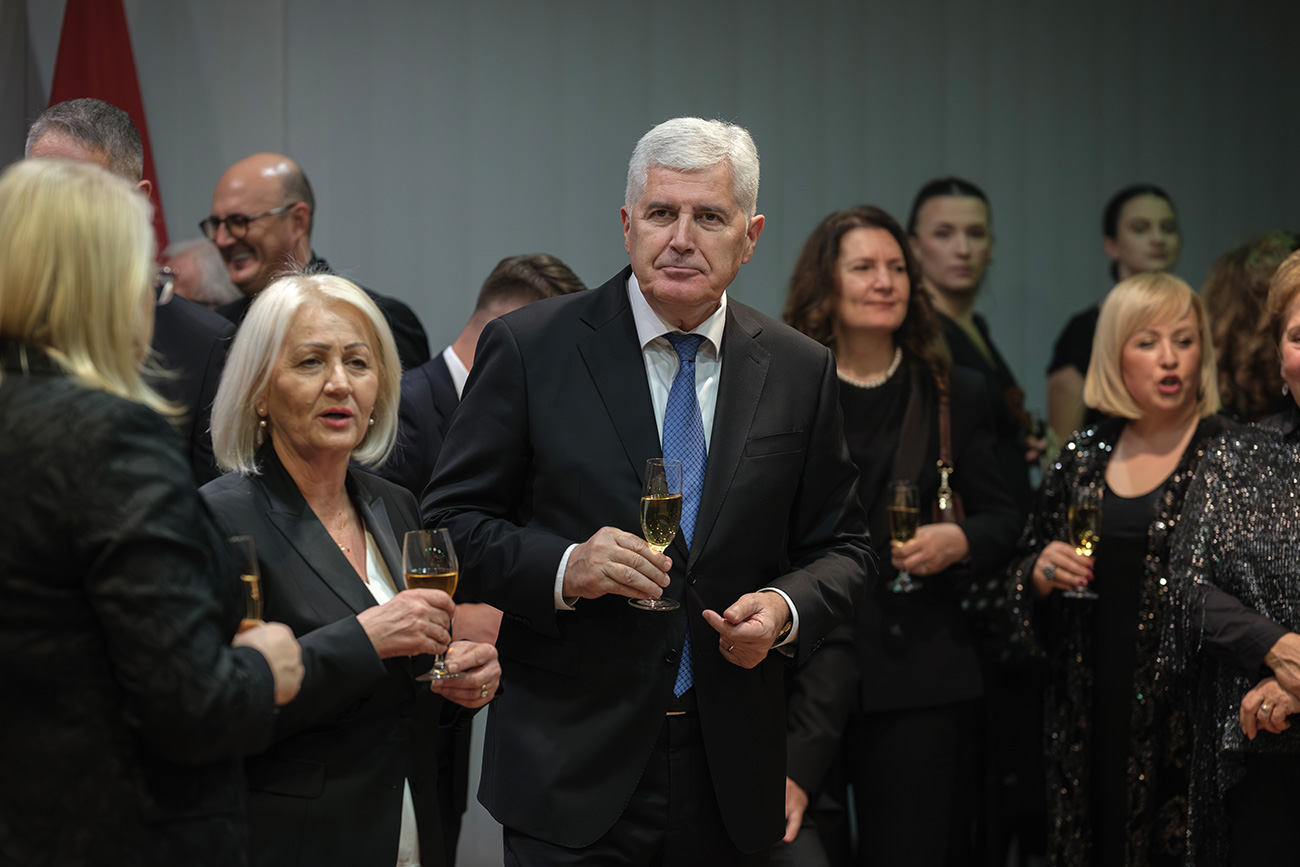
The three officials could thus be following in the footsteps of their party leader, Dragan Čović, president of the Croatian Democratic Union of BiH (HDZ), who was fined four years ago with a 10 per cent pay reduction for being in a conflict of interest.
Two Seats Each for HDZ Appointees
Vidović has served as Secretary General of the Council of Ministers of BiH since 2018, and in the same year was first appointed to the Management Board of the Foreign Investment Promotion Agency of BiH.
As early as May 2025, CIN journalists contacted the Commission for Deciding on Conflicts of Interest, seeking clarification on whether Vidović’s two positions were compatible. Six months later, the Commission responded that it had launched proceedings to determine a potential conflict of interest.
A complaint against Vidović and Ćosić was also filed by Transparency International BiH (TIBiH) in August of the same year.
“The law is clear, and our legal team considers these to be fairly straightforward cases. We expect positive decisions, that is, rulings establishing a conflict of interest,” said Damjan Ožegović of TIBiH.
On 18 December, Borjana Krišto (HDZ BiH), Chair of the Council of Ministers of BiH, hosted the traditional Christmas reception at the Parliamentary Assembly of BiH building. The event provided an opportunity for CIN journalists to speak with Bošnjak and Ćosić, as their offices had not responded to media enquiries or phone calls.
However, journalists’ movement at the reception was restricted, and organisers did not allow questions to be asked. Reporters were only able to obtain a brief comment from Bošnjak, who said: “This is neither the place nor the time to discuss this.”
Vidović’s office previously told CIN journalists that the Secretary General would act in accordance with BiH law and provide the Commission with everything it requests.
The Commission for Deciding on Conflicts of Interest was established in October 2024, and its first decisions to initiate proceedings were made in early December 2025. A conflict of interest can be declared only if five out of the seven Commission members vote in favour.
Ožegović considers these proceedings a useful test of how the Commission will function when politically connected individuals are involved, noting that these cases are relatively straightforward.
Previously, CIN reported that Čović, while serving as Chair of the Presidency of BiH, was in a potential conflict of interest because the Croat National Assembly (HNS), a political NGO he heads, received budget funds in 2017.
However, when the case was placed on the Commission’s agenda, it could not convene twice due to a lack of quorum. The first time, the Croat members of the Commission, Čović’s colleagues from HDZ BiH, Bariša Čolak and Borjana Krišto, were absent. The second meeting also failed to take place due to the absence of the Serb members of the Commission. The Commission ultimately sanctioned Čović only in March 2021.
The new Law on the Prevention of Conflicts of Interest in BiH institutions has been in force since 2024 and provides that Commission members are to be appointed from within institutions, rather than, as was previously the case, from parliamentary benches.
Vidović, Ćosić, and Bošnjak will have the opportunity to present their statements to the Commission, after which, if necessary, further checks will be carried out.
“My view is that, in principle, this should take two to three months and shouldn’t last any longer,” Šečerbajtarević told CIN.