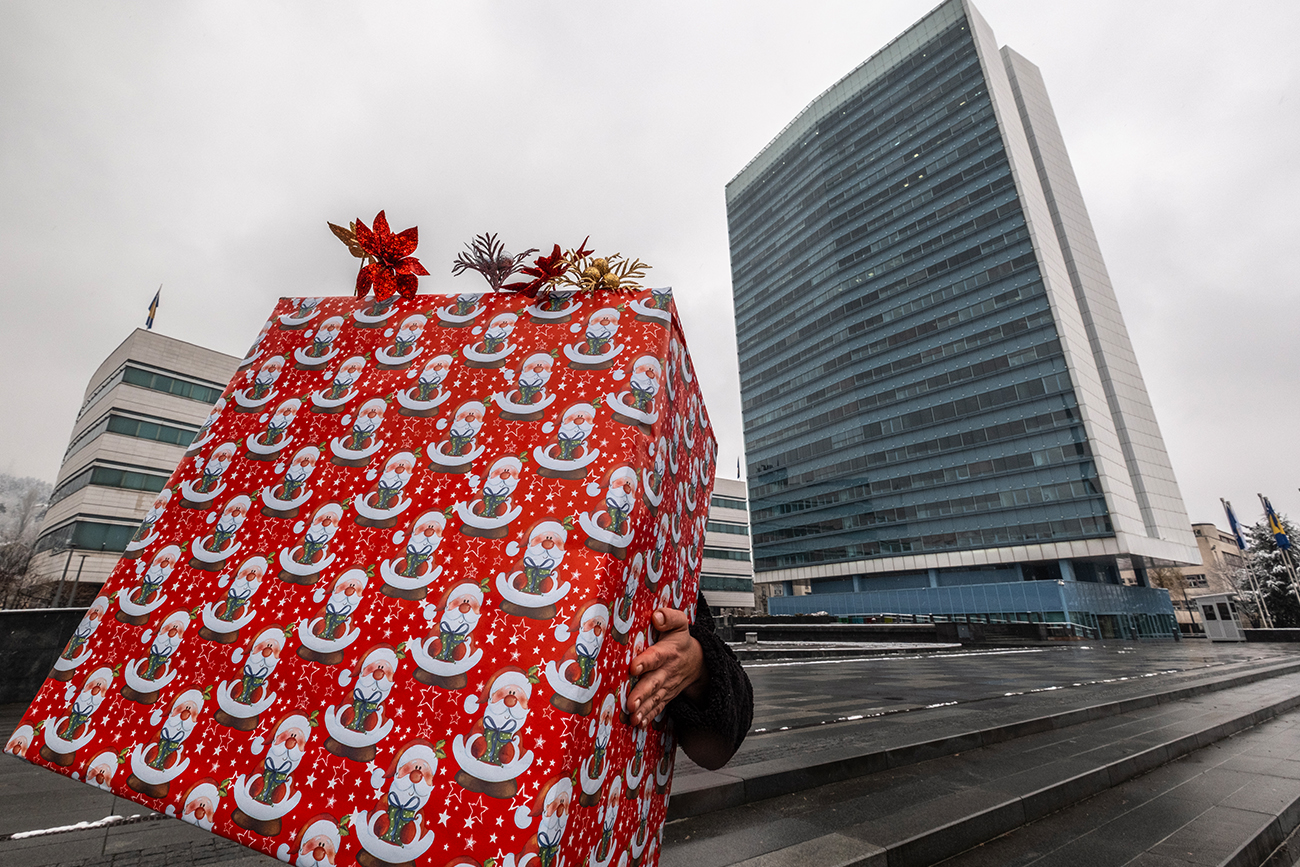
It was late December 2023. The holiday season was in full swing, but inside the Council of Ministers of Bosnia and Herzegovina, work was running at full throttle — 3.8 million BAM from the budget reserve had to be allocated urgently.
This money is primarily intended for emergency and unforeseen situations that cannot be anticipated in the budget, such as natural disasters and other disasters. That year, with at least 21 communities across the country suffering the effects of floods, landslides, and earthquakes, the CoM BiH distributed 8.2 million BAM from the reserve. Only one million marks of that was earmarked for the affected areas.
Three times as much was handed out to non-profit and religious organisations at the very end of the year.
Far from the public eye, and without criteria or checks, a list was drawn up of 118 organisations that received between 5,000 and 100,000 BAM. All they had to do was submit a request to the Council of Ministers a few days before the money was distributed.
Some of these organisations have political links to members of the Council; others do not normally engage in the work for which they received funding, and some have still not completed the promised projects nearly two years later.
“The selection of beneficiaries and the amounts approved were decided by the Council of Ministers of BiH without any prior public call, making it impossible to determine the criteria used to choose the recipients,” the Audit Office of BiH Institutions said.
The Chairwoman, Borjana Krišto, and all ministers except Edin Forto refused to explain to the Centre for Investigative Reporting (CIN) how they managed to distribute in a single day almost half a million marks more than they had allocated for the reserve’s primary purposes over the previous three years.
“These current funds were allocated in a way you will have to investigate yourselves,” the Minister of Communications and Transport, Edin Forto, told CIN journalists.
| wdt_ID | wdt_last_edited_by | wdt_last_edited_at | Udruženje | Iznos | Svrha |
|---|---|---|---|---|---|
| 1 | nwbdev | 28.11.2025 14:17 | Udruga za kulturni razvoj općine Neum | 20.000 | Implementacija projekta Gradski dječiji park |
| 2 | nwbdev | 28.11.2025 14:17 | RK Hercegovina, Nevesinje | 10.000 | Implementacija projekta "Socijalizacija djece i mladih kroz sport i sportsko-edukativne sadržaje" |
| 3 | nwbdev | 28.11.2025 14:17 | Udruga “Herzegowine”, Mostar | 30.000 | Projekat "Mostar, svjetski grad vina 2024" |
| 4 | nwbdev | 28.11.2025 14:17 | Judo klub “Randori”, Istočno Sarajevo | 10.000 | Programske aktivnosti 2024 |
| 5 | nwbdev | 28.11.2025 14:17 | Fudbalski klub "Borac", Banja Luka | 50.000 | Projekat "Zimske pripreme, efikasno poslovanje i sportski poduhvati" |
| 6 | nwbdev | 28.11.2025 14:17 | Omladinski kulturni centar Abrašević, Mostar | 50.000 | Nex You radijska mreža: regionalna mostogradnja kroz kulturu i muziku |
| 7 | nwbdev | 28.11.2025 14:17 | Fudbalski klub "Sloga", Doboj | 30.000 | Podrška aktivnostima |
| 8 | nwbdev | 28.11.2025 14:17 | OK "Radnik", Bijeljina | 15.000 | Podrška programskim aktivnostima u 2024. |
| 9 | nwbdev | 28.11.2025 14:17 | Udruga vinogradara i vinara, Ljubuški | 30.000 | Implementacija projekta "Trnjak fest 2024" |
| 10 | nwbdev | 28.11.2025 14:17 | Karate klub "Široki" | 15.000 | Odlazak natjecatelja na Youth ligu, svjetsku karate ligu u Poreču |
| Udruženje | Iznos | Svrha |
Funds Paid Out for Colleagues
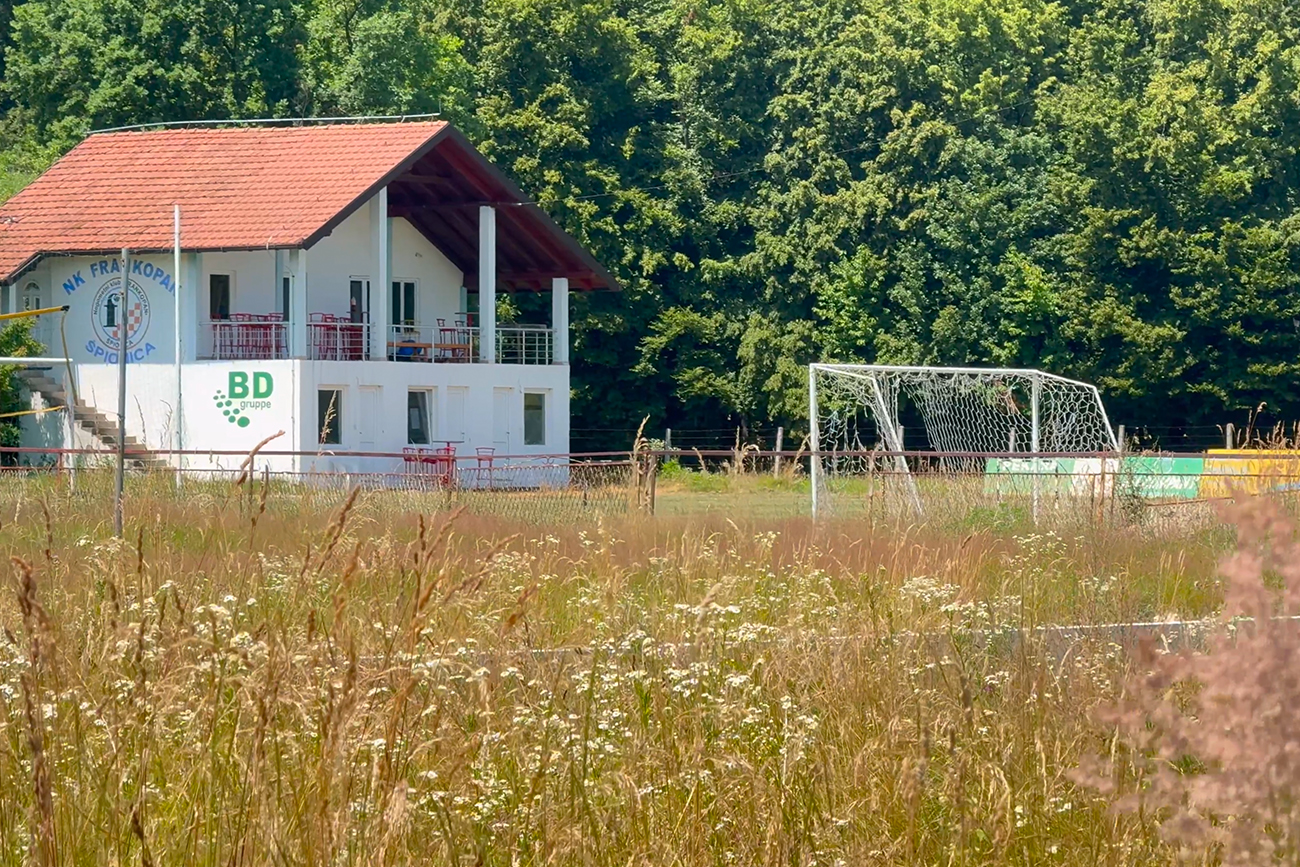
It is a sweltering afternoon in Špionica Srednja, a village near Srebrenik. Gates are shut, shutters drawn, and the heavy silence is broken only by the sound of cicadas — in a place of around a thousand residents, signs of life are scarce. On the pitch of the Frankopan Football Club (NK Frankopan), players had been giving their all for nearly 20 years, while supporters roared from the stands — all for the love of their local team.
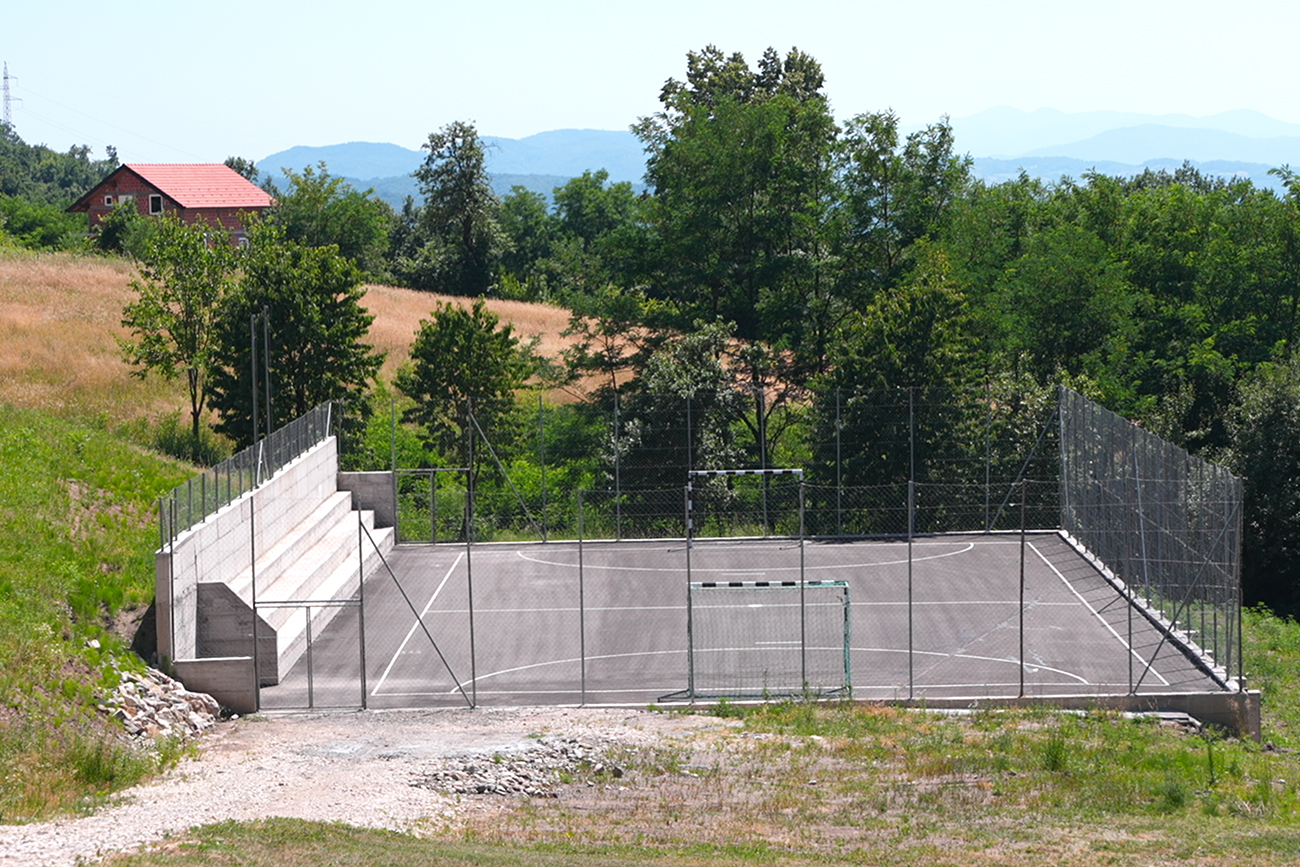
The end of 2023 seemed particularly promising: the club was competing in the Second Cantonal League of the Posavina Canton, and just two days before New Year’s, a state-funded “gift” arrived — the Council of Ministers of BiH, through the BIH Ministry of Civil Affairs, approved 20,000 BAM from the budget reserve for the first phase of building a training plateau and an artificial-turf pitch.
Club president Pero Matijević had requested the funds a week earlier, arguing that their existing pitch was in poor condition. The new, smaller pitch, he wrote, would provide better training conditions and could be rented to other teams. The money was approved.
Matijević later told CIN journalists that he could not speak to them due to health issues, leaving unanswered how he knew when and to whom the request should be submitted. The club is run by nine people, among them Matijević’s relatives and namesakes — Mato, an HDZ BiH councillor in the Srebrenik City Council, and Ivo. They declined to speak to CIN.
Nine months later, in the report on how the funds were spent, Pero Matijević signed off, stating that trenches had been dug, foundations installed for a concrete protective fence, and the ground prepared for infill material. The Council of Ministers approved the report, confirming that the money had been “properly used”: 17,500 BAM for works and 2,500 BAM for administrative costs.
Soon after, the club ceased competing. Locals say it fell apart because there were no longer enough players.
By summer 2025, next to the old pitch, a small concrete wall is just visible through the overgrown grass. A noticeboard states that the work was supported by the Central State Office for Croats Abroad (Središnji državni ured za Hrvate izvan Republike Hrvatske).
At the same time as receiving the BiH funds, the club also received EUR 5,000 from them for the “first phase of stadium construction”. The Office told CIN that NK Frankopan fulfilled its obligations and submitted its financial report on time.
Its documents make no mention of the sum, twice as large, provided by the BiH authorities, making it difficult to determine whether the small concrete wall is in fact the “concrete protective fence” described in the project, as neither anyone from the Council of Ministers nor from the organisation was willing to comment.
CIN journalists also encountered major difficulties obtaining basic information about organisations receiving public funding in the case of “Notra” in Novi Travnik. The association was founded by HDZBiH members Ivan Kvasina and Ana Šindrić, who says she has not been involved in its activities since resigning as vice-president in 2022.
Kvasina submitted a grant application for 27,800 BAM, explaining that the funds were needed for the “2024 Novi Travnik Diaspora Meeting Days” – a project aimed at connecting the diaspora with their homeland and building ties for future generations. Authorities approved 15,000 BAM.
However, neither the City Administration nor local journalists CIN spoke to recall the event taking place, and the police had no record of it. There are also no reports of the event in other local media or on Notra’s website, despite the association claiming part of the funds were spent on a media campaign.
The remainder of the grant was reportedly used to cover venue and equipment hire, hospitality, printing of materials and photographs, transport, a host, support staff, and auditing.
Residents of Rankovići, where Notra is registered, said they had never heard of the association. Kvasina did not respond to journalists’ calls.
Only Those Who Didn’t Ask Went Without
Frankopan and Notra are two of 118 non-profit and religious organisations that the Council of Ministers awarded a total of 3.8 million marks from the budget reserve.
At an extraordinary session on 28 December 2023, the Council tasked the Ministry of Civil Affairs and the Ministry for Human Rights and Refugees, together with the Ministry of Finance and Treasury, with compiling a list of non-profit organisations and the amounts to be allocated from the budget reserve.
However, the Civil Affairs Ministry claims it received an already completed list and only handled the technical side: “The Council of Ministers of BiH, through the General Secretariat, provided the Ministry of Civil Affairs with information accompanied by a table showing the requests and the amounts approved for allocation.” Minister Dubravka Bošnjak ignored calls for comment, leaving unanswered the question of who manually wrote the approved amounts on the applications and why.
According to the minutes, the very next day, during an extraordinary telephone session, a list of applications received by the Council of Ministers and the ministries was compiled, and the funds were approved.
All applications received by the Ministry of Defence that CIN reviewed were submitted on 21 and 22 December 2023, most within just a few minutes of each other. Minister Zukan Helez did not explain how this was possible. “I have no idea,” he replied.
Neither Krišto nor Košarac responded to questions.
“It seems there must have been some communication, or another method, beyond public notification—informing potential applicants about the possibility of receiving funds,” said Džemail Ćibo, Director of the Legislative Office of the Council of Ministers.
Minister of Communications and Transport Edin Forto noted that the funds would have been budgeted for the following year if they had not been spent, and could no longer be accessed from the reserve.
The session did not address how applications would be collected or what criteria would guide allocations. Political will alone was sufficient to distribute the funds, as it was the end of the year and no votes were cast against.
“At that moment, I could not determine that there was anything controversial, and I sense that the funds were spread across Bosnia and Herzegovina,” said Minister Forto.
By contrast, the Council of Ministers showed no urgency in implementing a proposal to send one million marks in medical aid to the population of Gaza—particularly children—a proposal approved a month earlier by the House of Representatives of the State Parliament.
In total, 79 organisations on the Civil Affairs Ministry’s list received 2.23 million BAM, while 39 organisations through the Ministry for Human Rights and Refugees received 1.57 million BAM. The funds were allocated for activities including the promotion and protection of human rights, gender equality, support for religious communities, sport, culture, youth initiatives, and humanitarian work.
“And who knew they were supposed to apply? There may be a hundred others who didn’t know they could apply, but could have,” said former General Auditor of the FBiH, Dževad Nekić.
The Legislative Office of the Council of Ministers ruled that distributing the reserve to non-profit organisations was legal, since this possibility is provided for by law, and there was a specific decision by the Council. However, the Audit Office argued that a different approach was needed.
“There were no clear and reliable criteria for distributing the current reserve funds, no public call for applications, and no publication of approved recipients before the funds were transferred. This gives rise to justified concerns about corruption and the lack of responsible and transparent use of public funds,” the Audit Office told CIN.
Where There’s a Will, There’s a Way
In 2023, the Council of Ministers of BiH spent a total of 8.2 million marks from the budget reserve. Of this, one million marks was allocated for its primary purpose—emergency expenses arising from natural disasters in BiH—including flood repairs in 14 towns and municipalities. A further 1.5 million marks was sent to Turkey and Slovenia following earthquakes and floods, while nearly two million marks went to institutional needs and expenses, receptions, and a 30,000-mark donation to the “Srpska Kuća” Foundation. The foundation, which provides housing for large families in the RS, is run by Gorica Dodik, the daughter of SNSD leader Milorad Dodik.
The reserve has been used in a similar way in the past. During the three difficult years of the pandemic, CoM BiH distributed 3.1 million marks to cover earthquake damage and coronavirus-related costs. Another one million marks was allocated as aid to Turkey and Croatia after earthquakes, and to Ukraine because of the war.
At the same time, 17.2 million marks from the budget reserve were spent on salaries, allowances, meals, and other employee costs within institutions, as well as on energy and equipment procurement, meetings, and holiday celebrations.
The state’s inadequate response to emergencies continued into 2024. During the floods and landslides that struck Jablanica, Konjic, Kreševo, Kiseljak, Fojnica, Vareš, and Drvar on the night of 3–4 October 2024, 27 people lost their lives.
The World Bank estimates the damage at around EUR 144 million.
In just a few hours, people lost children, parents, relatives, homes, and possessions, leaving them to grapple with grief, trauma, and fear.
Yet it took the Council of Ministers of BiH 13 days to approve 200,000 marks in aid for each of the five affected municipalities. That year, due to temporary funding following the failure to pass a budget, only 2.07 million marks were available. Another one million marks was allocated to entity-level civil protection agencies, while 60,000 marks were spent on receptions in the House of Peoples of BiH for religious holidays.
In Jablanica, which lost 19 residents and suffered material damage estimated at 123 million marks, little had improved a year after the disaster. Recovery has relied largely on donations.
Just over one million marks came from two FBiH ministries, municipalities, towns, private and legal entities, humanitarian organisations, and other countries, while 4.7 million marks came from an international fund. The European Union has also contributed through UNDP and IOM. These funds have been used to repair roads, bridges, water supply, sewage systems, and street lighting. In addition, the Government of the Federation of BiH recently allocated a further 16.7 million marks in aid to Jablanica.
Minister Forto said CoM BiH did not act urgently in this case as it did in December 2023 because the responsibility lies with local authorities. Meanwhile, Džemail Ćibo, Director of the Legislative Office, argued that the affected areas should have submitted a request for assistance to the Council.
Emir Muratović, mayor of Jablanica, said the municipality was unaware—and no one had informed them—that they were entitled to the funds. They had hoped that aid would arrive, as the whole world had witnessed the disaster.
“I know that the then-members of the Civil Protection Headquarters in Jablanica appealed to many authorities, and I believe that if they had received instructions to submit a formal request, they would have done so,” said Muratović, expressing hope that CoM BiH will allocate funds from the reserve for Jablanica by the end of 2025.
Some residents of Jablanica have given up hope of receiving state assistance.
“The state should have stepped in during those first few months, but it didn’t. So what can we expect from it? Nothing,” said Mersiha Begović, who, together with her husband, bought land where the EU will finance the construction of their new home.
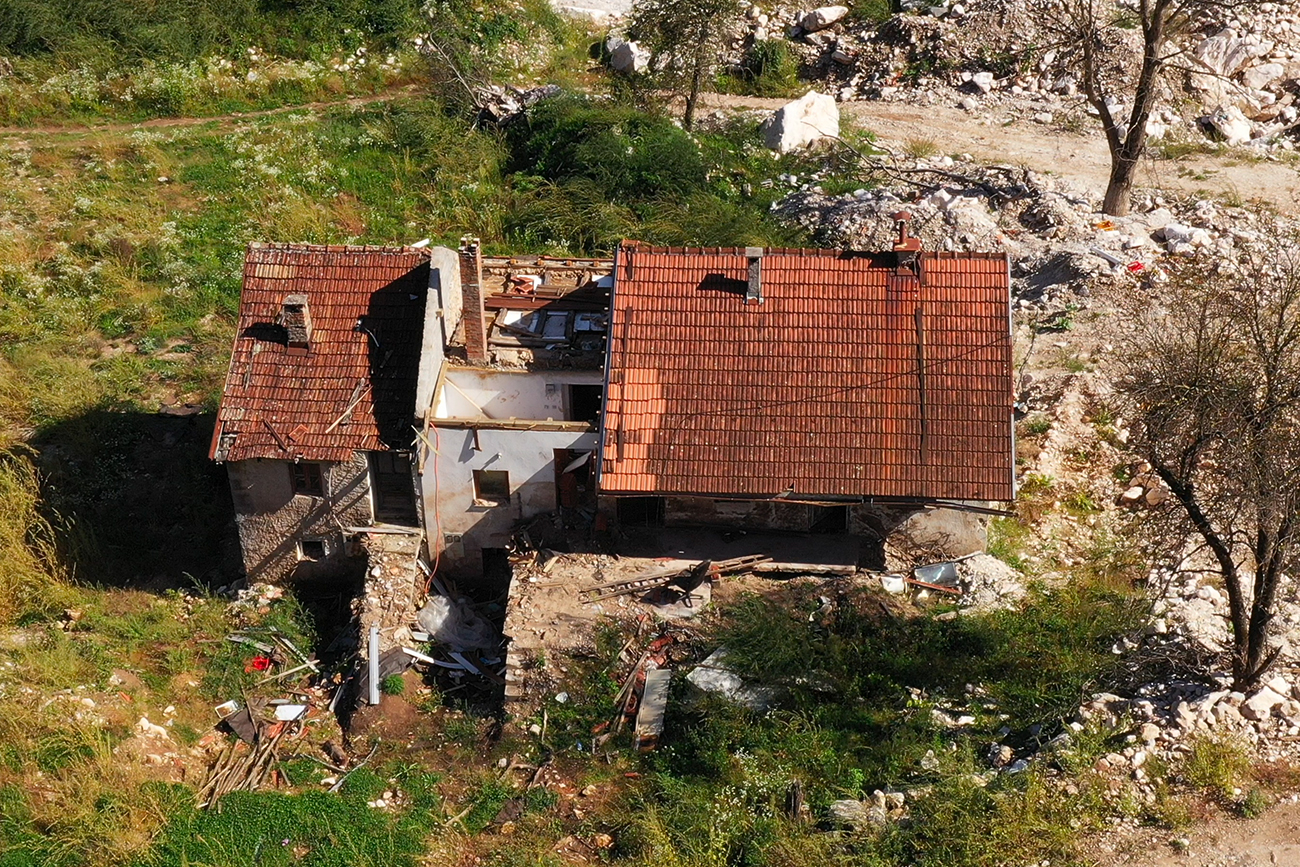
Among the associations that received funds in the emergency allocation was the “Eko Urban Centar” from Istočno Sarajevo. They were granted 10,000 marks to organise the beer festival “Beerka.”
A month later, the BiH Prosecutor’s Office charged the association’s president, Siniša Papaz, with giving former Minister for Human Rights and Refugees Miloš Lučić previously paid fiscal receipts from his café, “Majstor za Pivo,” between May 2020 and the end of 2022. According to the indictment, Lučić used the receipts to claim false representation expenses, which the Ministry then reimbursed. Papaz is accused of embezzlement in office and causing nearly 70,000 marks in damage to the budget.
It was through this Ministry that Papaz’s association received the funds for the festival. Earlier, 20,000 marks from the reserve had also been allocated for the same purpose by BiH Presidency member Željka Cvijanović.
At the time of receiving this double support from the state budget, Papaz’s café, “Majstor za Pivo,” and the “Beerka” shop had generated more than 1.2 million marks in revenue. Papaz declined to speak to CIN due to the ongoing legal proceedings.
Pretty villages, Lavish spending
At least 21 associations on the lists of two ministries were founded or led by individuals politically connected to members of the Council of Ministers of BiH.
Associations linked to HDZBiH, SNSD, and BH Zeleni received over 600,000 marks for local projects, including the construction and renovation of playgrounds and facilities, organising events, purchasing sports equipment, providing aid to vulnerable groups, and cleaning up the environment. The leaders of these organisations are party members, and some also hold positions in local government.
The funds they received were justified with expenditure reports and accompanying receipts.
Yet, most of these projects have no public documentation, even though the reports include details of venue rentals, media campaign costs, and gatherings involving large numbers of people. Organisations receiving funds through the Ministry for Human Rights and Refugees were supposed to publicly acknowledge their partnership with the Ministry, but few did. Some have no websites at all, and those that do seldom disclose where the funding came from.
In some cases, organisations took credit for projects even though the money came from the state budget.
Some recipients said they “heard about the funds from someone,” while others, like Smail Mešić from Svjetliča near Doboj, claimed they applied in response to a public call—even though no such call existed for this allocation. Mešić is a member of the “BH Zeleni” party of Minister Sevlid Hurtić, and his association, “Vodovod Svjetliča,” which focuses on water supply and infrastructure issues, received 95,000 marks from the reserve.
The funds were intended for the construction and outfitting of a sports complex and a playground for preschool children. However, the playground was never built. Despite this, the expenditure report was approved without any objections.
Another member of “BH Zeleni,” Amir Hurtić from Grapska Gornja near Doboj, said that neither his party affiliation nor family ties to Minister Hurtić influenced the allocation of 50,000 BAM for a children’s playground in the village, as he received the information that funds would be distributed from the Ministry for Human Rights and Refugees.
“We submitted an application and were told that these funds would be allocated to associations and that we would be able to apply”, Amir Hurtić explained.
Minister Hurtić, like his colleagues, declined to comment to CIN on the non-transparent distribution of the budget reserve.
The “Undertakers’ Association ‘Novo Rastovačko Cemetery” from Posušje received 40,000 BAM through the Hurtić’s Ministry, intended for the promotion and protection of human rights and gender equality. The money was used to repair a chapel and install concrete paving at the Rastovača cemetery. The expenditure report claimed that all work had been completed as planned. Mario Milićević, the association’s president, which represents families of the deceased and those planning to be buried at the cemetery, said he requested the funds directly from the Ministry. However, he could not recall—and the documents do not indicate—when the request was made.
“All of this suggests that it was a pre-arranged allocation rather than a transparent and lawful one,” said former auditor Dževad Nekić. “It’s all about who you know—VIP, as they call it. That seems to be the main qualification for funding”.