The SAHVA COMPANY has been in control of the Rača industrial landfill, located right next to the Zenica steelworks, for 15 years. Co-owned by Zulkaid Skomorac, a member of the Bosanskohercegovačka inicijativa party (BHI) – Fuad Kasumović [Bosnian-Herzegovinian Initiative], the company has been extracting slag for years without a permit. Slag is a valuable by-product of the iron-making process.
From 2013 to 2024, the company had a contract with the City of Zenica to manage the landfill. Under the agreement, it was required to pay a municipal fee of 1.5 convertible marks for every tonne of slag it collected, as well as to carry out permanent works to restore and remediate the site. That work was never done. The contract was signed in breach of the Concessions Act of Zenica-Doboj Canton (ZDK), which stipulates that such agreements can only be concluded with the competent cantonal ministry. SAHVA COMPANY did not hold a concession for the Rača site.
Skomorac briefly told journalists from the Centre for Investigative Reporting (CIN) that he had nothing to do with the slag, refusing to discuss the matter further.
However, journalists found that SAHVA COMPANY had been extracting the slag with the help of APS, a company based in Livno that processed it before it was sold to cement works in Bosnia and Herzegovina (BiH) and Croatia.
For years, the steelworks had dumped this by-product at the Rača landfill, on land owned by the City of Zenica and Nova Željezara. Once processed, the slag is used in road construction, embankments and the manufacture of building materials.
It was always being sold and traded. I, let’s say, put the buyer and the seller in touch, and got a little something out of it, Ante Perić, owner of the Livno-based company, confirmed to CIN journalists.
The City of Zenica’s financial officers stated in their reports that SAHVA COMPANY had not paid the fee by 2014, but had not removed any slag either. After that, the city stopped monitoring the company’s activities at Rača altogether. It was not until 2019 that a city working group found that the company had failed to provide reliable figures for the amount of slag it had collected between 2014 and 2018. The group therefore made a rough estimate that the company owed the city more than 300,000 convertible marks.
In November 2025, the city authorised the company to continue managing the landfill until a new public tender had been completed. Seven months later, it accepted the company’s bid to manage the site.
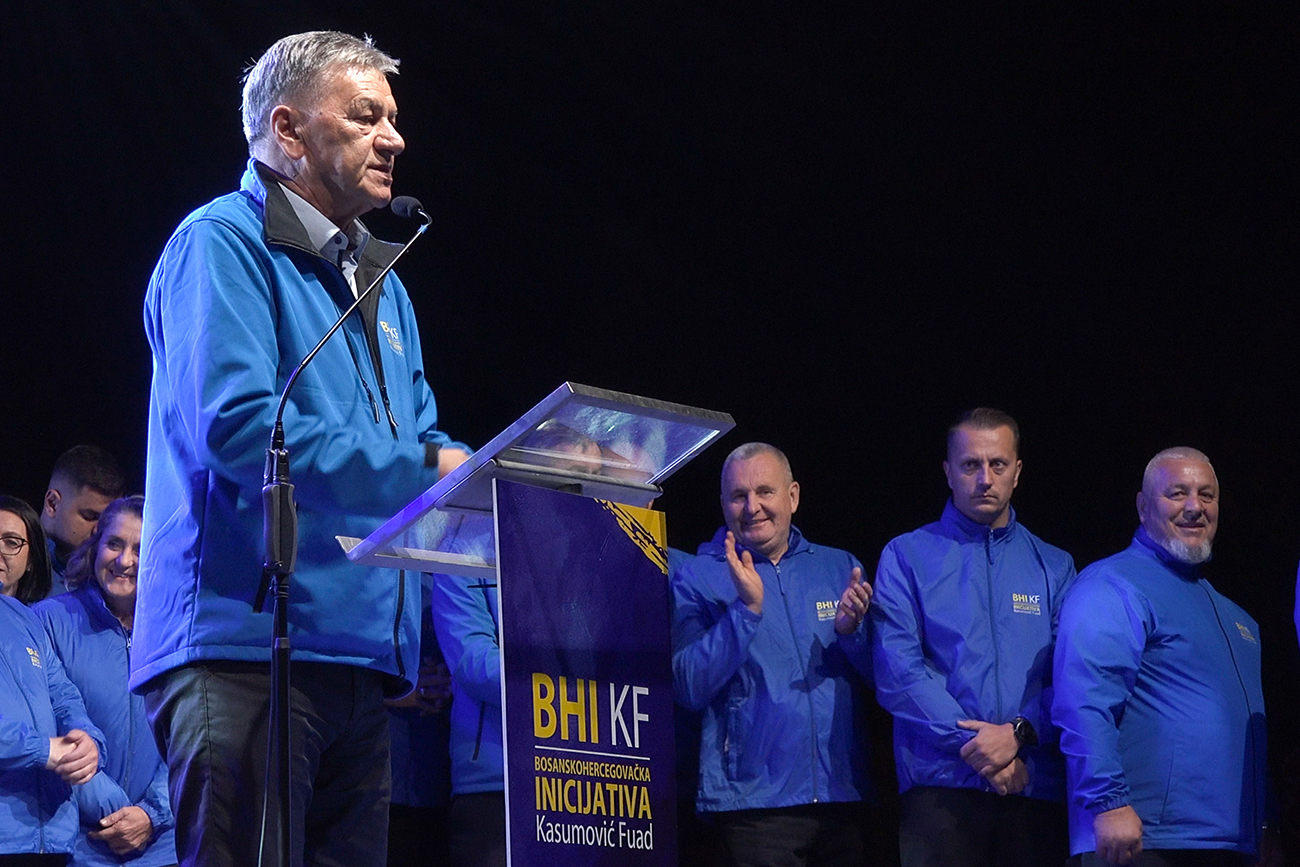
Fuad Kasumović, Mayor of Zenica and leader of the BHI KF party, declined to discuss the matter, referring journalists to the city administration.

One tonne, One and a half marks
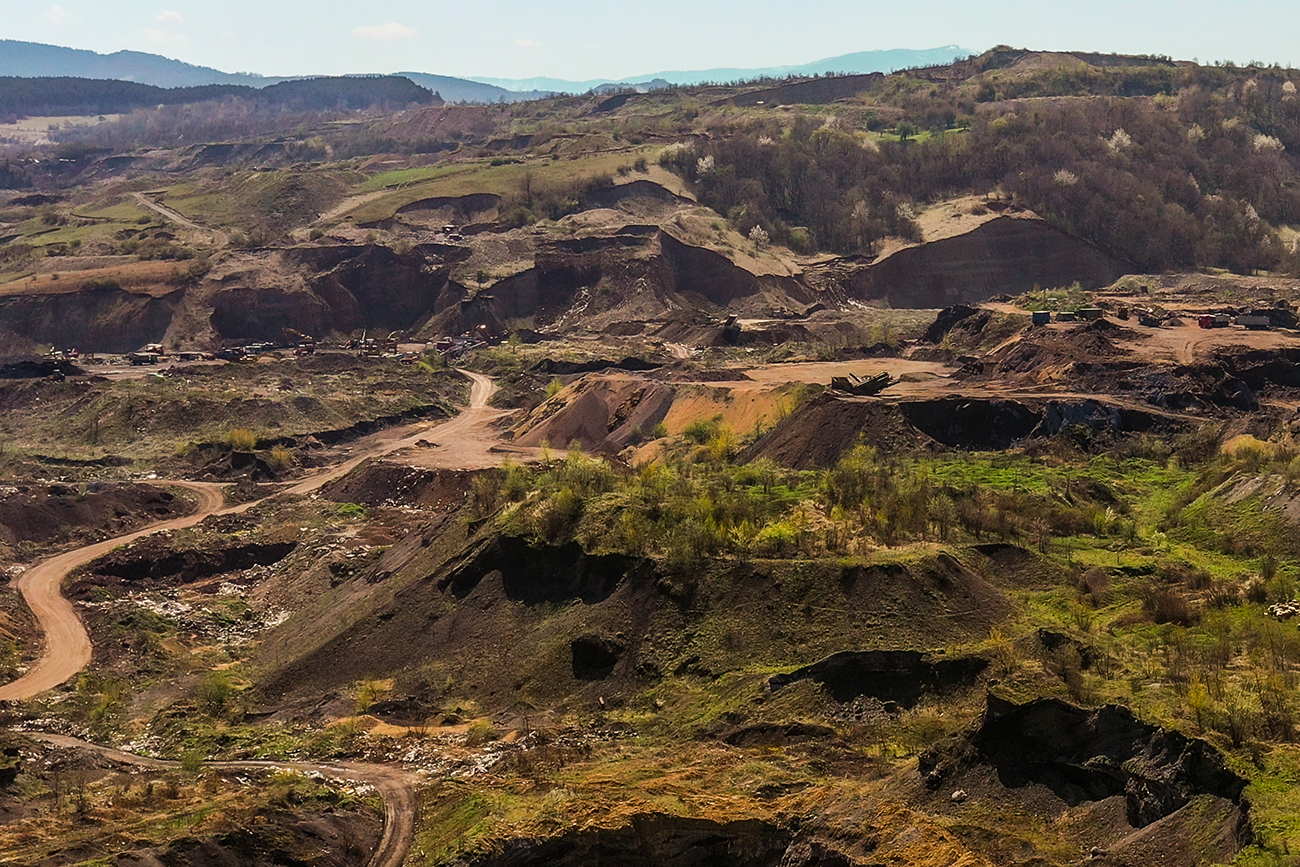
For years, the Rača industrial landfill, located in the Tetovo and Gradišće neighbourhoods of Zenica, near the steelworks, was used by ArcelorMittal to dispose of granulated slag, a by-product of steel production in a blast furnace. According to figures the company submitted to the relevant authorities, around 300,000 tonnes of slag were deposited at Rača each year.
However, in the second half of 2015, the company began dumping slag at the site without proper control, causing the quantities to rise significantly. According to the City of Zenica, the amount reached around one million tonnes a year.
Although slag is classified as waste from metallurgical production, it still has commercial value.
Cement manufacturers buy slag and use it as a raw material in cement production. The cement is of slightly lower quality, but it helps them reduce their carbon emissions, said Samir Lemeš, Vice-Dean of the Polytechnic Faculty in Zenica.
Seeing an opportunity to make money, representatives of numerous companies visited the Rača landfill with proposals for its use. Most offered to process the slag, remove it from the site, and sell it for use in road construction.
In November 2010, the then Municipality of Zenica and ArcelorMittal signed a protocol setting out the terms for upgrading and remediating the Rača landfill. The aim was to find a lasting solution to the accumulation of slag and other waste and to restore the site. Under the agreement, the municipality allowed ArcelorMittal to dump industrial waste at Rača free of charge as part of the long-term remediation effort. By comparison, Zenica’s other municipal landfill, Mošćanica, charges an average of around 70 convertible marks per tonne of waste.
The municipality subsequently launched an international public tender and, in April 2011, signed a contract with mlm Group Zagreb, awarding the company the contract to manage Rača. However, on the very same day, the contract was transferred to Zenica-based SAHVA COMPANY, which took over the rights and obligations relating to the long-term reclamation of the site.
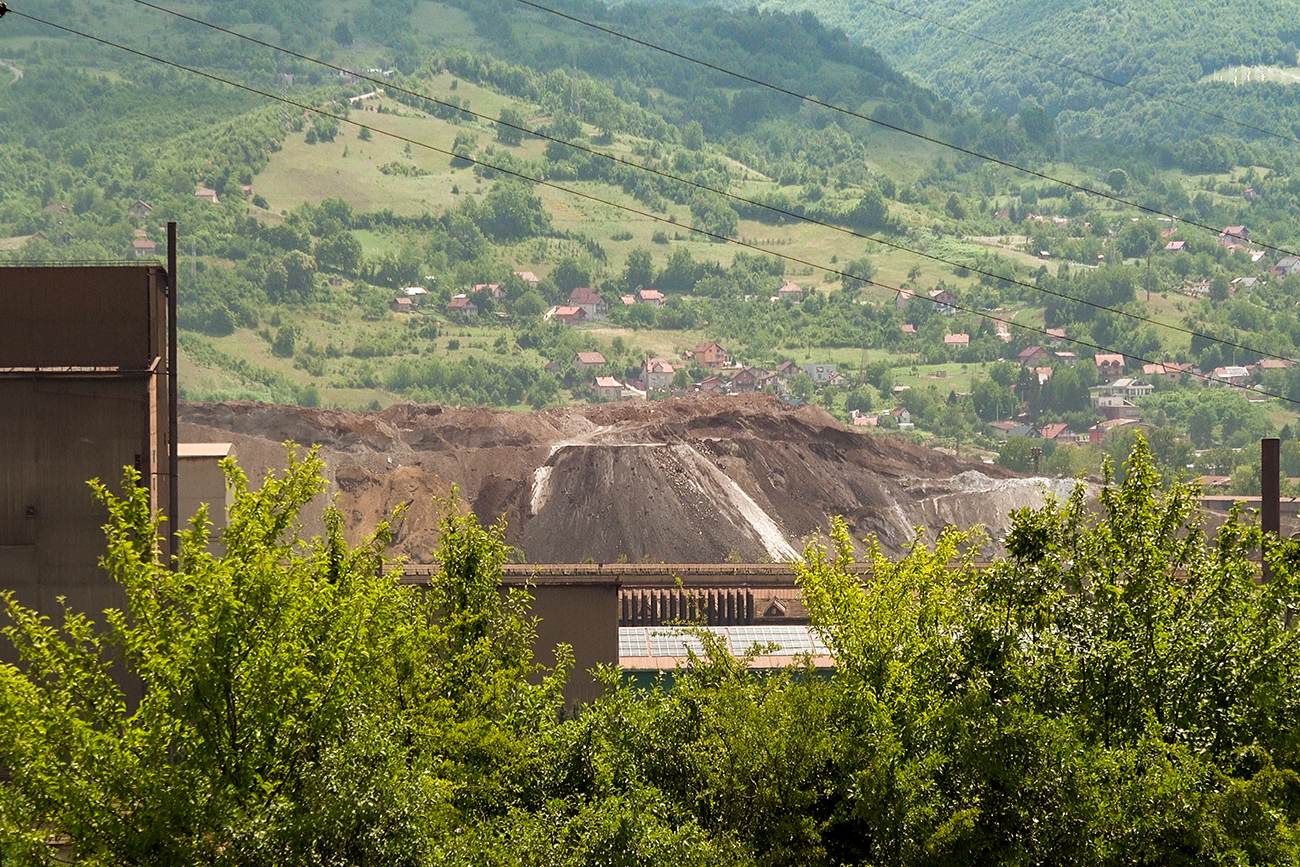
The aim of the contract for managing Rača was to remove industrial waste from the landfill permanently and restore the site to the highest environmental protection standards. SAHVA COMPANY was required to remove the waste, permanently remediate the land, and make it available to the Municipality of Zenica for future development projects.
The contract allowed the company to remove slag, but required it to pay the municipality 1.50 convertible marks for every tonne collected, processed, and removed from the site. Payments were to be made quarterly.
However, problems arose almost as soon as the contract was signed. Initially, the slag was removed by mlm Group Zagreb, as the Zenica Municipal Council did not approve the transfer of the contract to the Zenica-based company until mid-2013. By then, the Zagreb company owed the Municipality of Zenica 600,000 convertible marks in unpaid fees. The municipality warned that it would terminate the contract, but SAHVA COMPANY then assumed the debt and took possession of the Rača site.
Mlm Group Zagreb did not respond to questions from CIN journalists.
Mining engineer Professor Jovan Sredojević, PhD, who prepared landfill remediation studies for the company, says it had state-of-the-art technology for processing slag but simply “took as much as it needed” and then pulled out.
When SAHVA COMPANY took over Rača, it told the relevant authorities that the project would be a demanding undertaking, requiring specialised technology to process the slag and permanently remediate the landfill. It therefore brought in a partner, the Zenica-based company Quorum BH.
From 2013 onwards, the obligation to pay the slag removal fee, along with the debt inherited from Zagreb-based mlm Group, fell to the two companies. According to the City of Zenica’s Finance Department, they settled the outstanding debt but did not pay the fee because they failed to provide reliable documentation on which to calculate the amount of slag collected, processed and removed.
In the absence of reports, city officials made a rough estimate in 2019 of how much slag the company could have processed between 2014 and 2018. Their calculations were based on scientific estimates of the amount of steelmaking residue, known as berne, deposited at the site. They estimated that the companies had processed around 156,000 tonnes of slag, leaving them with a total debt of approximately 318,000 convertible marks.
In their calculations, city officials did not take into account a 2013 proposal from SAHVA COMPANY, in which the company stated that it could excavate and process around one million tonnes of slag a year.
CIN journalists waited four months for the City of Zenica to provide information on how much SAHVA COMPANY had paid in fees for processing and removing the slag. Following intervention by the Administrative Inspectorate of Zenica-Doboj Canton, journalists were granted access to the financial records. However, Selver Keleštura, an adviser to the Mayor of Zenica, offered them only the documents he considered appropriate, refusing to let them inspect the full file.
The documents made available showed that SAHVA COMPANY had paid 350,000 convertible marks and Quorum BH 235,000 convertible marks towards the outstanding debt. However, they contained no information on the quantities of slag processed and sold.
Quorum BH was also unavailable for comment, as the company is no longer in business.
Despite being a party to a contract that had been signed in breach of the Zenica-Doboj Canton Concessions Act, SAHVA COMPANY sued the City of Zenica in 2021 over the contract’s conclusion and the fact that it failed to specify precisely the area of land earmarked for the remediation of the Rača landfill.
In 2024, the Cantonal Court in Zenica declared the contracts between the city and SAHVA COMPANY null and void, ordering the city to refund the company the 350,000 convertible marks it had paid towards the debt inherited from Zagreb-based mlm Group. As a result, SAHVA COMPANY recovered the money it had paid in, while never having paid the municipal fee for waste disposal.
Processing and supplying cement works
CIN journalists obtained delivery notes and invoices showing that SAHVA COMPANY and APS had sold slag to cement works in Bosnia and Herzegovina and Croatia.
On 5 December 2025, APS delivered 27 tonnes of slag to Heidelberg Materials Cement BiH in Kakanj, using a local haulage company.
Ante Perić, the owner of APS, told journalists that the price ranged from 20 to 30 convertible marks per tonne, excluding transport costs.
The Kakanj cement works confirmed to journalists that, between November 2025 and January 2026, they had purchased slag from APS solely for industrial testing, to determine whether the material met the technical requirements of their production process.
“The supplier also informed us that slag from this site had been sold for years to other buyers in Bosnia and Herzegovina and abroad, and that previous inspections by authorities at various levels had confirmed that activities at the Rača landfill were lawful, the cement works said. They added that APS had informed them that, under its contractual arrangement with SAHVA COMPANY, it held the necessary permits to sell and extract the slag.
On 15 January 2026, inspectors from the Zenica-Doboj Canton Administration for Inspection Affairs carried out an inspection at the landfill and found that SAHVA COMPANY was extracting, processing and selling slag. According to the inspection report, APS was preparing a delivery note on site and weighing the load of slag on a lorry that the inspectors found there.
The following day, the City of Zenica warned SAHVA COMPANY that it was not authorised to excavate or remove slag from the site. The company was told that its activities at the landfill were limited to preventing illegal waste dumping and restricting access by construction machinery and lorries.
According to delivery notes obtained by CIN journalists, SAHVA COMPANY exported slag to Nexe d.d. in the Croatian town of Našice through APS in both 2023 and 2025. One shipment in 2023 comprised around 27 tonnes of slag, invoiced at €875, equivalent to approximately 63 convertible marks per tonne.
Nexe d.d. declined to disclose details of its business dealings with suppliers in Bosnia and Herzegovina, but added: Upon learning that the right to dispose of slag from the Rača landfill had been called into question, all further deliveries were suspended.
According to data from Bosnia and Herzegovina’s Indirect Taxation Authority, around 2.5 million tonnes of granulated slag, worth nearly 162 million convertible marks, were exported from the country between 2021 and 2025.
Financial statements show that APS’s revenue rose from 2.7 million convertible marks in 2022 to 14.2 million in 2025. SAHVA COMPANY also recorded an increase, with revenue climbing from half a million convertible marks in 2023 to more than 4 million just two years later.
Everything I do is transparent. I’m not hiding anything, and I haven’t stolen anything. I was always told, ‘Here, you can buy it. We’re doing the work, we have a contract,’ so I bought it, Perić said, explaining his business relationship with SAHVA COMPANY.
Perić says that, before working with him, SAHVA COMPANY had offered slag to cement manufacturers, but they were reluctant to deal with the company because they lacked confidence in its ability to process the material at the landfill, specifically, to separate the usable material from the rest of the waste. As he had contacts at Cemex, he helped the company get a foothold in the business. Cemex ignored CIN’s calls and enquiries.
I never sensed for a second that anything was wrong […] A little investment in additional machinery was needed to separate the material. So I helped them out, got involved, and then I told them, ‘There you go, you’ve managed it.’ But then they said to me, ‘Ante, no – since you were the one who put us in touch, you should carry on selling it.’ So I genuinely did carry on selling it, Perić explained.
Zulkaid Skomorac, owner of SAHVA COMPANY, agreed to meet with journalists but then backed out of discussing the Rača landfill.
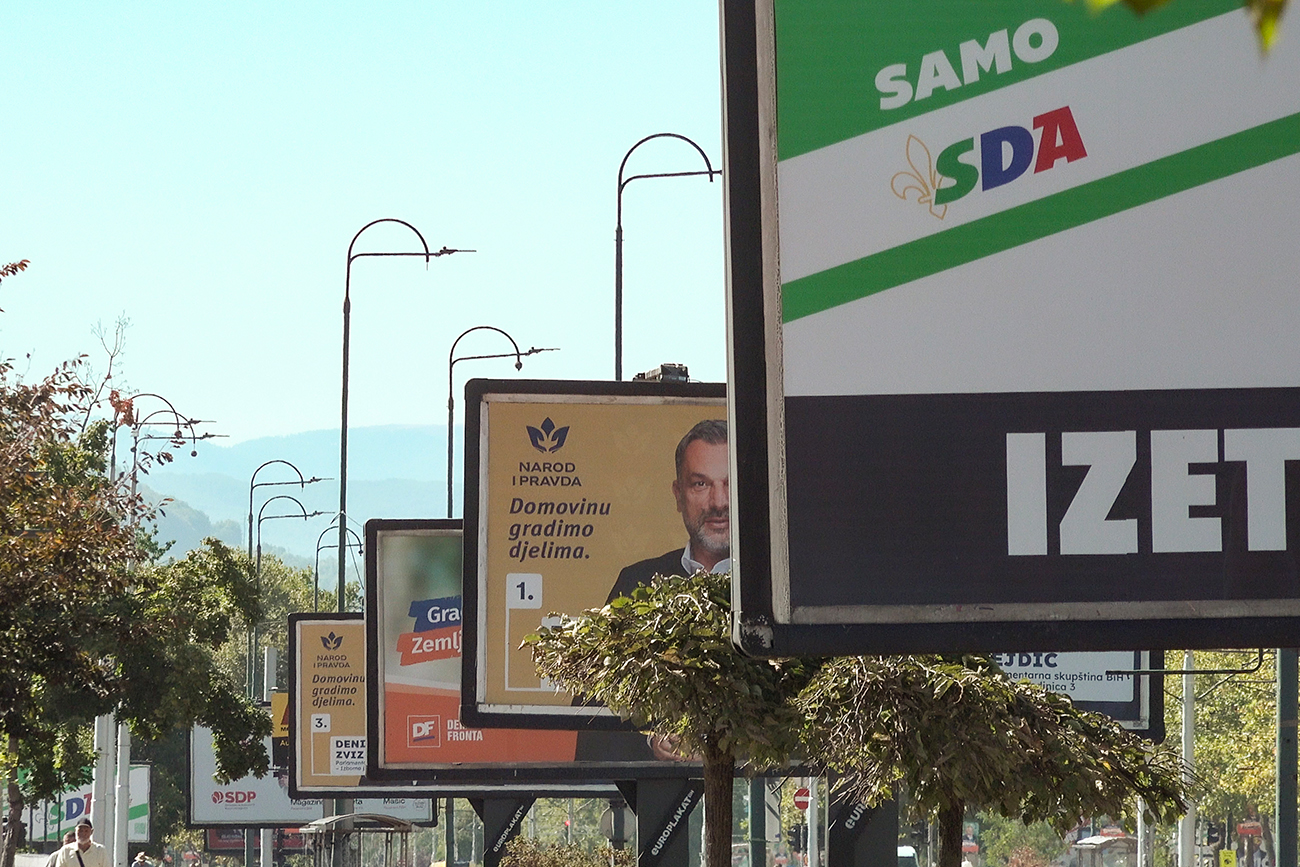
During the campaign ahead of Bosnia and Herzegovina’s 2026 general election, Skomorac, a BHI KF candidate for the Zenica-Doboj Canton Assembly, told voters: I have years of hard work and many tangible achievements behind me […] I believe that people’s trust is earned not just through words and promises, but above all through actions and results. That is why I want to continue working responsibly, decisively and courageously in the interests of all the citizens of our canton. According to preliminary results, he failed to win a seat in the Zenica-Doboj Canton Assembly.
Without the required permits
Environmental inspectors from the Zenica-Doboj Canton Administration for Inspection Affairs have visited the Rača landfill over the past few years. In March 2026, they found several unidentified people loading coal at the site. One person threatened an inspector and prevented her from remaining there.
In a written response to journalists, the Zenica-Doboj Canton Administration for Inspection Affairs said that no slag extraction was currently taking place at Rača. It added that it was waiting for the process of selecting a new landfill operator to be completed, followed by the signing of a new contract between the City of Zenica and SAHVA COMPANY.
Jasmina Tica, a cantonal environmental inspector, explains that since mid-2025, unregulated landfills in the Federation of Bosnia and Herzegovina have fallen under the remit of cantonal environmental ministries. Previously, they were the responsibility of the Federation authorities.
The Federation Ministry of Environment and Tourism told journalists that it had not issued any permits for slag extraction to either SAHVA COMPANY or APS.
This type of activity does not require an environmental permit. However, companies must obtain a different permit for waste management activities carried out by small businesses, which is issued by the cantonal ministry, said Sabina Šahman-Salihbegović, Secretary of the Federation Ministry of Environment and Tourism.
However, the Zenica-Doboj Canton Ministry of Physical Planning, Transport and Communications and Environmental Protection had also issued no permits for slag extraction at Rača.
The Mayor of Zenica is set to sign a new contract with SAHVA COMPANY, recommitting the firm to the stabilisation, remediation and rehabilitation of the city-owned section of the Rača landfill site. The 15-year agreement binds the company to make a one-off local community contribution of 1 million BAM, alongside an annual payment of 110,000 BAM, and provide an unconditional, irrevocable performance bank guarantee worth 2.5 million BAM to secure the project. The contract exempts the company from paying any additional municipal fees or levies for the removal of slag and other waste materials from the landfill.
After taking over the steelworks from ArcelorMittal, Nova Željezara alerted the relevant authorities in Zenica-Doboj Canton and the Federation of Bosnia and Herzegovina to slag extraction taking place on the part of the landfill it owns. In November 2025, the company filed a criminal complaint against APS with several judicial institutions. It alleged that there were grounds to suspect that, with the assistance of certain politicians, institutions and officials of Bosnia and Herzegovina’s Indirect Taxation Authority, the company had committed serious criminal offences, including illicit trading, aggravated theft and abuse of office. The complaint was referred to the Special Department for the Suppression of Corruption, Organised and Inter-Cantonal Crime within the Federation Prosecutor’s Office (POSKOK). POSKOK confirmed to CIN that it had received the complaint and opened a case.
Accompanied by police, representatives of Nova Željezara tried to gain access to Rača, but said Skomorac barred them, claiming that he was responsible for managing and protecting the landfill. In December 2025, Nova Željezara also sued SAHVA COMPANY at the Municipal Court in Zenica over the obstruction of its access to the property.
Following Nova Željezara’s warnings to the federal and cantonal authorities, the Zenica City Attorney’s Office issued formal letters towards the end of 2025 stating that any further unauthorised extraction of slag was strictly prohibited. It also noted that the companies and individuals excavating the slag had no consent, authorisation, or valid permit allowing them to handle or dispose of it.
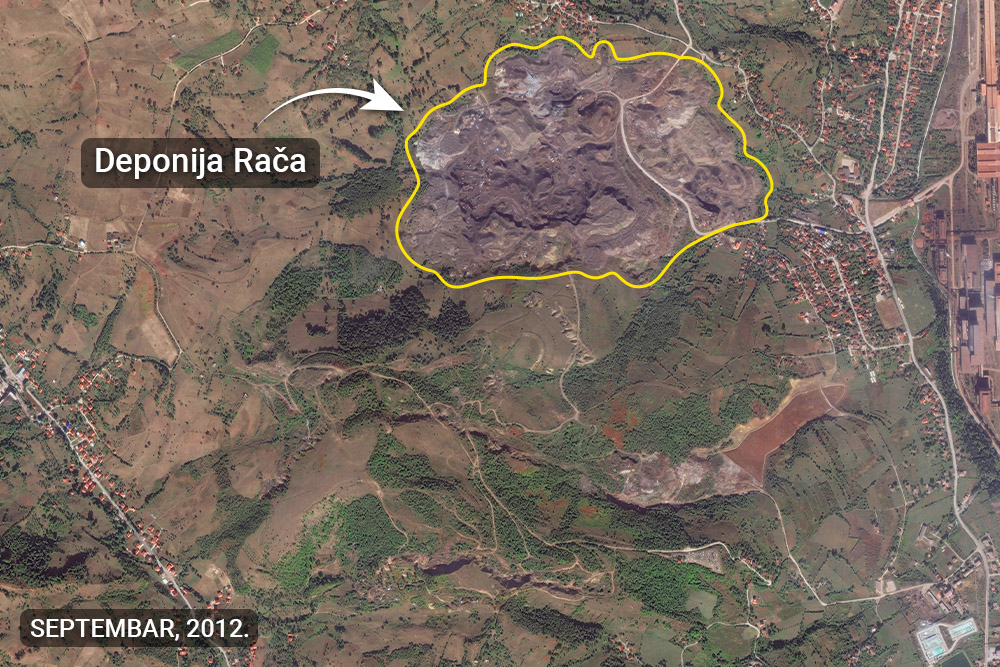
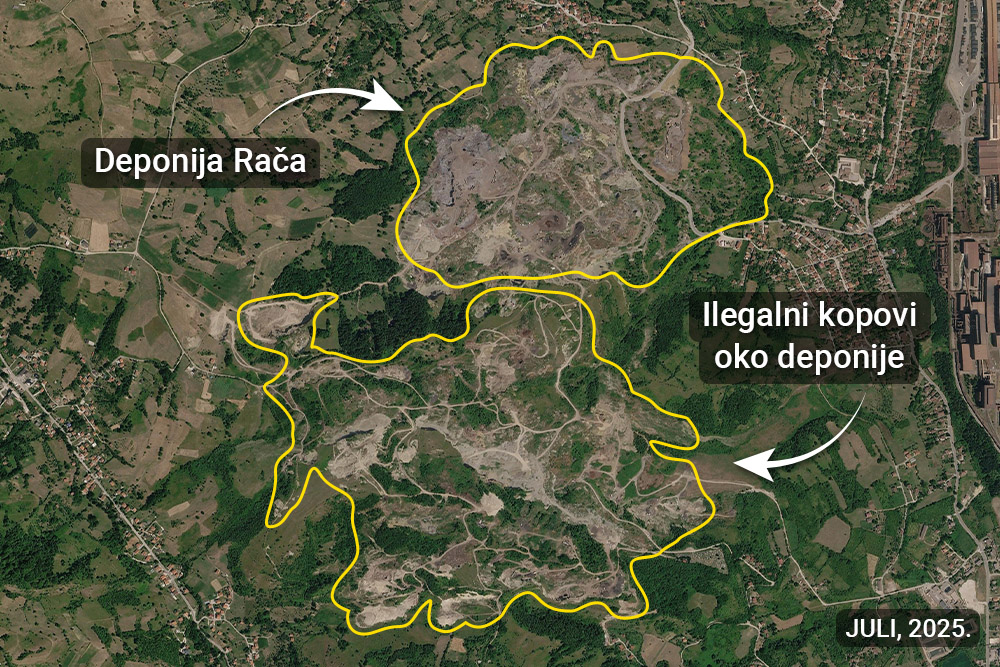
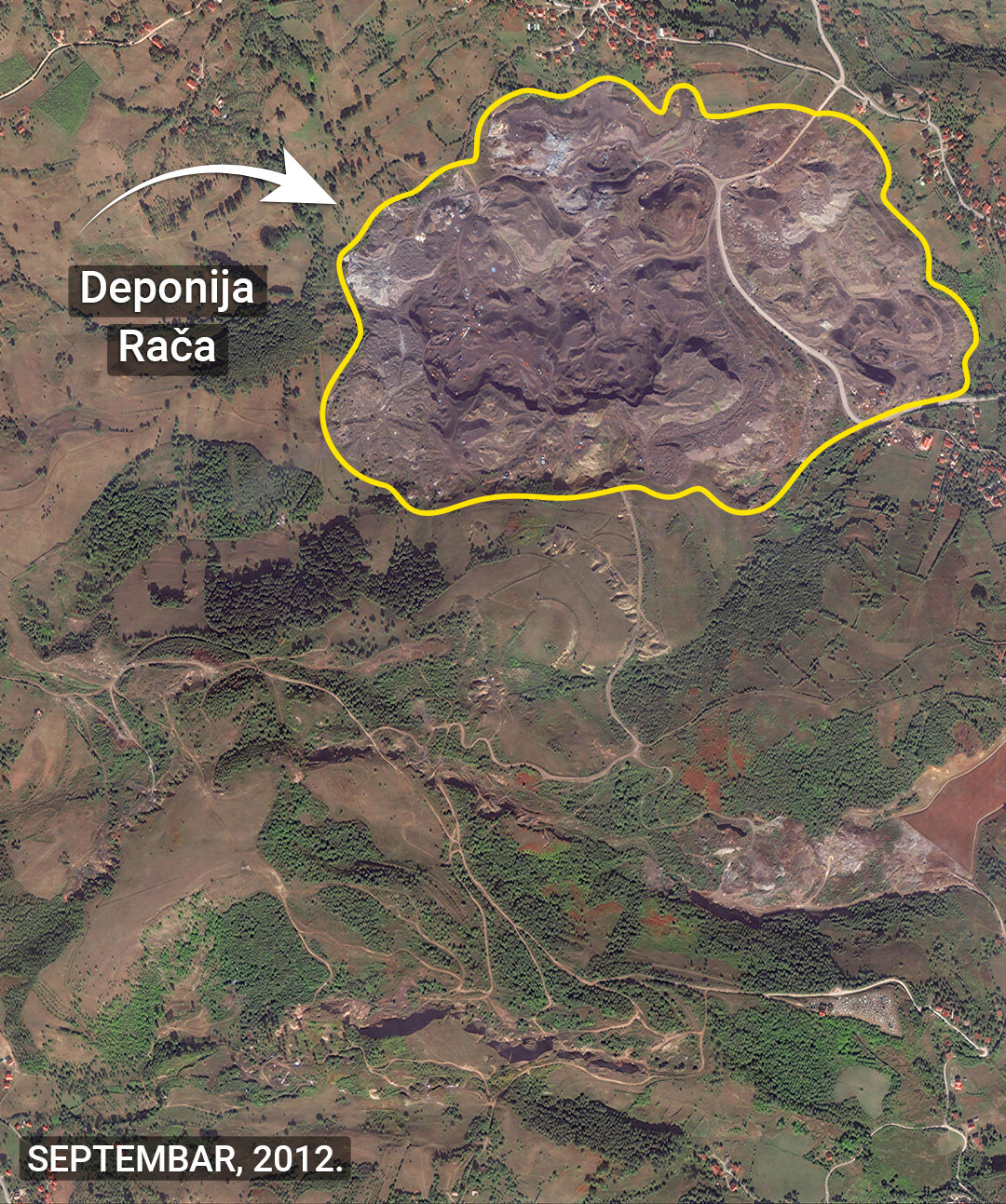
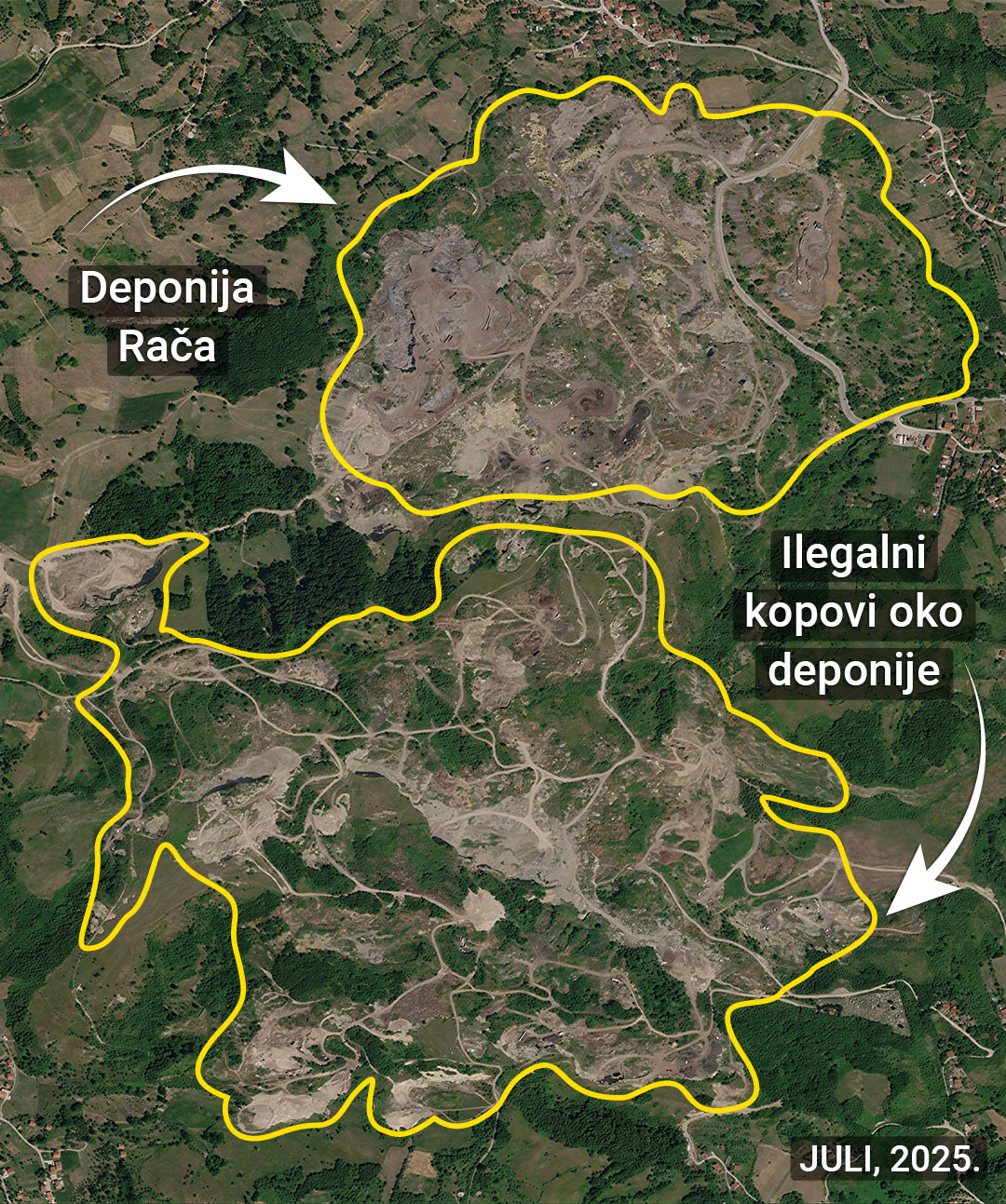
Graphic: Željko Todorović (CIN) / Google Earth Pro