
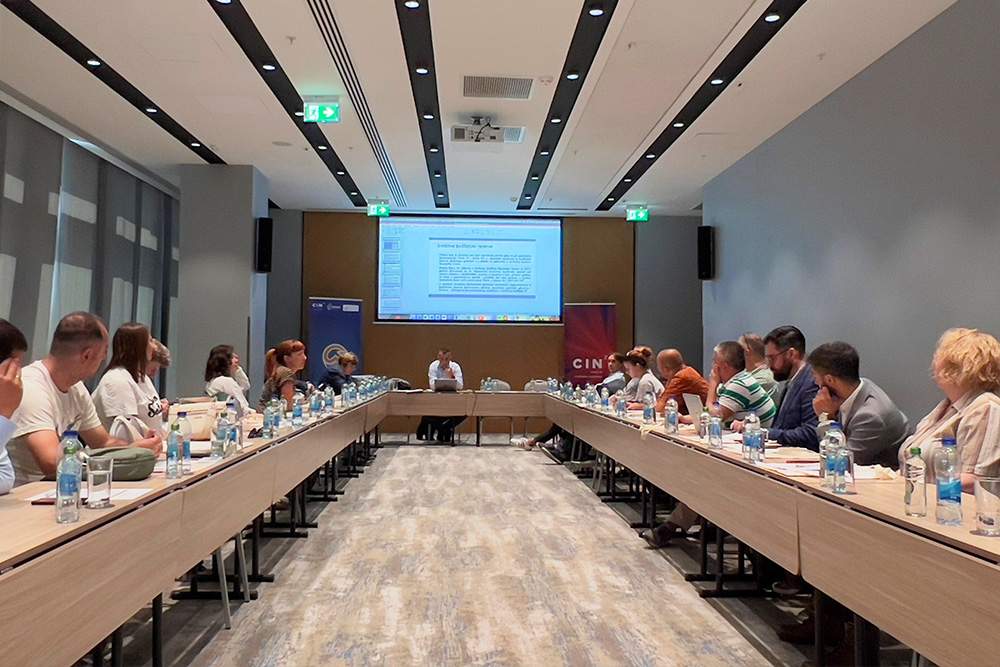
Every year, authorities allocate over 100 million BAM from public budgets to finance thousands of non-governmental organizations (NGOs) in Bosnia and Herzegovina. This money is often spent non-transparently, without a clear goal and plan, and lacks proper oversight, concluded representatives from the NGO sector and public institutions at a roundtable discussion in Banja Luka organized by the Center for Investigative Reporting (CIN) in partnership with Futura from Mostar and the Center for Research and Studies – GEA from Banja Luka.
GEA conducted research and analyzed the system of financing NGOs in Bosnia and Herzegovina. According to the executive director of this organization, Marko Martić, the majority of the funds are allocated to sports organizations.
“In most cases, the funds are allocated based on requests rather than through public calls and clear procedures. The amount granted from public budgets is several times higher than that provided by international organizations”, explained Martić.
Furthermore, the practice of retroactive funding, i.e., money being disbursed to support events that have already happened is not uncommon. He also pointed out a practice of granting multiple NGOs small amounts of money without adhering to allocation criteria or conducting subsequent expenditure control and without a clear plan for what the funding aims to achieve.
Lana Matić, an expert associate for citizens’ associations at the Banja Luka City Administration, emphasized that the allocation rules vary both among entities and from city to city. In her opinion, the issue could be addressed by requiring each local community to develop a financing strategy along with a plan for civil sector development before distributing funds.
The roundtable discussion on “Financing Non-Governmental Organizations in Bosnia and Herzegovina” was held as part of the project “Strengthening the Capacities of Civil Society Organizations for Monitoring Public Budgets”, funded by the European Union and The Balkan Trust for Democracy through USAID.
The project aims to contribute to the fight against corruption by increasing the levels of fiscal and budgetary transparency through the active involvement of civil society.