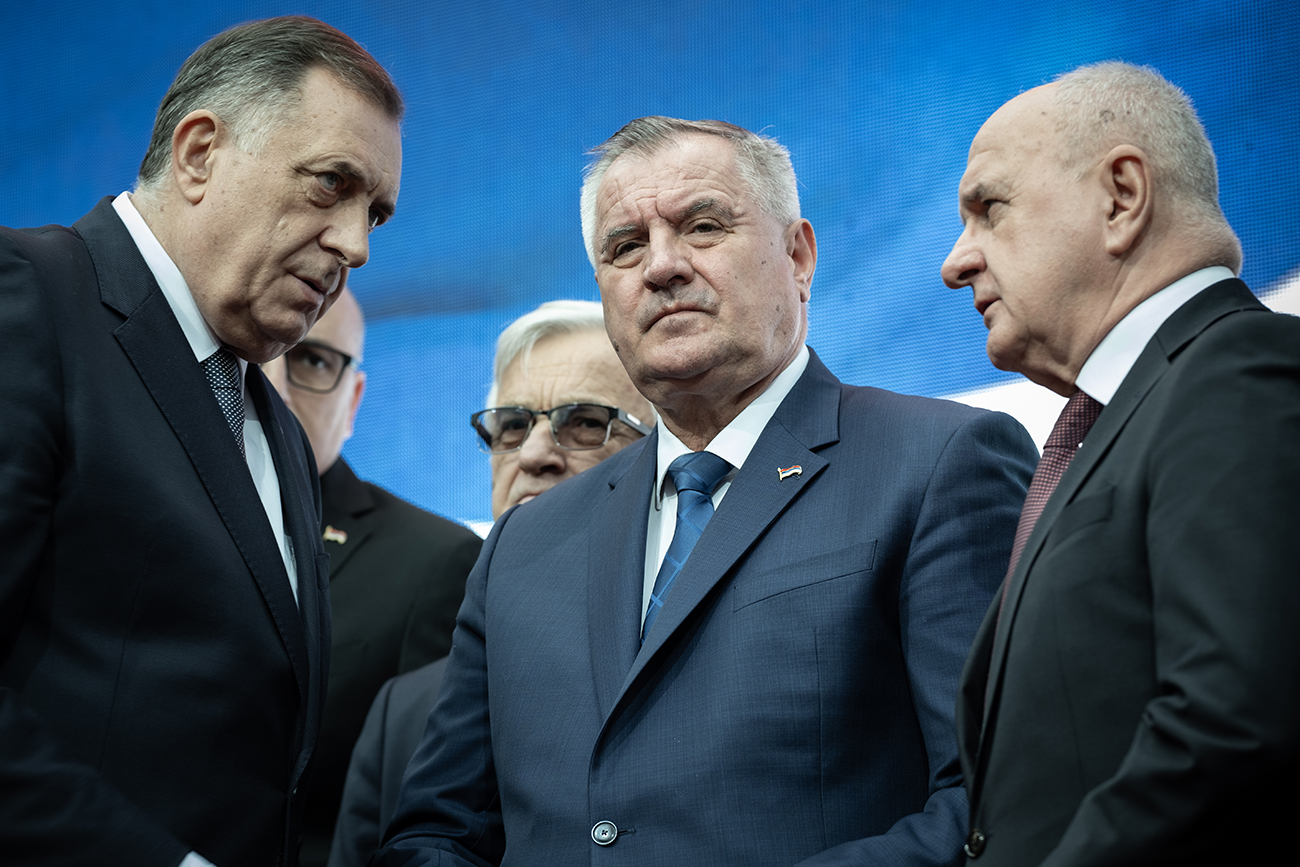
In the late summer of 2025, Radovan Višković resigned as Prime Minister of Republika Srpska (RS) after being named among the suspects investigated by the Prosecutor’s Office of Bosnia and Herzegovina (BiH) over an alleged attack on the country’s constitutional order. His resignation, however, did not mark the end of his political career.
Višković stated at the time that he would “remain part of the Alliance of Independent Social Democrats team”, while the party’s leader, Milorad Dodik, prepared a new role for him – Acting Director of Autoputevi RS, the Republika Srpska motorway company.
To enable Višković to take up the post, the company’s statute was amended. Instead of requiring a degree in law, economics or civil engineering, the revised criteria stipulated a degree in either a social science or a technical field, making Višković eligible on the strength of his degree in transport engineering.
His appointment in September 2025 triggered yet another reshuffle. By October, the then acting director of Autoputevi RS, and fellow party member, Nedeljko Ćorić, had been appointed acting director of the Investment and Development Bank of Republika Srpska, a position he still holds today.
There was no legal basis for either appointment in an acting capacity. No public recruitment process was conducted, nor were the candidates subjected to a professional selection procedure.
These cases are far from isolated.
The Centre for Investigative Reporting (CIN) found that, over the past decade, at least 140 heads of institutions, agencies and public companies in Republika Srpska have been reappointed in an acting capacity more times than regulations permit.
The Republika Srpska Government selects individuals of its choosing, installs them in senior posts as supposedly temporary appointments, and then periodically extends their mandates, allowing them to remain in office for years in breach of civil service and public-sector regulations.
In this way, the lawful appointment of senior officials through open competition is circumvented, while the management of public resources is entrusted to political appointees who are not required to meet prescribed professional criteria.
The competent institutions of Republika Srpska neither prevent nor sanction unlawful acting appointments, even though companies and public institutions led in this manner often fail to make progress and accumulate debt at the expense of citizens.

Political control
While serving as Prime Minister of Republika Srpska, Višković argued that appointing acting directors was practical because it enabled the Government to exercise greater control and replace managers more easily. Asked by journalists in March 2024 why such appointments were being made, he replied: “It is much easier to work with them when they are acting directors than when they are appointed as directors.”
Years of practice in Republika Srpska suggest that the Government has effectively taken control of the appointment process for acting officials. The Republika Srpska Civil Servants Act, which governs recruitment within public institutions, permits the appointment of acting office-holders for a period of 90 days and for no more than three consecutive terms. Meanwhile, the Republika Srpska Public Service System Act, which regulates employment in public companies and institutions, does not provide for the appointment of acting directors at all. Nevertheless, the Republika Srpska Government has ignored these legal provisions for years.
Instead, it repeatedly appoints, dismisses and then reappoints the same acting directors to the same positions, allowing them to remain in office for months and, in many cases, years.
Journalists pointed out to then Prime Minister Višković that the practice was not in line with the law.
“Well, fine, we’ll change the law. What’s the problem?” he replied, effectively acknowledging the Government’s long-standing disregard for the legal framework.
The law was never changed, but the practice continued. Indeed, among the vacancy notices published on the website of the Republika Srpska Public Administration Agency, there are almost no open competitions for senior management positions.
This agency is responsible for administering recruitment procedures for all civil servants in the entity, including the heads of institutions such as the Republika Srpska Pedagogical Institute, the Institute of Statistics and the Archives of Republika Srpska. Appointments in public companies and institutions, meanwhile, fall under the responsibility of their supervisory boards and the Republika Srpska Government.
However, according to data compiled by CIN, no recruitment competitions for senior management positions were held in at least 140 institutions, agencies and public companies over the past decade. Instead, acting managers were selected by the Republika Srpska Government and supervisory boards, with political considerations taking precedence over professional qualifications. Not all of these appointments, however, were publicly disclosed in the Official Gazette of Republika Srpska.
Aleksandar Radeta, head of the Republika Srpska Public Administration Agency, says that “the Agency neither proposes nor adopts legislation, nor does it supervise the implementation of laws”.
Radeta himself has served in an acting capacity for more than a decade. Since 2014, the Republika Srpska Government has repeatedly appointed and dismissed him, yet no open competition has ever been held for his position, despite the law stipulating that an acting appointment may last no longer than 90 days and may be renewed only three consecutive times. He described the matter as a “personal issue” on which he “cannot and does not wish” to comment.
Tamara Stojnić, Deputy Director of the Republika Srpska Secretariat for Legislation, likewise treated the procedure under which she was appointed as a private matter. “The email you sent me contains questions of a personal nature. (…) I am under no obligation to answer any of them,” Stojnić wrote to CIN, declining to discuss the unlawful appointment of acting officials despite being part of the leadership of an institution responsible for the legal review, harmonisation and technical drafting of legislation and regulations in the entity.
According to data gathered by CIN, more than 140 heads of public companies, institutions, administrations and agencies have been appointed in breach of the law. Of these, 38 have been appointed as acting officials more than three consecutive times, while for around one hundred others heading major institutions and public enterprises there is no legal basis whatsoever for appointment in an acting capacity.
In addition, at least three current office-holders have been appointed without an open competition or any assessment of their professional qualifications, although their mandates still fall within the legally permitted 90-day period.
Jovana Kisin Zagajac, a lawyer from Banja Luka, believes that the authorities resort to acting appointments precisely to avoid public recruitment procedures.
“If they want a particular individual to be appointed to a position, they will do so through this grey area in the legislation. They will appoint that person as an acting office-holder and, in doing so, avoid the public competition procedure.”
Without a formal recruitment process, such appointments cannot easily be challenged through appeals or legal action.
“If an appointment is made by circumventing a public competition, the question arises as to who has legal standing to challenge such a decision,” Kisin Zagajac concludes.

Legal experts interviewed by CIN say that temporary appointments make acting office-holders more obedient, as such mandates are insecure and dependent on political will.
“This means absolute political control and coercion, and that is precisely why acting appointments exist. If an acting director receives an instruction to sign a contract that is detrimental to the company, they will sign it because they know that if they refuse, they will be removed the next day,” said Stefan Blagić, political analyst and president of the Banja Luka-based association ReStart.
Lawyer Kisin Zagajac shares a similar view: “In other words, we appoint you even though you have not earned the position and do not meet the requirements to perform it, and we can dismiss you at any time if you fail to comply with what is being demanded of you.”
No sanctions
Among acting office-holders in RS entity-level institutions, the majority are members of political parties including the Alliance of Independent Social Democrats (SNSD), United Srpska, the Socialist Party of Srpska (SPS), the People’s Party of Srpska (NPS), the Democratic People’s Alliance (DNS) and the Democratic Alliance (DEMOS). Their minimum monthly salaries are around 3,500 BAM, while in some administrations and public companies they reach nearly 5,000 BAM.
CIN contacted dozens of senior officials, but none were willing to provide concrete answers regarding how they were appointed or how they remain in office. They nevertheless argue that government decisions appointing them constitute a valid legal basis for holding their positions.
The Republika Srpska Government, for its part, has not explained how candidates are selected or appointed. Instead, in a written response to CIN, it outlined general procedures for permanent appointments, addressing the issue in a single sentence:
“The Government of Republika Srpska has data on the duration of all managerial mandates and ensures that for all those appointed for shorter periods, the procedure for selection through public competition is conducted in a timely manner.”
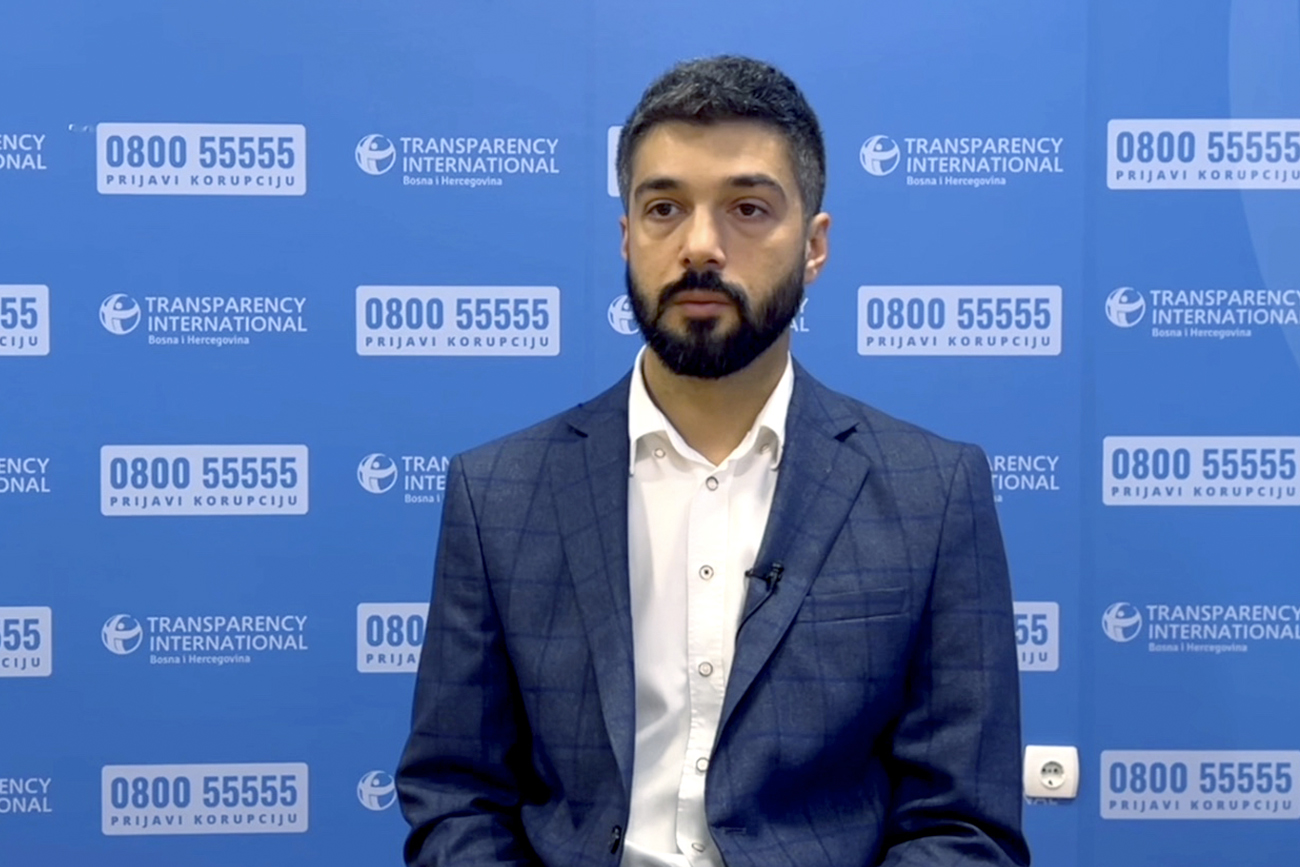
Damjan Ožegović, legal affairs associate at Transparency International Bosnia and Herzegovina, believes the situation clearly amounts to political bargaining.
“In practical terms, it is not possible for the Government, as a central authority, to have under its control such a large number of sufficiently qualified individuals capable of meeting the needs of so many public institutions requiring acting office-holders.”
Since 2021, the Administrative Inspectorate within the Ministry of Administration and Local Self-Government of Republika Srpska has carried out nine inspections following complaints alleging unlawful appointments of acting officials in administrations and administrative organisations. Irregularities were identified in seven cases, but no sanctions were imposed.
“The Administrative Inspectorate cannot fully exercise its powers to impose inspection measures; instead, it informs the Government of the findings for further action,” the Ministry stated, adding that breaches of time limits cannot lead to the suspension of administrative bodies.
CIN submitted to the Inspectorate a list of acting officials who, according to its investigation, are serving beyond their legal mandate. The Inspectorate responded that it maintains individual case files for each of them, but that the information is classified as an official secret.
Lawyer Jovana Kisin Zagajac says such cases must ultimately be brought before a court, which would order the Government of Republika Srpska or another authority “to explain how someone can continue serving as an acting director or in another position despite exceeding the statutory maximum term”.
On the other hand, oversight of appointments in public institutions and companies should, under the Law on the Public Service System, fall under the responsibility of the Republika Srpska Administration for Inspection Affairs. However, the institution claims it is not competent to supervise the work of the Government of Republika Srpska.
“This body is not, in that sense, competent to review decisions on the appointment of senior officials in public institutions made by these authorities,” the Republika Srpska Inspectorate replied.
Such a systemic practice by the Republika Srpska Government is difficult to control and sanction.
“We can only request public institutions and decision-makers not to act contrary to the law, because in practice no one can challenge the Government’s temporary decisions on appointments,” says Ožegović of Transparency International BiH.
Entirely acting management
Auditors from the Republika Srpska Supreme Office for Public Sector Auditing found irregular appointments of acting officials in Šume Republike Srpske in 2023 and 2024. The 2024 report confirms that throughout the year this was the case across almost all management positions, and recommended that the Supervisory Board carry out appointments through public competition.
Blaško Kaurin, a member of the Socialist Party, was appointed acting general director of Šume RS in March 2024. His mandate has since been repeatedly extended, and he remains in the same position today. He had previously agreed to speak to CIN but never responded to questions.
Contrary to both the law and the company’s statute, acting appointments in Šume RS also include members of the Supervisory Board, the Audit Committee, executive directors and heads of organisational units.
At the same time, the company is facing serious financial difficulties. It has recorded multi-million losses for years, while total debt exceeds 100 million BAM, including six million BAM owed to the Tax Administration of Republika Srpska and more than four million BAM owed to employees.
“You have a situation where you need to go and cut a tree, sell it, transport it somewhere and sell it. The tree you did not water, did not cultivate, did nothing for, bears fruit, and then you cut it down, and the company is still operating at a loss. Can someone explain to me how that is possible? How is that possible?” says Stefan Blagić of ReStart.
Nebojša Vukanović of the For Justice and Order party and a member of the Republika Srpska National Assembly argues that acting officials are coerced and compliant individuals loyal to the authorities.
“Dodik’s priority is for his system to function. If a director rebels or refuses to do something – and these people are generally under pressure – they are forced to sign harmful contracts. Later, if they attempt to resist, they know they can be arrested and removed,” Vukanović says.
Party control has also been evident for years in the Republika Srpska Civil Protection Administration (RUCZ), which is led by officials from the Democratic People’s Alliance. Boris Trninić has been serving for two and a half years in an acting capacity as director, while his party colleague Nenad Nešić was unlawfully appointed more than three times consecutively. His appointment followed his resignation as Bosnia and Herzegovina’s Minister of Security amid an investigation conducted by the Prosecutor’s Office of BiH. Nearly a year later, he remains in an acting role.
At the same time, auditors have pointed to a series of irregularities in the management of RUCZ, including weaknesses in financial control and administrative operations.
Neither Nešić nor Trninić agreed to speak to CIN on the matter.
and after stepping down. He is suspected of laundering money and accepting bribes within the company, securing millions in illicit gains. He concealed half of the properties he owns with his wife across Bosnia and Herzegovina, Serbia, and Montenegro from the authorities.”]The Investment and Development Bank (IRB) of Republika Srpska is also run by acting officials. Since 2020, all four acting directors have been linked to the SNSD. The first to be appointed was Dražen Vrhovac, a former SNSD member of the National Assembly of Republika Srpska, followed by Srđan Jovanović and Boris Knežević, and, since October 2025, Nedeljko Ćorić, an SNSD official and former Minister of Transport and Communications of Republika Srpska. None responded to CIN’s requests for comment.
At IRB Republika Srpska, three additional acting executive directors have also been appointed “until the position is filled through a public competition”. Although the appointment decisions date from 2023 and 2025, no public competition has yet been announced.
The IRB claims it is not obliged to conduct such procedures, arguing that as a joint-stock company majority-owned by Republika Srpska it operates under the Labour Law of Republika Srpska, which does not require public recruitment procedures.
Audits of IRB operations are rare and seldom made public, which is why the Bank is frequently the subject of political disputes between the ruling SNSD and the opposition over transparency and governance. These disputes have been further fuelled by the fact that favourable audit reports for 2023 and 2024 were produced by the Banja Luka-based audit firm Grant Thornton, founded by former Republika Srpska Prime Minister and former Chairman of the IRB Shareholders’ Credit Committee, Aleksandar Džombić.
Džombić is currently on trial for abuse of office in connection with the approval of a 19.4 million BAM IRB loan to the company Energolinija. The Banja Luka District Court acquitted him of the charges, but the Supreme Court of Republika Srpska disagreed with the ruling and ordered a retrial.
Against this backdrop, opposition representatives in the National Assembly of Republika Srpska have expressed scepticism regarding the data contained in the reports and have criticised the IRB, claiming that it “serves to plunder the people while enriching individuals close to the authorities”.
“IRB revenues in 2024 were down by 7.8 per cent, and profit amounted to 1.9 million – across all funds and everything the IRB encompasses. Just look at the cluster of restaurants around this National Assembly and each of them will earn that much (…) yet ‘Grant Thornton’ issues an unqualified audit opinion,” said Nebojša Vukanović, a member of the Justice and Order caucus, during a parliamentary session in February.
CIN has previously reported on the IRB’s operations and the granting of loans based on falsified documentation.
Legal expert Ožegović argues that institutions, public enterprises and administrative bodies are obliged to provide citizens with the best and most efficient services, which, he says, is currently not the case.
“This is not possible because acting officials are accountable to political parties and appoint politically suitable staff who are not necessarily the most capable of performing these duties. They also misuse resources, diverting them to the benefit of political parties, most often through public procurement, and those resources are not used to improve the functioning of institutions that are supposed to serve citizens,” Ožegović concluded.