
The construction of Trebinje Airport, six hydropower plants on the Drina and Trebišnjica rivers, and the extraction of crude oil were all touted as investments of strategic importance, yet little has come of them beyond technical documentation and limited construction work.
Progress has largely been limited to the awarding and subsequent resale of concession stakes, the establishment and capital increase of concession-holding companies, investment in technical documentation and the taking on of loans. For just one of the six planned hydropower plants, the Republika Srpska authorities took on BAM 370 million in debt.
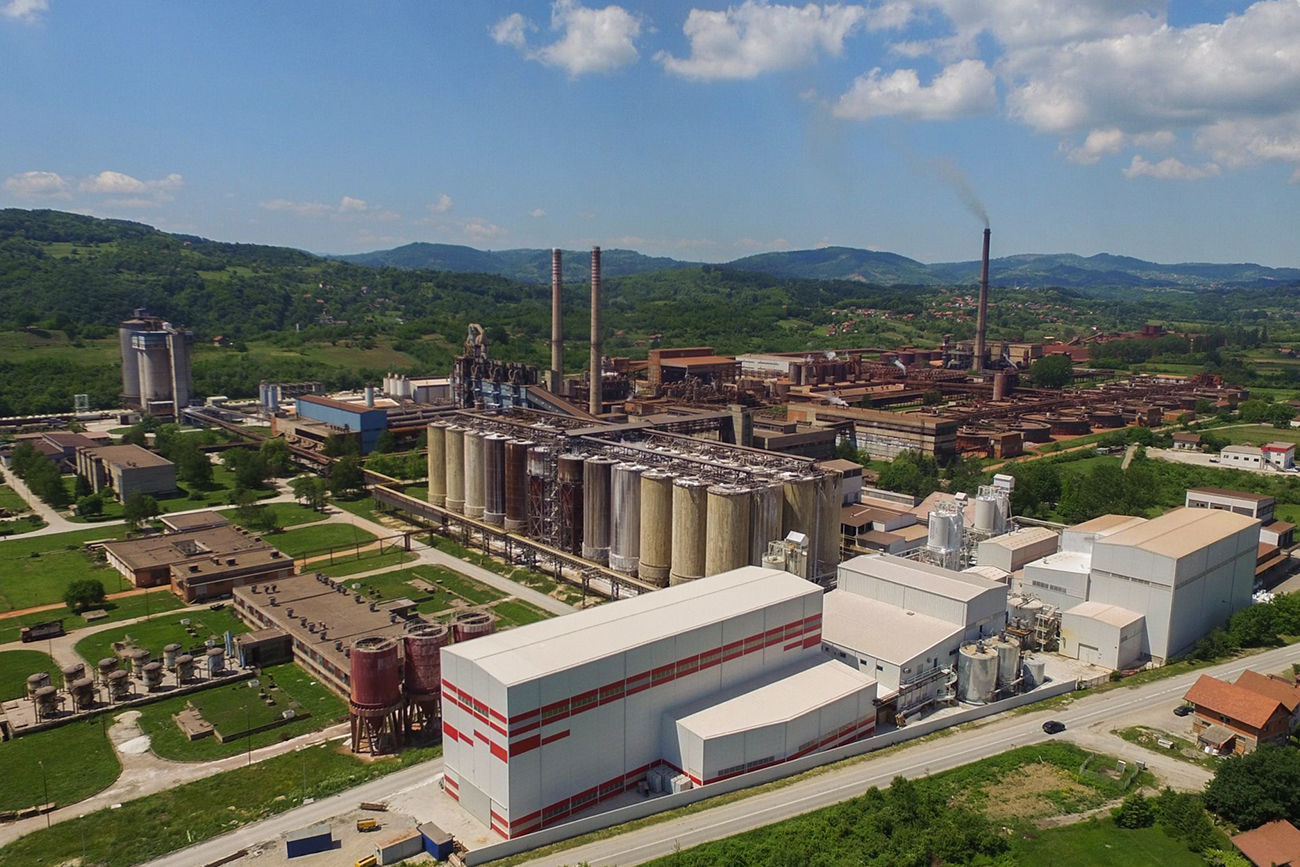
Nor did the attempt to rescue the Zvornik alumina plant Birač through privatisation bear fruit. Once the largest manufacturing and exporting company in Yugoslavia, the plant received almost three times as much investment from the authorities as from its foreign owners, financed through loans from the Investment and Development Bank of Republika Srpska (IRBRS) that were never repaid.
The plant and its associated companies, through which Lithuanian investors siphoned money out of Republika Srpska for years, eventually went into bankruptcy. The proceedings lasted 12 years and were brought to an end by the Foča-based company Pavgord, which acquired most of the Lithuanian group’s claims. By buying up those claims, owner Gordan Pavlović also became the owner of the former Zvornik industrial giant.
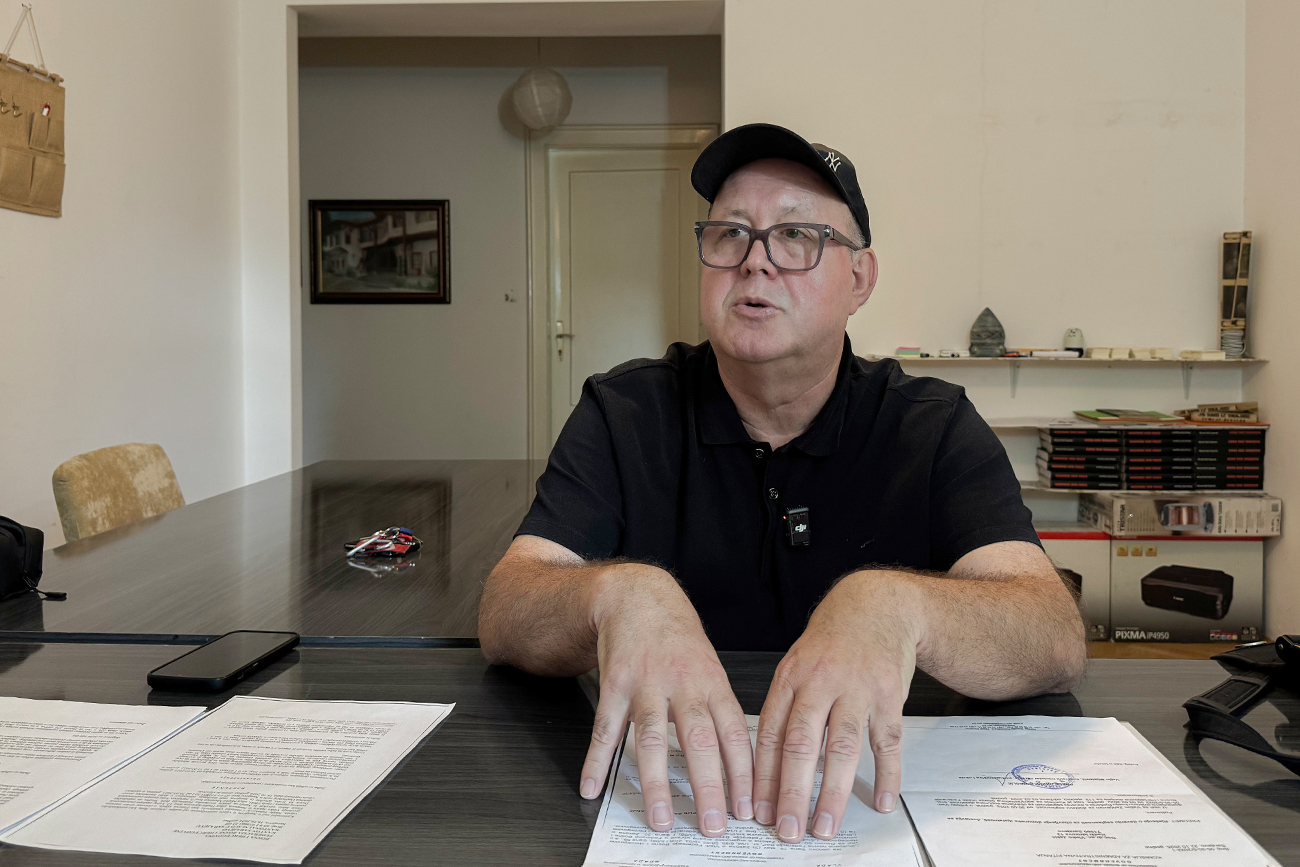
‘The pattern is always the same – deals struck behind closed doors and in private, contracts and investors’ obligations kept out of the public eye, money siphoned off, and the authorities, institutions and oversight bodies, to put it mildly, ignored,’ said Siniša Vukelić, editor of the Capital news portal, commenting on the high-profile investment projects in Republika Srpska that were announced but never delivered.
A Captured State
Privatisations in the late 1990s were meant to save Bosnia and Herzegovina’s industrial giants from collapse, but the alumina plant Birač in Zvornik did not get its chance.
The Lithuanian group Ukio Banko Investicine Grupe, owned by Russian-Lithuanian businessman Vladimir Romanov, first appeared in Bosnia and Herzegovina in 1998 as a consultant to the Republika Srpska government during preparations for the privatisation of Birač. From that position, it quickly went on to become the company’s buyer in an international tender launched at the end of 2000.
Experts repeatedly raised concerns about alleged irregularities and called for the tender to be annulled, but to no avail. The process ended with the sale of the plant for BAM 6 million, rather than the BAM 10 million originally advertised.
Just before alumina production began, the Ukio group set up a company called Balkal in Banja Luka in 2002. The company later signed a business cooperation agreement with Birač, taking over the procurement of raw materials needed for production as well as the entire export operation, leaving the alumina plant to focus solely on contract manufacturing.
‘It had an office, one secretary and a telephone, yet at the same time it was the biggest exporter in Bosnia and Herzegovina with just one employee! It was an even bigger exporter than Elektroprivreda BiH, Aluminij Mostar and others, said Siniša Vukelić, editor of the business news portal Capital, noting that all the business went through this company: ‘But even Balkal did not book enormous profits, which would have meant paying taxes here. Instead, there was a third company abroad, on offshore islands, where all that profit was accumulated.’
In 2018, Transparency International Bosnia and Herzegovina (TI BiH) examined the case in a study entitled The Effect of State Capture in the Extractive Industry: The Birač Case. It described how money was siphoned off through the manipulation of transfer prices, the misuse of loans and control over the judiciary, causing estimated economic damage of around BAM 3.4 billion.
‘This case shows (…) a textbook example of state capture, where all institutions work in the interests of an individual or a small group of people who have enriched themselves enormously, while no one will ultimately be held accountable for the damage suffered by society as a whole,’ said Srđan Traljić of TI BiH.
Soon after it was established, Balkal was sold to a company registered in the British Virgin Islands, making it difficult for any future investigation into the company’s business dealings to establish who its ultimate beneficial owner was.
In 2003 and 2004, the Ukio group also used Birač to establish Alumina, Mehanika, Birač Energo and Energolinija, subsequently restructuring the industrial giant’s operations around the management and financing of these subsidiaries, according to the TI BiH study.
In 2014, the Investment and Development Bank of Republika Srpska (IRBRS) approved two loans totalling BAM 8.5 million for Alumina. Energolinija was also granted two loans, worth BAM 5 million and BAM 19.4 million respectively. The loans led to proceedings being brought against former Republika Srpska Prime Minister Aleksandar Džombić.
‘The proceedings (…) recently ended with an acquittal, but the Republika Srpska Supreme Court overturned that ruling because he played a significant role in approving loans to Energolinija through the Investment and Development Bank, loans that were never repaid and which resulted in substantial losses. The court’s reasoning ‘that the decision had been taken by a collective body and that the prime minister could therefore not be held responsible’ was truly absurd, and the Supreme Court overturned the ruling,’ said Traljić.
Vukelić, who has spent years investigating and reporting on the Ukio group’s business dealings, described it as a ‘complex international network set up for financial wrongdoing’, involving dozens of financial experts.
‘I even went to Lithuania, to their headquarters, where the Ukio group was based. They have a beautiful basketball arena that was actually built by the Birač alumina plant. (…) Milorad Dodik and Željka Cvijanović were guests there; they travelled to matches in Lithuania on the company’s official plane,’ Vukelić told CIN.
The Centre for Investigative Reporting (CIN) has compiled a map of 20 foreign investments that have either not been realised or whose implementation has been delayed for years.
Although they were touted as major capital projects with a combined value of at least BAM 10.6 billion, their implementation has been delayed by more than a decade, and they remain unfinished to this day.
According to the data collected, the Republika Srpska government has even bought back some concessions, paying millions of Bosnian convertible marks in public funds to do so. On top of that, the government lost two arbitration cases over the unilateral termination of contracts or failure to meet contractual obligations, costing taxpayers around BAM 125 million.



Concessions as a route to energy security
Since 2010, the authorities in Republika Srpska have been promising energy independence and security through the construction of the Gornja Drina and Gornji Horizonti hydropower projects, as well as the extraction of crude oil and gas in Motajica, Majevica and eastern Herzegovina. All the announced deadlines have been missed, and none of the projects has been completed.
The Gornji Horizonti project envisaged the construction of three hydropower plants: Dabar, Nevesinje and Bileća. The planned cost of Dabar HPP alone was BAM 661 million, with the hydropower plant originally due to be completed and brought into operation by 2020. A year later, the authorities took out a loan to finance its construction, borrowing BAM 370 million from the Chinese state-owned bank (CEXIM), with a 20-year repayment period.
According to environmental campaigners and local media reports, disbursement of the loan is currently suspended.
A 50-year concession was awarded to Hidroelektrane na Trebišnjici and Elektroprivreda Republike Srpske. To implement the project, the concession holders established Hidroelektrana Dabar in 2011.
The company’s capital was later increased from BAM 1 million to BAM 31 million, while Elektroprivreda Republike Srpske transferred its 30 per cent stake, valued at BAM 9.3 million, to Hidroelektrane na Trebišnjici.
As part of the project, a 12-kilometre-long canal was built through Fatničko polje, along with associated infrastructure. Environmental groups have warned that the construction of the hydropower plants could have devastating consequences for the environment, particularly because the authorities are issuing permits based on environmental impact assessments that are more than 40 years old, as the project dates back to the former Yugoslavia.
‘Based on everything we know, Gornji Horizonti is currently the worst hydropower project in Europe. ‘(…) It will primarily affect the karst fields of Gacko, Nevesinje, Dabar and Fatničko polje, because it will collect all the water from these areas and divert it through canals and tunnels,’ said Vladimir Topić of the Centre for Environment.
In August 2024, the Basic Court in Banja Luka, acting on a lawsuit brought by the Aarhus Centre, annulled the construction permit for the hydropower plant issued by the Republika Srpska Ministry of Spatial Planning, Construction and Ecology.
‘And what did the ministry do? It repeated the procedure, changing only the registration number and the date. (…) And they said: ‘Everything is fine now, so let’s carry on with construction,’ Emina Veljović, executive director of the Aarhus Centre, told CIN.
The organisation has since filed another lawsuit, and is awaiting a response.
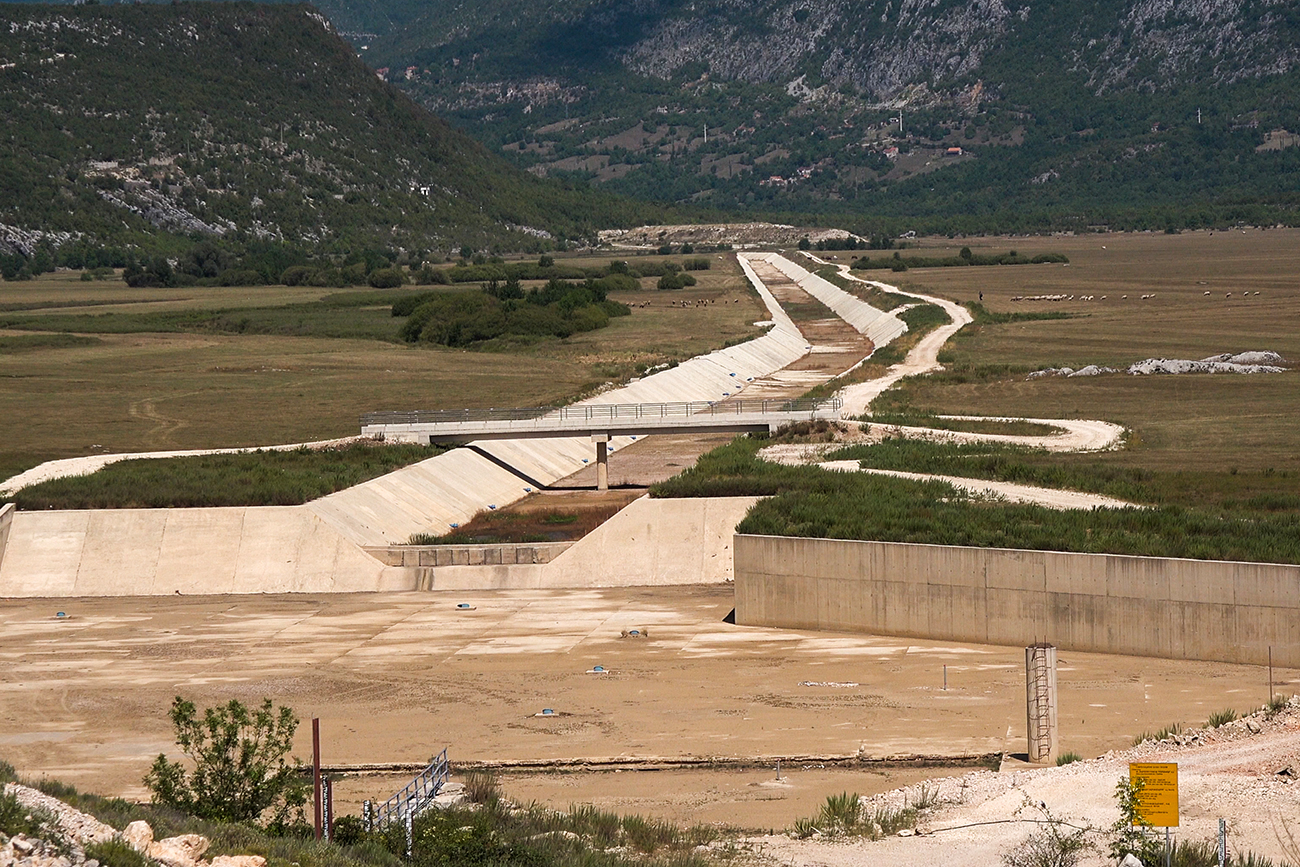
The Gornja Drina project was announced as an investment worth BAM 861.5 million, involving the construction of three hydropower plants: Buk Bijela, Foča and Paunci.
The concession agreement for Buk Bijela was signed in 2016, with construction due to be completed by 2023. The concession for the Foča and Paunci hydropower plants was signed in 2019, with a 2025 completion deadline. Serbia joined the project in 2020. Its state-owned company Elektroprivreda Srbije became the majority shareholder in the concession-holding company HES Gornja Drina, with a 51 per cent stake, after investing BAM 39.6 million in its share capital. By August 2026, the company’s capital stood at BAM 82.6 million, while only preparatory work had been carried out on the ground.
In 2010, Republika Srpska officials also optimistically announced a major energy project focused on oil and gas exploration and extraction.
That year, Naftna industrija Srbije, with a 60 per cent majority stake, and the Russian company NeftegazInKor established Jadran-Naftagas. The following year, the company was awarded a 28-year concession to explore for and extract crude oil and gas in the Majevica, Motajica and eastern Herzegovina areas. The planned investment was worth BAM 345 million. In 2012 alone, BAM 19.5 million was invested in geological exploration. However, according to official data, the quantities of oil discovered were not commercially viable for production.
Trebinje Airport has long been touted as a key infrastructure project aimed at boosting development in Republika Srpska and unlocking Herzegovina’s tourism potential. Plans for its construction date back to 2008, when the public company Aerodrom Trebinje was established with initial capital of BAM 50,000.
By 2013, the company had received around BAM 1 million from the public budget for its ‘regular activities and normal operation’, before being merged into the public company Aerodromi Republike Srpske. The project then largely faded from view until 2020. That year, with the approval of the Republika Srpska authorities, the Serbian government established a new limited liability company, Aerodrom Trebinje, through Aerodromi Srbije. The planned location was changed, a 3.5-kilometre runway was envisaged, and preparations for the necessary documentation began.
By 2025, the company’s share capital had risen to BAM 4,610,476. The planned cost of the airport was put at around BAM 390 million, but on the vast open field some 15 kilometres from Trebinje, there is still little sign of any construction work.