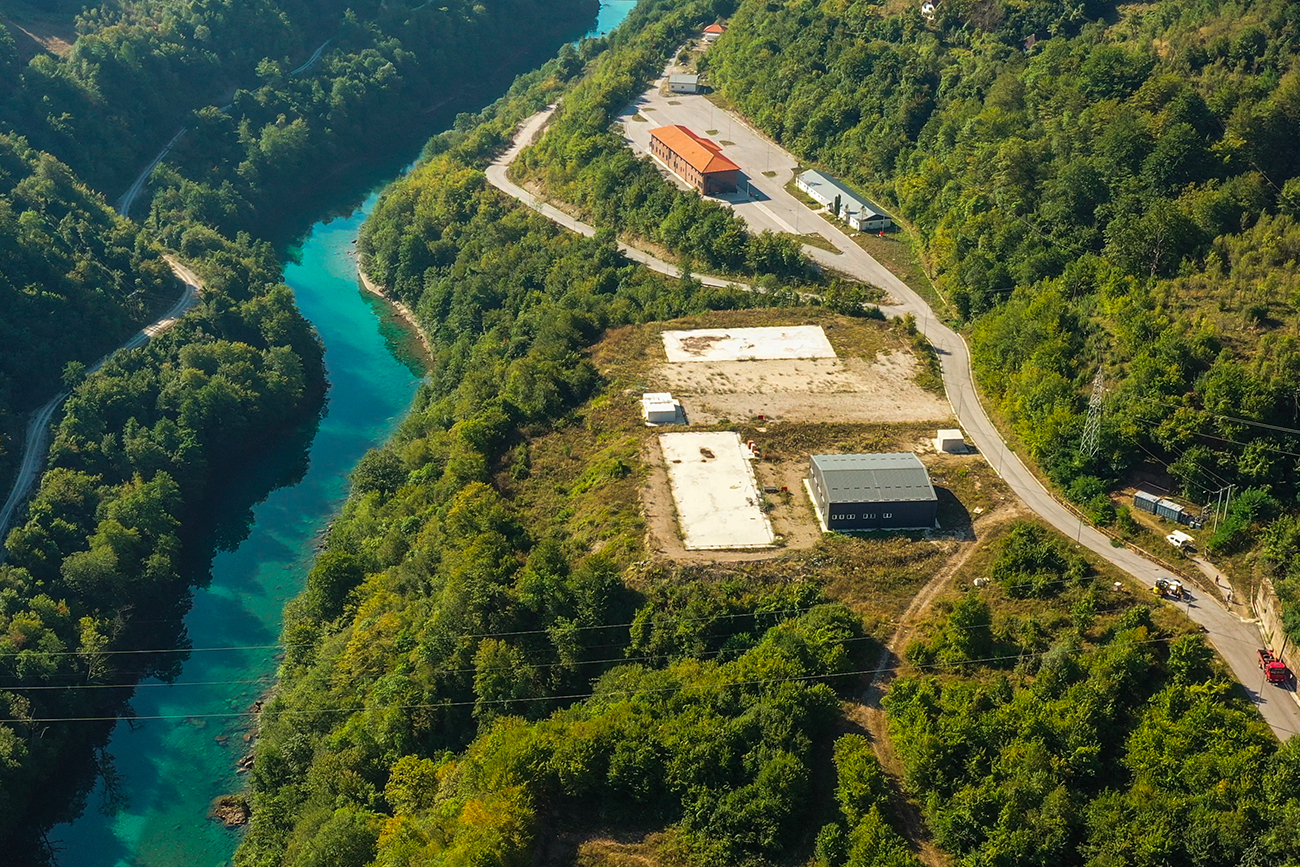
In 2010, the Republika Srpska (RS) government announced plans to build hydropower plants on the Upper Drina, hailing the project as being in the public interest and promising a boost to domestic electricity production.
But the years that followed brought a different reality.
A concession-holding company, HES Gornja Drina, was established in Foča. Yet the authorities imposed no obligation on it to supply the domestic market or meet public needs, leaving it free to pursue profits instead. It was granted a 50-year concession to build and operate three hydropower plants Buk Bijela, Foča, and Paunci, which, according to projections, could generate electricity worth BAM 110 million a year.
The majority stake is held by Serbia’s power utility, Elektroprivreda Srbije (EPS), based in Belgrade, while a smaller share belongs to Elektroprivreda Republike Srpske (ERS), based in Trebinje. But that was not how the ownership structure looked at the outset.
The situation was the result of a convoluted process of setting up concession-holding companies and transferring ownership stakes – a process in which unclear financial calculations were paid for with public funds.
The original majority owner, the Višegrad-based company Hidroelektrane na Drini, withdrew from the project at the request of the Republika Srpska government, shortly after the concession-holding company that later became HES Gornja Drina was established. It sold its stake to Elektroprivreda Republike Srpske for BAM 10.2 million, with payment due by 2034. According to the company’s accounts, that is less than half the amount it invested.
By 2026, only a third of the agreed sum had been paid.
Documents obtained by the Centre for Investigative Reporting (CIN) show that EPS was selected to take part in the project without a public tender.
EPS went on to acquire a majority stake in HES Gornja Drina by contributing BAM 44.5 million in share capital.
Construction of the hydropower plants on the Upper Drina has been going nowhere for years. According to project documents, more than BAM 861.5 million is needed to complete it, most of which is expected to come from loans that have yet to materialise.



An investment not fully recognised
In July 2010, the Republika Srpska government, led by Milorad Dodik of the Alliance of Independent Social Democrats (SNSD), declared the priority construction of the Upper Drina project to be in the public interest. The scheme involved a series of three hydropower plants near Foča, which were expected to increase electricity production in the entity by around 9%.
In June 2016, a 50-year concession to build the first plant, Buk Bijela, was awarded to a consortium of public companies: Elektroprivreda Republike Srpske (ERS) and its subsidiary, Hidroelektrane na Drini, based in Višegrad. Under the contract, construction was supposed to be completed by June 2022.
The investment was estimated at BAM 382.4 million, most of which was to be financed through loans. The contract allowed the concession rights to be transferred to a lender, subject to approval by the RS government and consent from the RS Concessions Commission.
A fee of BAM 764,816 was paid for the concession, followed by a further BAM 1 million to establish the concession-holding company Hidroelektrana Buk Bijela in Foča.
The Višegrad-based company paid 80% of the total, with ERS covering the remaining 20%. They divided ownership of the newly established company in the same proportions.
Changes were already under way by March 2019. At a shareholders’ meeting, Hidroelektrane na Drini director Nedeljko Perišić announced that the company was withdrawing from the project and selling its stake in the concession-holding company to ERS for BAM 800,000. He said the RS government and ERS had decided to press ahead with the project alongside Serbia’s power utility, Elektroprivreda Srbije (EPS), as a strategic partner.
Some shareholders objected to the sale price. According to the company’s accounts at the end of 2018, it had invested BAM 24.2 million in the project, covering surveys and other preparatory work, land expropriation, technical documentation, and other costs.
Has it been specified in any way whether these costs will also be reimbursed to the subsidiary Hidroelektrane na Drini a.d. Višegrad? If so, over what period and how? – asked Goran Klincov, a representative of the Banja Luka-based investment fund Kristal Invest.
Director Perišić replied that only the founding stake in the concession-holding company was being sold, and that the company would discuss reimbursement of the other costs with ERS at a later date. The projects, the facilities and the administrative building in Foča have not been transferred to the concession-holding company – Perišić said.
The shareholders’ objections did nothing to halt the sale. The RS government was determined to press ahead with its plans.
In April 2019, an agreement was signed under which Hidroelektrane na Drini sold its stake in the concession-holding company for the previously announced price. ERS also undertook to reimburse the other costs, subject to an independent valuation.
That valuation dealt another blow to the Višegrad-based company. In May 2019, the Banja Luka-based audit office of Deloitte valued the investment at BAM 16 million, rather than the BAM 24.2 million recorded in the books. It concluded that some of the documentation was outdated or inadequate, either because it dated back to the pre-war period, when Bosnia and Herzegovina was planning a hydropower plant with a different technical design, or because there was no evidence to substantiate the costs incurred.
As a result, Hidroelektrane na Drini had to adjust its accounts, leading to a negative financial result that affected dividend payments to shareholders. The value assigned to the investment was subsequently written down further.
Two years later, in March 2021, a new agreement was signed under which ERS would reimburse its subsidiary BAM 9.4 million in recognised costs. This included an immediate payment of BAM 611,853 for the concession fee, plus BAM 8.8 million in property expropriation costs, to be paid in ten annual instalments. The first instalment of BAM 876,212 was paid in February 2025, followed by the second in February 2026. The remaining eight instalments are due by 2034.
Director Perišić declined CIN’s request for an interview on the matter. We would not offer an opinion on the amount of the write-down or question the expertise of those responsible for this work – he wrote in a letter. He provided copies of the agreements and said that payment of the remaining recognised investment made by Hidroelektrane na Drini had yet to be agreed. The timing and schedule of any such payments, he added, were ‘a matter of business policy’ between his company and ERS.
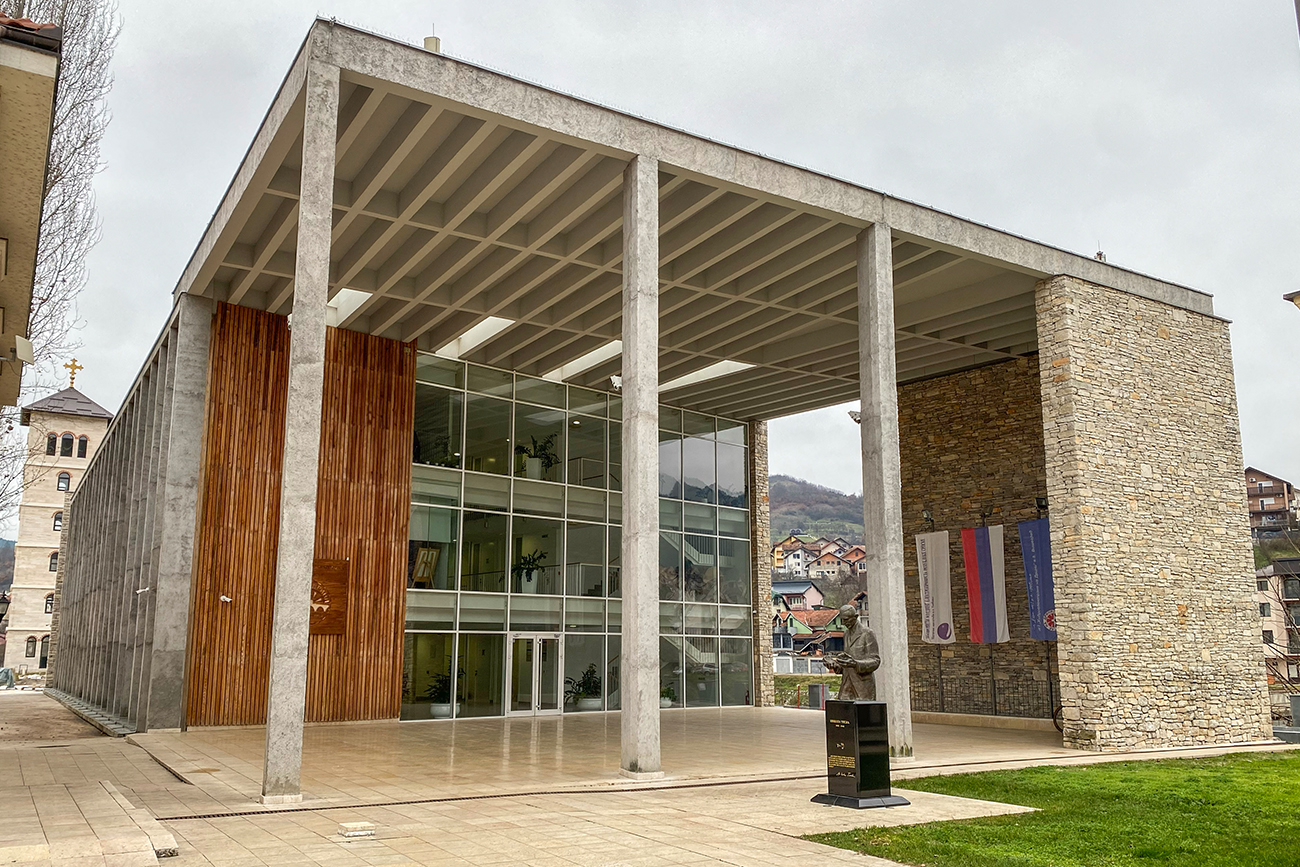
RS Government decisions leave Hidroelektrane na Drini out of pocket
In 2019, the Republika Srpska government made two decisions that placed a heavy financial burden on Hidroelektrane na Drini, a Višegrad-based company in which it holds a majority stake. First, the company was made to withdraw from the Upper Drina hydropower project without adequate compensation for the money it had invested. It then bought the Foča-based concession company Hidroelektrana Bistrica for BAM 20.7 million.
Hidroelektrana Bistrica had share capital of BAM 10.2 million and was loss-making. The acquisition transferred to Hidroelektrane na Drini the concession agreements to build three hydropower plants on the Bistrica River and one on the Janjina River. The contractual deadlines for completing the plants had expired, yet none had been built.
An agreement in Serbian, arbitration in English
Having been left to pursue the construction of the three hydropower plants on its own, ERS continued working to bring the Upper Drina project under one roof.
In February 2019, it obtained concession rights to build the Foča and Paunci hydropower plants, paying BAM 2.3 million for them. These concession agreements also allowed the rights to be transferred to a financier, subject to approval by the Republika Srpska government.
Construction was scheduled for completion by 2025, with the plants due to remain in operation until February 2069. The entire project was valued at around BAM 500 million.
All three hydropower plants were subsequently brought together under a single concession-holding company, which continued operating under the name Hidroelektroenergetski sistem (HES) Gornja Drina d.o.o. Foča.
ERS’s founding stake in the concession-holding company amounts to BAM 42.7 million. In addition to a cash contribution of BAM 5.7 million, it contributed an office building in Foča valued at around BAM 684,000, as well as intangible assets worth BAM 36.3 million, including technical documentation and concession rights.
In mid-2020, Serbia’s power utility, Elektroprivreda Srbije (EPS), joined the concession-holding company without a public call for bids or tender. By contributing BAM 44.5 million to its share capital, EPS acquired a 51% stake in HES Gornja Drina.
The power utilities from Republika Srpska and Serbia agreed that the company would ‘conduct its registered activities solely for the purpose of making a profit’ and would ‘have no obligation to meet public needs’. They also agreed that the ownership structure would remain fixed, although stakes could be transferred to third parties once the hydropower plants became operational. The concession rights could also be pledged as collateral to lenders, subject to approval by the RS government and consent from the RS Concessions Commission.
The agreement stipulated that profits would be distributed at least once a year. Any disputes would be settled through arbitration before the International Chamber of Commerce in Vienna.
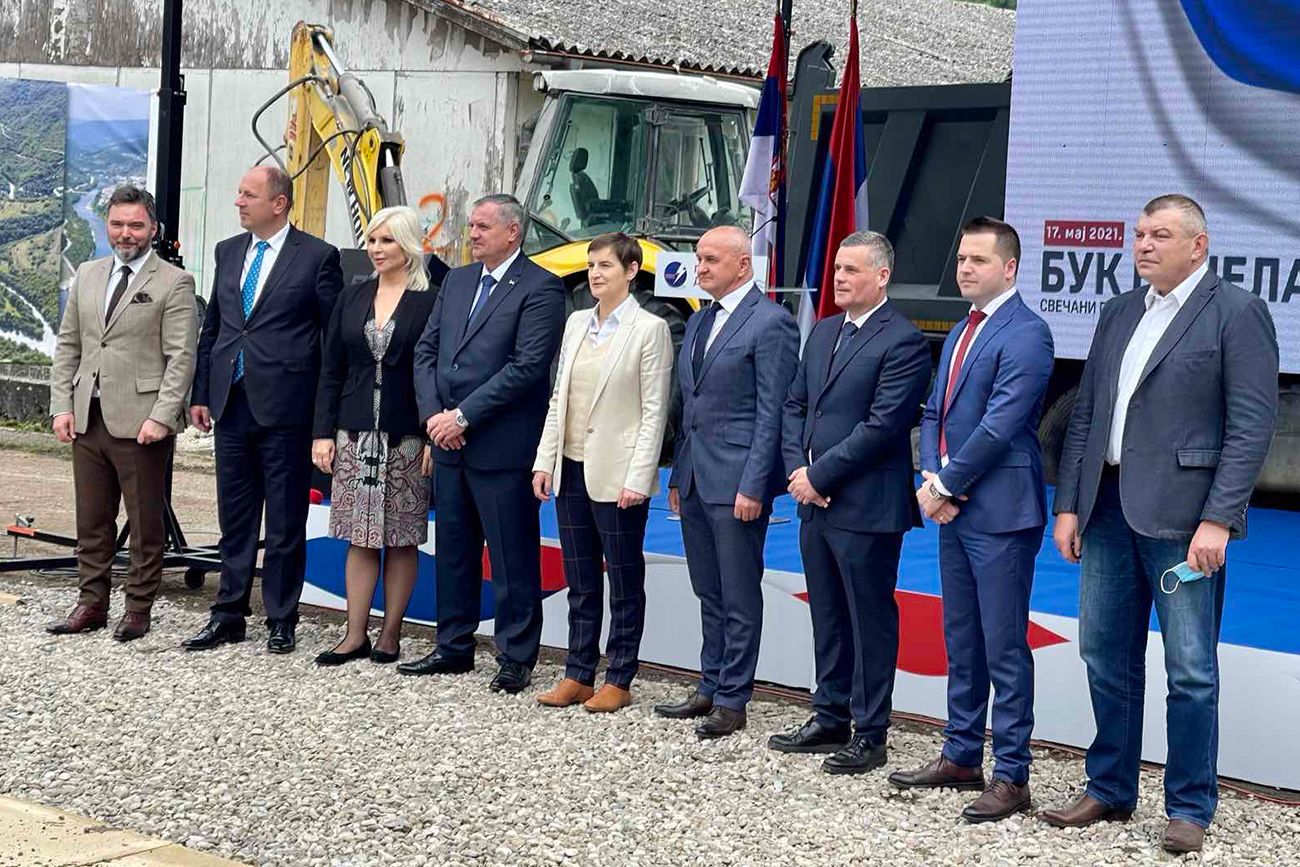
The laying of the foundation stone in May 2021 was meant to mark the official start of construction on Buk Bijela, the first of the planned hydropower plants. Serbia’s then Prime Minister, Ana Brnabić, described it as a project that would open up ‘many doors and many possibilities’. I hope this marks a new beginning in relations, not just between Republika Srpska and Serbia, but across the region – she said.
Radovan Višković, then Prime Minister of Republika Srpska, announced a joint investment of around BAM 440 million, approximately BAM 47 million more than the amount stipulated in the concession agreement.
Make no mistake, and remember this day: this is history – Višković said.
ERS has ignored CIN’s requests for an interview, while EPS responded in writing, saying it had no plans to transfer its stake to anyone and that the project was still in the preparatory stage – with no loan agreements in place and no agreed valuation of the investment.
Those involved in the project are unwilling to discuss the investment, despite having presented it as a major achievement for the authorities. Even members of the Republika Srpska National Assembly have no access to the details.
Bojan Kresojević, an MP from the Party of Democratic Progress (PDP), is critical of the Alliance of Independent Social Democrats (SNSD) and its coalition partners, whose appointees oversee this and similar projects.
If they were doing things properly, they should be proud of it. They would want to put it on the National Assembly’s agenda and push for a debate, because that would help boost their political standing. But clearly, the reality is somewhat different – Kresojević told CIN.
Under the concession agreements, the hydropower plants should already have been built. Yet construction has not even begun.
Amendments signed in 2025 extended the deadlines, but the Republika Srpska Ministry of Energy and Mining has refused to release the documents and ignored requests for an interview.
Damjan Ožegović of Transparency International Bosnia and Herzegovina (TI BiH) warns that such a lack of transparency is unacceptable. Many cases, he says, have shown individuals obtaining concessions for a nominal fee and then selling them on for millions, without delivering any benefit to society.
We all have the right to know who is mining our resources, who is turning our rivers into small hydropower plants, who is destroying the environment, and what we are getting in return – Ožegović says.
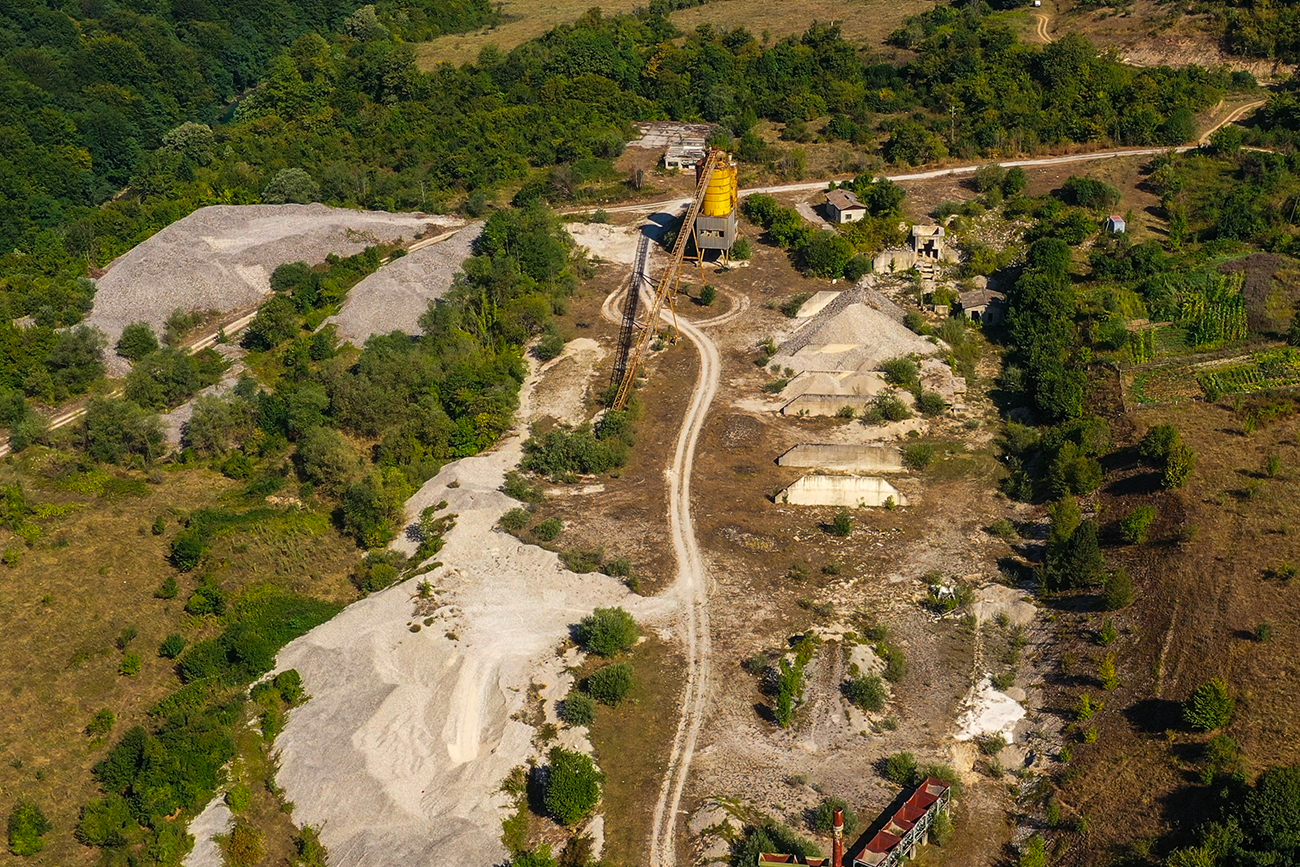
Environmental groups have also raised objections to the project, warning that the construction of hydropower plants on the Upper Drina will harm the environment. They point in particular to the planned reservoirs, which would flood the area, and are challenging the construction permits in court.
Vladimir Topić of the Banja Luka-based Centre for Environment says the project cannot go ahead without adversely affecting the climate, wildlife and local tourism. The reservoir would threaten the huchen, an endemic fish species. In his view, breeding the fish in hatcheries and restocking the river would not be an acceptable solution.
Our findings show that there is no facility of this kind anywhere in the country. At the same time, it would have a significant impact on the species’ genetic diversity – he says.
Representatives of the state-level authorities have also objected to the project. They consider the Drina River to be state property and argue that the entity government therefore has no authority to grant concessions in the area.
The Constitutional Court of Bosnia and Herzegovina ordered the BiH Concessions Commission to resolve the disputed issues, but this has yet to happen.
As far back as the 1970s, Bosnia and Herzegovina (BiH) and Montenegro were planning to build the Buk Bijela, a high hydropower plant in Foča. Work had begun on land expropriation and the preparation of project documentation when concerns arose over the potential adverse impact on the Tara River. Montenegro subsequently withdrew from the project.
After the war in Bosnia and Herzegovina, Elektroprivreda Republike Srpske (ERS) explored the possibility of building a hydropower plant at a lower elevation, which was supposedly intended to prevent adverse environmental impacts in Montenegro. In 2010, the Republika Srpska government declared the construction of four hydropower plants on the Upper Drina to be in the public interest. Concessions were granted for three of them, but not for the fourth, the Sutjeska hydropower plant.