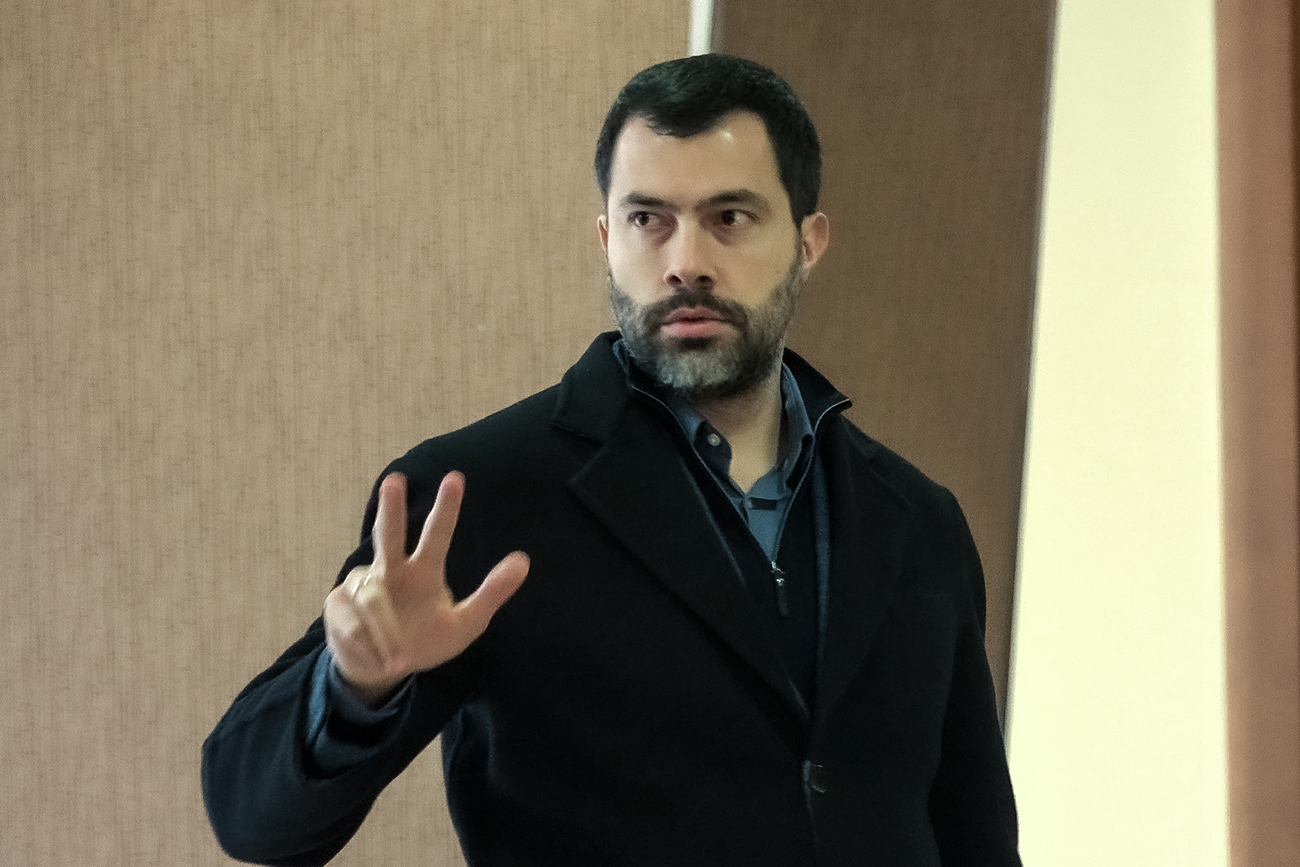
The appointment of Igor Dodik as Prime Minister-designate of Republika Srpska (RS) marks the opening act in a transfer of power from father to son and, in many respects, the coronation of yet another major political dynasty in Bosnia and Herzegovina (BiH).
The process of keeping power within the family gathered pace last year after the Court of Bosnia and Herzegovina barred Milorad Dodik from holding political office for six years. But the RS leader was far from caught off guard. For years, he had been methodically grooming his son for a place among the country’s political elite, entrusting him with a succession of behind-the-scenes responsibilities in both the party machinery and the family business empire.
Igor played his part dutifully. Reflecting on his relationship with his father in an interview, he remarked: “I was raised not to argue back. When my father disagrees with my position, I usually step back and keep my counsel.”
Patience paid off. In early 2024, Igor Dodik burst onto the political scene, securing a place at the very top of the Alliance of Independent Social Democrats (SNSD) when he was appointed the party’s Organisational Secretary. Just a few months later, he was handed another key role, taking charge of the party’s election campaign. The campaign proved a resounding success. Under his stewardship, SNSD delivered one of the strongest electoral performances in its history, securing one of its best results since the party’s founding.
Igor Dodik himself was rewarded with an impressive show of public support. Heading the Banja Luka list for the National Assembly of Republika Srpska (NSRS), he won nearly 22,000 votes, around 4,000 more than Draško Stanivuković, the Mayor of Banja Luka and leader of the Sigurna Srpska movement.
On 22 November 2026, Savo Minić, President of Republika Srpska, entrusted Igor Dodik with the mandate to form the entity’s new government. Under the RS Constitution, Dodik has 40 days to present both his government’s programme and the proposed cabinet to the National Assembly, which must approve the new administration by a majority vote.
Savo Minić said he expects the Prime Minister-designate to modernise the Republika Srpska government and inject fresh energy into its work. ‘I am convinced that Igor Dodik is capable of meeting all of these expectations,‘ Minić said, noting that the nominee is the youngest candidate ever tasked with forming an RS government.
‘I am fully aware that I will have to justify that trust every single day through my decisions and through results that serve the interests of the citizens of Republika Srpska,’ he said after being named Prime Minister-designate.
A Prime Minister-designate is the individual entrusted by the President with the task of selecting ministers and shaping the agenda of a new government.
The Government of Republika Srpska comprises 16 ministries, and the appointed Prime Minister-designate has 40 days to consult with parties from the governing majority and draw up a list of ministerial nominees.
At the same time, the nominee prepares the government’s programme, which is presented to lawmakers in a policy address. The National Assembly then votes on the proposed Prime Minister and cabinet, approving both the government’s composition and its programme of work by a majority vote. The government’s term is tied to that of the National Assembly and lasts four years. The Government and its ministers are accountable to the Assembly for their performance in office.
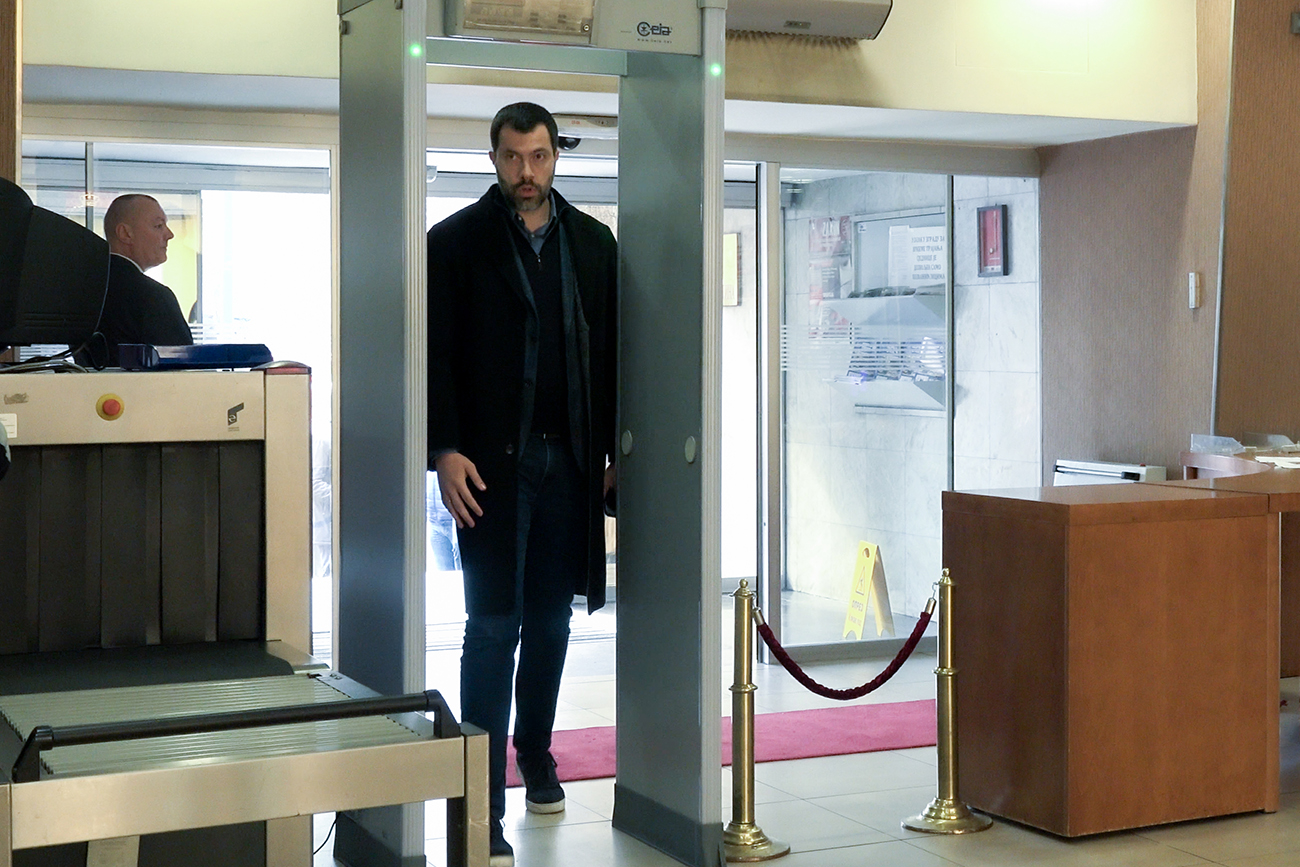
that he was personally responsible for bringing the son of one of the world’s most powerful families to the city.
A year earlier, Igor had been removed from the United States sanctions list by presidential decree from Donald Trump. He had previously appeared on the blacklist alongside his father, his sister Gorica Dodik, his brother-in-law Pavle Ćorović, and many other senior party associates and power brokers, as well as companies linked to the Dodik family.
‘Do I deserve some of these opportunities? Have I achieved certain things through my own work, or is it simply down to my surname?’ Igor Dodik reflected in an interview.
That surname has undoubtedly shaped the life of the 37-year-old man. An investigation by the Centre for Investigative Reporting (CIN) into Igor Dodik’s entry into the world of multi-million-mark business ventures two decades ago suggests that the son of Republika Srpska’s long-time leader began enjoying favourable winds from an early age.
At just 18 years of age, he and his cousin, Mirko Dobrić, founded the fruit-growing company Fruit Eco in Podgradci, near Gradiška. Only three years later, the business controlled assets worth more than BAM 9 million and had already secured a foothold in the market. Dobrić said that major retail chains from neighbouring Croatia and Serbia, including Konzum and Delta Maxi, were buying their apples and pears.
The story of their rapid rise to wealth appears almost too good to be true. Initially, they had little capital of their own. Yet funding soon became available through privatisation deals and preferential loans far beyond the reach of most aspiring entrepreneurs in Bosnia and Herzegovina.
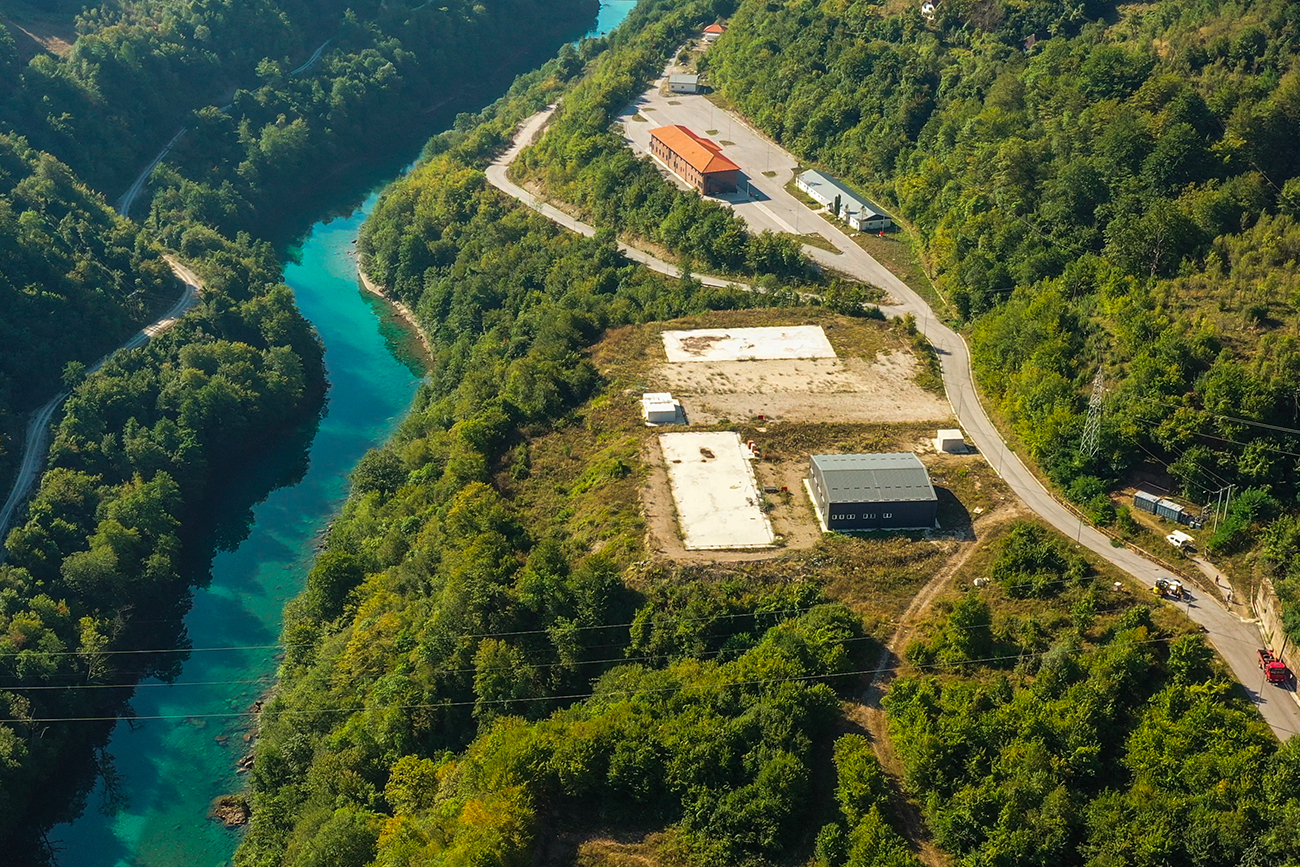
Their business journey began in mid-2007, when Dobrić purchased a 103-hectare agricultural estate in the village of Gornji Podgradci, near Gradiška, at a public auction for BAM 1.5 million. The land included what was considered the finest orchard belonging to the former state-owned company Plantaže.
Under the terms of the sale, the purchase price was due within seven days. However, Dobrić did not have the money to complete the transaction. Only after the auction did he secure a BAM 1.5 million loan from Balkan Investment Bank (BIB). Notably, a mortgage on the property was not registered until December 2007, four months after the funds had already been disbursed.
At the time Fruit Eco co-owner Mirko Dobrić obtained the loan from BIB, one of the bank’s largest clients was the Government of Republika Srpska, headed by Milorad Dodik.
According to a valuation commissioned as part of bankruptcy proceedings, the Plantaža estate, including its land, orchards and buildings, was worth BAM 937,000. There had been no significant investment in the property in the meantime, yet a year later, Dobrić hired a new team of appraisers who valued the estate in Gornji Podgradci at BAM 5.7 million, more than five times its estimated worth when he acquired it.
That same year, Dobrić transferred the property to Fruit Eco. Within a process that took just three days, the company secured a BAM 3 million loan from the Republika Srpska government’s Investment-Development Bank (IRB) to finance the construction of a fruit cold-storage facility and the expansion of its orchards.
The funding was approved by the IRB Shareholders’ Assembly Credit Committee, which at the time was chaired by Milorad Dodik. When the committee deliberated on the loan application submitted by a company co-owned by his son, the RS Prime Minister did not attend the session. He was instead replaced by Finance Minister Aleksandar Džombić, who would later go on to serve as Prime Minister of Republika Srpska.
Financial statements show that during its early years Fruit Eco generated most of its revenue not from its own production, but by purchasing fruit from other growers, storing it in its cold-storage facilities and then reselling it to customers in Bosnia and Herzegovina and abroad. In recent years, however, the scale of the business has contracted significantly. Revenue fell from BAM 1.8 million in 2021 to just BAM 340,000 in 2025. Despite the decline in turnover, the company’s underlying value remained largely intact, with shareholders’ equity standing at around BAM 4 million and fixed assets valued at approximately BAM 7.4 million.

Investigation into the Purchase of His Father’s Villa in Belgrade
The same year that Igor Dodik established his company, his father purchased a 342-square-metre villa in Belgrade’s exclusive Dedinje district for BAM 1.7 million. To this day, it remains the most valuable property owned by the Dodik family. As with the Fruit Eco case, banks made questionable decisions in the interests of the Dodik family. In this instance, Pavlović Banka, a lender from Bijenjina considered close to the family, approved a loan for Milorad Dodik only after he had already bought the villa. The mortgage on the property was then registered a year later.
Together with his sister, Gorica Dodik, Igor founded another fruit-growing company, Global Liberty, in Laktaši in 2016; however, the business never generated significant revenue from fruit production. Last year, the company, managed by Igor’s brother-in-law Pavle Ćorović, reported a turnover of just BAM 17,000.
Rather than focusing exclusively on the fruit business, Dodik Jr. turned his attention to education. According to his own account, he moved to Italy to study at Bocconi University in Milan. After completing his studies, he relocated to Genoa, where he took a job with the Japanese technology company Toshiba. He says he worked on major power-sector projects across Europe.
After returning to Banja Luka, Igor became involved in a number of business ventures, including work as an intermediary for Prointer ITSS, a Banja Luka-based IT company that secured some of the most valuable government technology contracts in Republika Srpska. Although Igor Dodik’s formal employment with the company has never been publicly established, the United States government in 2024 designated Prointer ITSS, its parent company Infinity International Group and a network of affiliated firms as part of what it described as a business structure linked to father and son, Milorad Dodik and Igor Dodik. According to the US authorities, the network was used to generate revenue, channel public contracts and undermine the institutions of Bosnia and Herzegovina.
The company was subsequently removed from the sanctions list alongside Milorad and Igor Dodik and a number of other individuals and entities associated with them.
At the same time, Igor Dodik served as General Manager of Igokea, the basketball club from Aleksandrovac near Laktaši that is widely regarded as the most successful club in post-war Bosnian and Herzegovinian basketball. He continues to hold the position today.
The Dodik family has long cultivated close ties between its political and business interests. That inner circle expanded in 2015 when Igor married Ivana Pešukić, a native of Belgrade. The couple have three children.
A year after their wedding, Ivana Dodik and her sister-in-law, Gorica Dodik, opened the upscale Agape restaurant on Trg Krajine in Banja Luka. Several years later, they launched a second café-restaurant in the city, this time in the Delta Planet shopping centre. Following the imposition of US sanctions on the Dodik family, management of the hospitality businesses was transferred to Aleksandar Dobrić, the son of Mirko Dobrić, Igor Dodik’s cousin and long-time business partner in the fruit-growing sector.
Igor Dodik did not respond to requests for comment from CIN journalists.