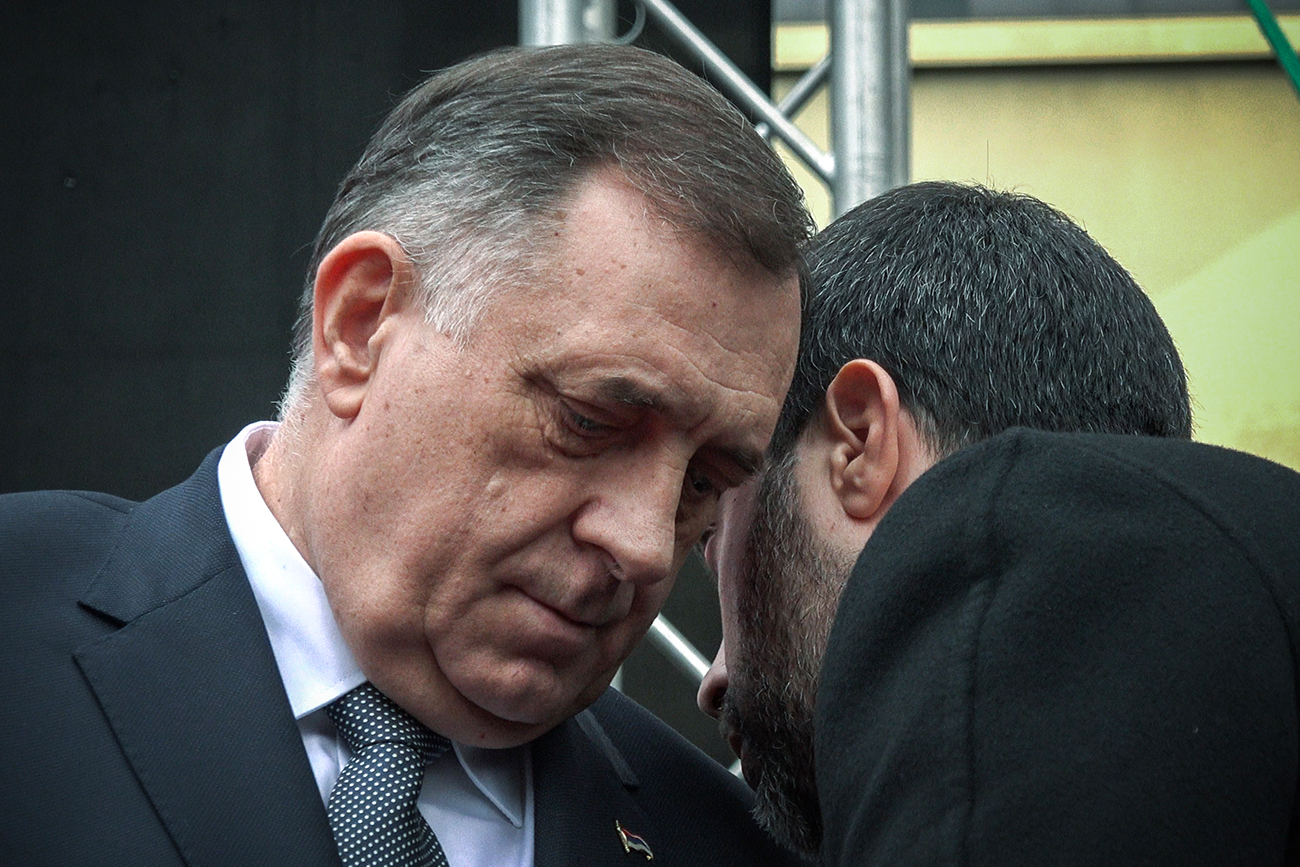
The parliamentary elections held in Serbia in late October 2026 brought a change of government, ending Aleksandar Vučić’s 14-year rule as leader of the Serbian Progressive Party (SNS). The Student List – Students Are Winning! secured more than 2.3 million votes, giving it a commanding majority in the national parliament.
Representatives of the Student List say that, among the priorities for the new government’s first 100 days in office, will be establishing the origins of politicians’ and their financiers’ wealth and confiscating assets acquired unlawfully. The legal framework is already in place, and the new leadership has pledged to enforce it.
Radomir Saičić, one of the Student List’s representatives, told CIN journalists that all unlawfully acquired assets would be confiscated, regardless of whether they belonged to Serbian or foreign politicians.
If the new government delivers on its promises, politicians and public officials from Bosnia and Herzegovina who own property in Serbia could also be required to explain how they acquired it.
CIN journalists have been investigating politicians’ property holdings for years, publishing their findings in the Politicians’ Assets database. Their investigations have found that most of the politicians with property in Serbia are from Republika Srpska (RS). They and members of their immediate families have bought houses and flats, mainly in Belgrade and Novi Sad.
CIN’s Politicians’ Assets database features more than 240 profiles of politicians and public officials. At least 28 politicians and members of their immediate families own property in Serbia. Some have kept these assets under wraps for years, failing to declare them in their asset declarations despite being legally required to do so. Yet Bosnia and Herzegovina’s legislation provides for no penalties for failing to declare such assets, nor does it allow the authorities to check property holdings abroad.


Back in 2009, journalists revealed that Milorad Dodik, then Prime Minister of Republika Srpska, had bought a villa in an exclusive part of Belgrade for EUR 850,000. He paid the full EUR 850,000 upfront and registered the villa in his name, and it was only eight months later that he took out a loan to allegedly cover the cost of the purchase.
The case prompted the Prosecutor’s Office of Bosnia and Herzegovina to open an investigation in 2015. However, in a statement issued in spring 2026, the Prosecutor’s Office said there had been little progress. It claimed that Serbian authorities had for years been ignoring requests for key documents.
As in Serbia, legislation providing for the investigation of the origins of assets and their confiscation if they have been acquired through criminal activity is also in place in Republika Srpska and, to some extent, in the Federation of Bosnia and Herzegovina (FBiH). In practice, however, these laws are rarely enforced.
We are now hoping – perhaps naively, perhaps because we are ill-informed or simply do not know enough – that this change of government in Serbia will put an end to corruption, clientelism and the abuse of public resources and public funds (here at home, ed.). Yet the government here is formed by the very same people we have returned to power at the ballot box – the same people who have been in power for the past 20 years, says political analyst Tanja Topić.
The Rule of Law and Tackling Corruption
The Student List’s programme pledges to strengthen the rule of law, with a particular emphasis on eradicating corruption. It proposes measures including safeguarding the independence of the judiciary, introducing lustration for public office-holders and investigating the origins of wealth. The confiscation of unlawfully acquired assets, it claims, could bring hundreds of millions of euros into the state budget, providing funds for public investment.
The legal framework is already in place. The programme also envisages strengthening the Tax Administration and increasing its staffing levels. The Tax Administration plays a central role in implementing the RS Law on Determining the Origin of Property and the Special Tax.
The Law on the Seizure and Confiscation of the Proceeds from Crime is another piece of legislation that provides for scrutiny of the lawfulness of acquired assets. It gives public prosecutors specific powers to work with other state authorities to secure the temporary seizure or permanent confiscation of unlawfully acquired assets.
A second relevant piece of legislation is the Law on the Seizure and Confiscation of the Proceeds from Crime. It provides for scrutiny of the lawfulness of acquired assets. It gives public prosecutors specific powers to work with other state authorities to secure the temporary seizure or permanent confiscation of unlawfully acquired assets.
Although these laws have been in place in Serbia for years, they have so far been virtually never enforced, says Sarah El Sarag, a lawyer and representative of the Student List. She adds that investigations will cover not only individuals but also companies linked to them.
People are aware that citizens of Republika Srpska hold dual citizenship and can therefore do business here while also being Serbian citizens. They will be subject to asset checks, just like public officials here and private companies that have done business here. Whether it involves public procurement contracts or something else … Anyone found to have committed an offence will, of course, face prosecution, says El Sarag.
She adds that cooperation between the tax administrations will be crucial to the process. If your income is EUR 2,000, how can you afford, for example, a flat in Belgrade Waterfront worth half a million euros?
The Tax Administration can launch an investigation into the origin of a person’s assets on its own initiative if it identifies a mismatch between their assets and income. It can also do so following a referral from another public authority or a request from an individual or legal entity.
Both laws are also in force in Republika Srpska, while the Federation of Bosnia and Herzegovina has adopted only the Law on the Confiscation of Assets Acquired through Criminal Offences. However, neither has yet produced tangible results.
Political analyst Tanja Topić says this is a consequence of a judiciary captured by the ruling political structures, which have kept it under their control for years.
I’m concerned that the assets held in Serbia may be just the tip of the iceberg. I believe our officials hold a great deal of wealth in EU countries, both in property and in cash.
For now, any change in this situation appears possible only in Serbia. In the days following the October elections, several senior officials were arrested and the work of the prosecution service came under scrutiny. Zagorka Dolovac, Serbia’s Chief Public Prosecutor, ordered inspections of all public prosecutor’s offices across the country, including the Public Prosecutor’s Office for Organised Crime.
In 2016, the Prosecutor’s Office of Bosnia and Herzegovina submitted a request to the latter office, seeking the examination of a witness and the provision of documents through mutual legal assistance in connection with its investigation into the purchase of a villa by Milorad Dodik, former President of Republika Srpska and current leader of the Alliance of Independent Social Democrats (SNSD).
The Public Prosecutor’s Office for Organised Crime previously told CIN journalists that it had encountered difficulties locating the witness. It said it had requested assistance from the Ministry of Justice but had received none. As a result, it was not until 2022 that the witness was located and interviewed.
The Prosecutor’s Office of Bosnia and Herzegovina said that it had forwarded the witness interview records and requested documents to Serbia’s Ministry of Justice, which had ignored subsequent requests to hand them over.
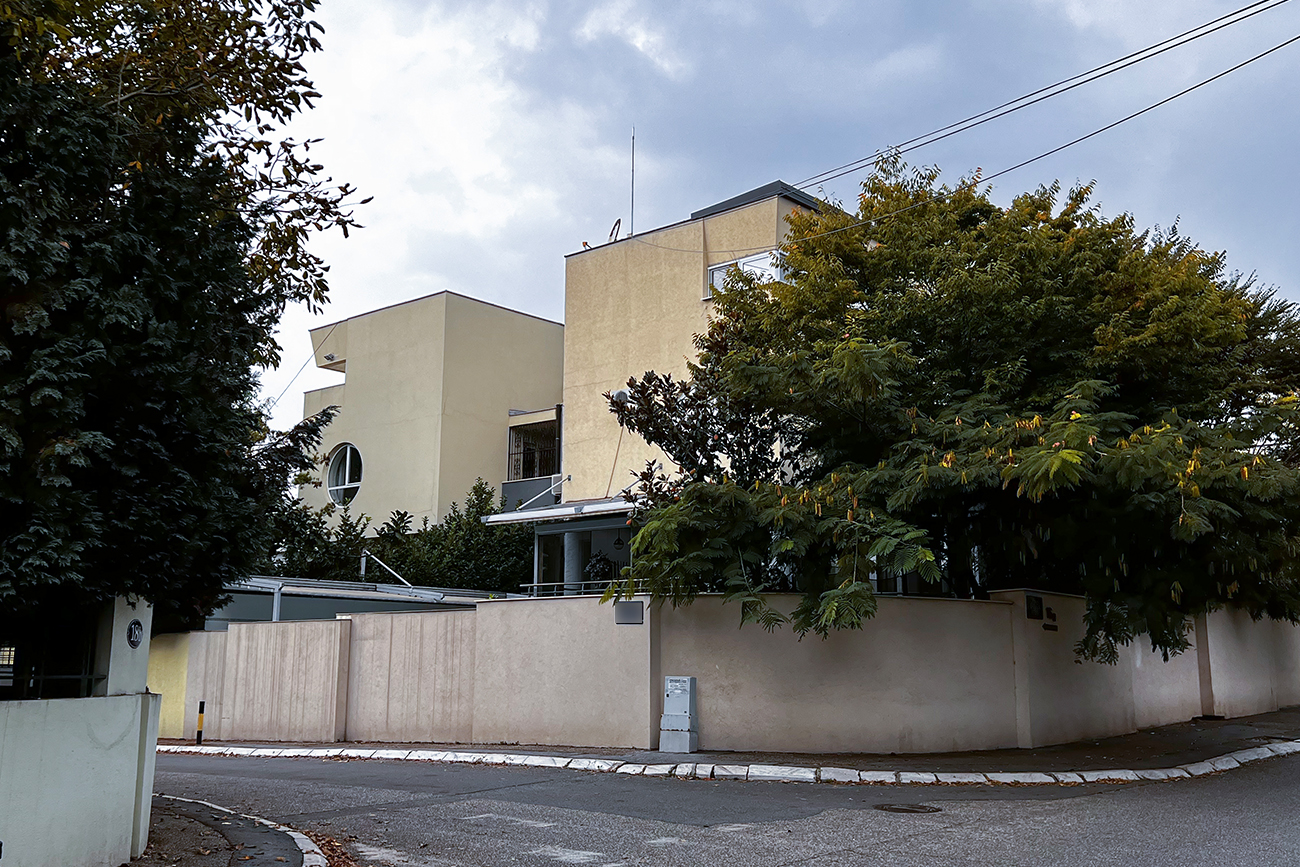
CIN journalists first reported in 2009 that Dodik had bought a 342-square-metre villa in Dedinje, an affluent neighbourhood in Belgrade. To register the three-storey property in his name in 2007, he had to pay the purchase price of EUR 850,000. Journalists subsequently discovered that he had not taken out a loan to finance the purchase until eight months later.
In March 2022, Dodik gave a statement to the Prosecutor’s Office of Bosnia and Herzegovina about the purchase of the property. The Prosecutor’s Office told journalists that the case remained open, but did not answer questions about whether it would send further requests for the documents following the change of government in Serbia.
Goran Bubić, Dodik’s lawyer, maintains that the purchase was above board. Although he initially declined to comment because the investigation was ongoing, Bubić later called the journalist back and said that financial expert assessments had disproved the money-laundering allegations. He claims his client took out a loan in 2007 for a property he was ‘yet to purchase’, which, he argues, meant that ‘there were no grounds for registering a mortgage’.
He maintains that the case has been fully investigated and that no criminal offence has been committed. He dismisses the failure to obtain documents from Serbia as a mere pretext, saying: No one is prepared to stick their neck out and call off an investigation that should have been dropped a long time ago.
Dodik had supported Aleksandar Vučić’s policies for years, with Vučić’s Serbian Progressive Party (SNS) in power since 2012. He continued to publicly back Vučić throughout the two-year wave of civil protests that began in late 2024. The widespread public discontent in Serbia was triggered by the collapse of a concrete canopy at the recently renovated railway station in Novi Sad, which claimed 16 lives.
The protests eventually led to snap parliamentary elections, held on 25 October 2026. On election night, Milorad Dodik stood alongside Aleksandar Vučić as he conceded defeat, bringing his 14-year rule to an end.
In the days that followed, Dodik repeatedly told representatives of the victorious Student List that he hoped for good cooperation.
Politicians Have Kept Their Property Holdings Under Wraps for Years
Nenad Nešić, former Bosnia and Herzegovina Security Minister and leader of the Democratic People’s Alliance (DNS), is another politician whose property in Serbia could come under scrutiny by the country’s new leadership.
When he took office as state minister in 2023, Nešić failed to disclose that he and his wife jointly owned a 98-square-metre flat and a 176-square-metre house in Novi Sad. At the time, he told CIN journalists that he had not known he was required to declare his spouse’s property as well. He said he had been given that advice at the Council of Ministers and declined to comment further.
A few days later, appearing on N1 television, Nešić explained how he had acquired the properties.
I paid for them without taking out a loan. I bought them legally, using my own income. I have a salary. I paid for everything properly through the bank where my salary is paid.
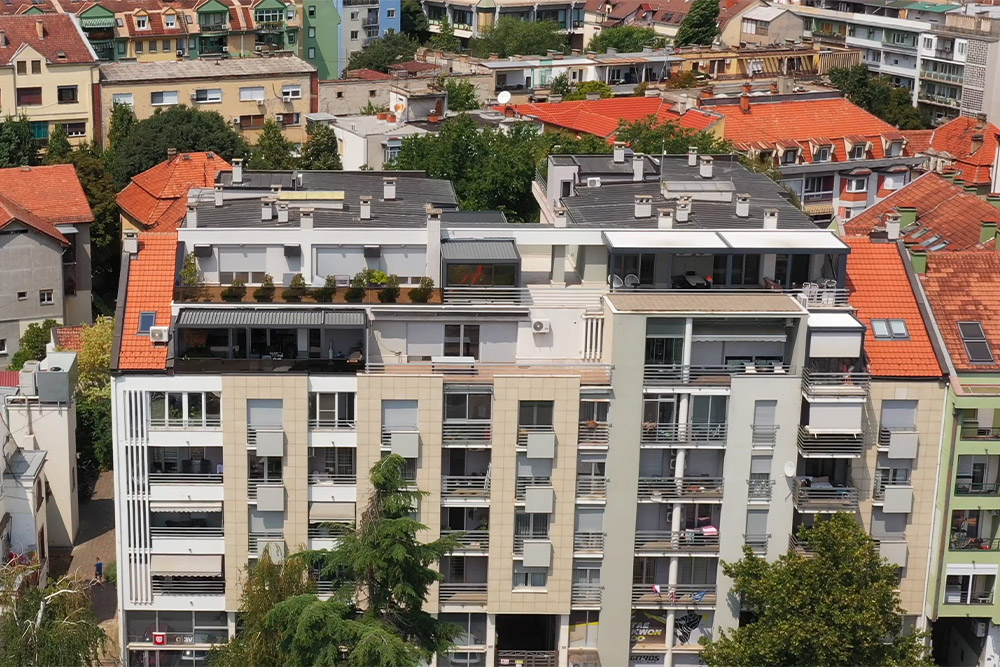
In the years that followed, Nešić continued buying and selling property in Novi Sad. The house is no longer owned by the couple, and Nešić has acquired two more properties. According to land registry records, he currently owns two flats and a garage in the city.
Nešić and members of his family also own valuable property in Montenegro. The country’s State Prosecutor’s Office has ordered a measure prohibiting the disposal of five of their properties in Budva and Tivat.
The Prosecutor’s Office of Bosnia and Herzegovina has been investigating Nešić for six years. He is suspected of money laundering, bribery and abuse of office while serving as director of the RS Motorways public company, allegedly gaining around BAM 1 million in the process.
His tenure as minister ended in early 2025, shortly after he was taken into custody and placed in pre-trial detention, where he spent around six months. He was released in May that year after posting bail of BAM 1.37 million, secured against one of his properties.
Nešić did not respond to journalists’ calls.